

When Your AC Breaks Down, Here’s What to Do First
Air conditioner repair is the process of diagnosing and fixing a malfunctioning cooling system to restore comfort in your home. If your AC isn’t working right, here’s a quick overview of what to know:
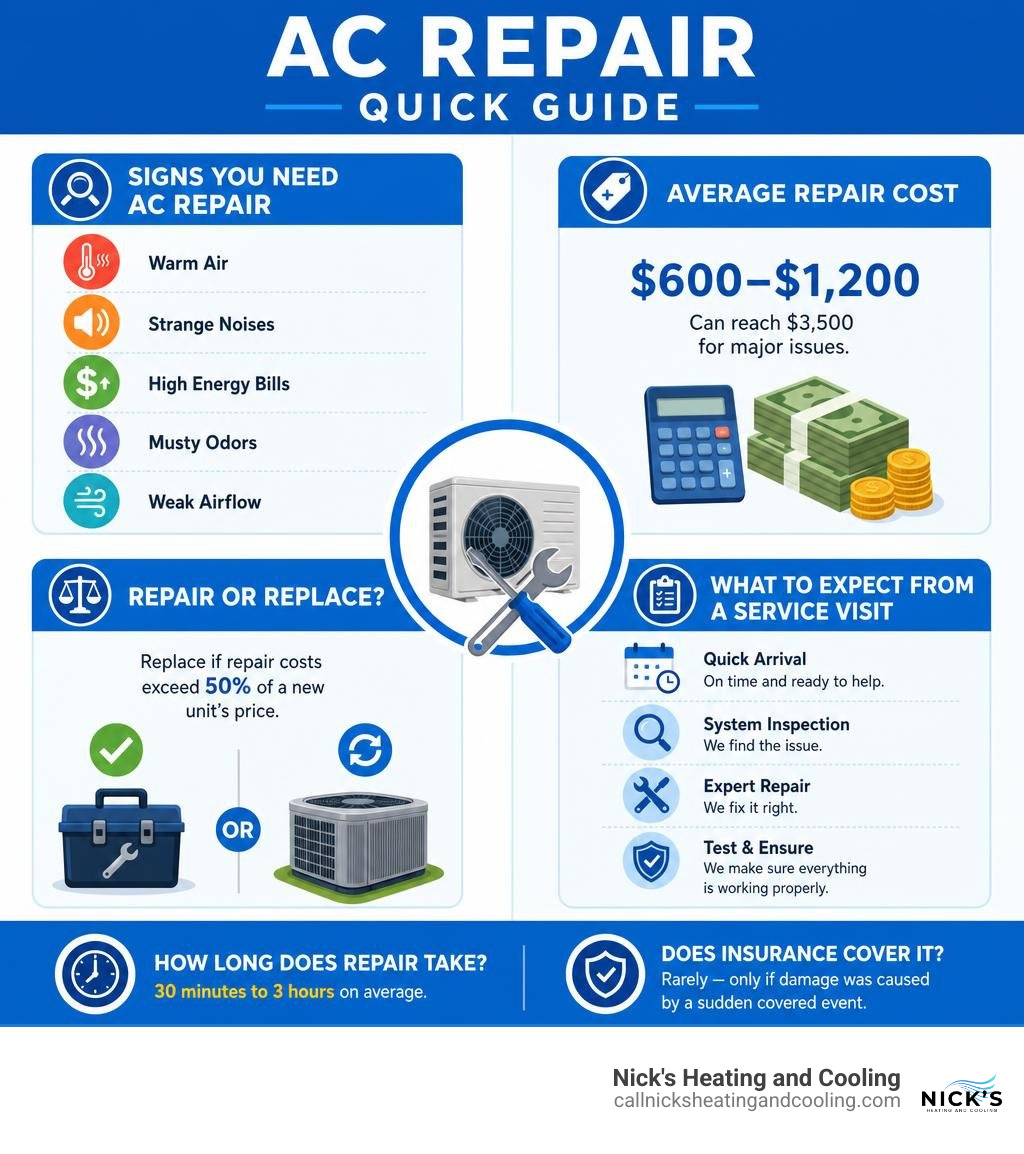
Quick Answer: Air Conditioner Repair at a Glance
| Question | Short Answer |
|---|---|
| Most common signs you need repair | Warm air, strange noises, high energy bills, musty odors, weak airflow |
| First steps before calling a pro | Check thermostat, replace filter, reset circuit breaker |
| Average repair cost | $600–$1,200 (can reach $3,500 for major issues) |
| Repair or replace? | Replace if repair costs exceed 50% of a new unit’s price |
| How long does repair take? | 30 minutes to 3 hours on average |
| Does insurance cover it? | Rarely — only if damage was caused by a sudden covered event |
Imagine walking through your front door on a hot Birmingham summer day and realizing it’s just as hot inside as it is outside. That sinking feeling is something far too many homeowners know well — and it usually means your AC needs attention fast.
The good news? Many AC problems are fixable quickly and affordably when caught early. This guide walks you through everything you need to know — from spotting early warning signs to choosing the right repair company.
Common Signs You Need Air Conditioner Repair
Recognizing the early warning signs of a failing cooling system can save you from a complete system breakdown during the peak of summer in Hoover or Birmingham. Our air conditioning units work incredibly hard to combat the intense Southern humidity, and when they begin to struggle, they usually let us know through several clear indicators.
- Weak Airflow: If you hold your hand up to your vents and feel only a faint whisper of air, your blower motor might be failing, or you could have severe blockages in your ductwork.
- Warm Air: This is the most obvious sign. If your thermostat is set to “cool” but your vents are blowing lukewarm or hot air, your system is struggling to complete its cooling cycle.
- Strange Noises: Your air conditioner should operate with a gentle hum. If you start hearing squealing, grinding, scraping, or loud banging, turn the system off immediately. These sounds often indicate a slipped belt, a broken motor bearing, or loose internal components that can cause severe mechanical damage if left running.
- Musty or Burning Odors: A musty smell usually indicates mold or mildew growth inside your ductwork or on your evaporator coils. A burning, metallic smell, however, is an urgent electrical hazard that requires professional attention.
- Short Cycling: If your AC turns on, runs for less than 10 minutes, and shuts back off only to repeat the process shortly after, it is short cycling. This puts immense strain on your compressor and spikes your utility bills.
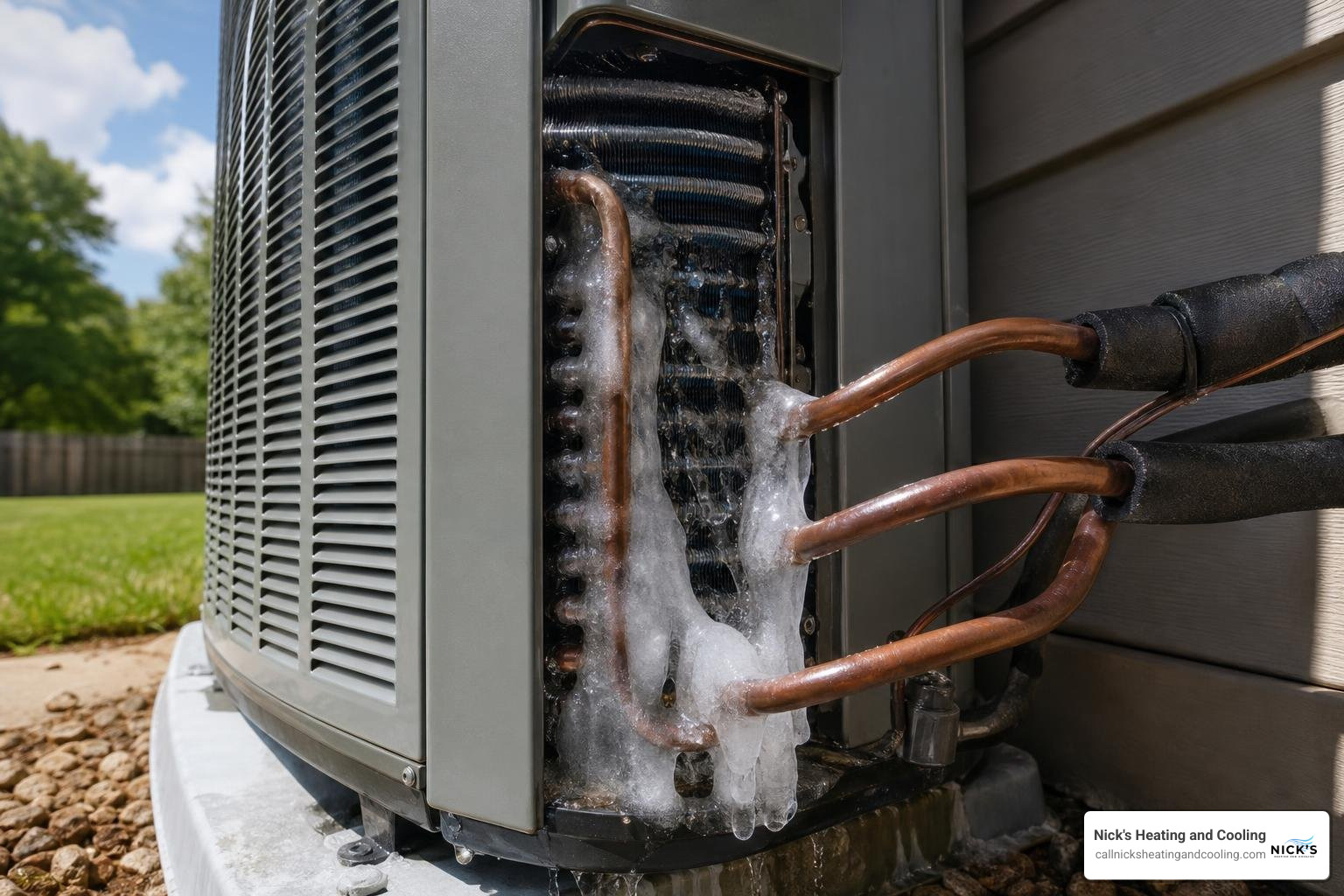
- Water Leaks: Pooling water around your indoor unit is a classic sign of a clogged condensate drain line or a frozen evaporator coil.
Troubleshooting Your System Before Calling for Air Conditioner Repair
Before you pick up the phone to schedule an emergency service call, we recommend performing a few basic checks. Sometimes, the solution is simple enough to handle yourself, saving you time and stress.
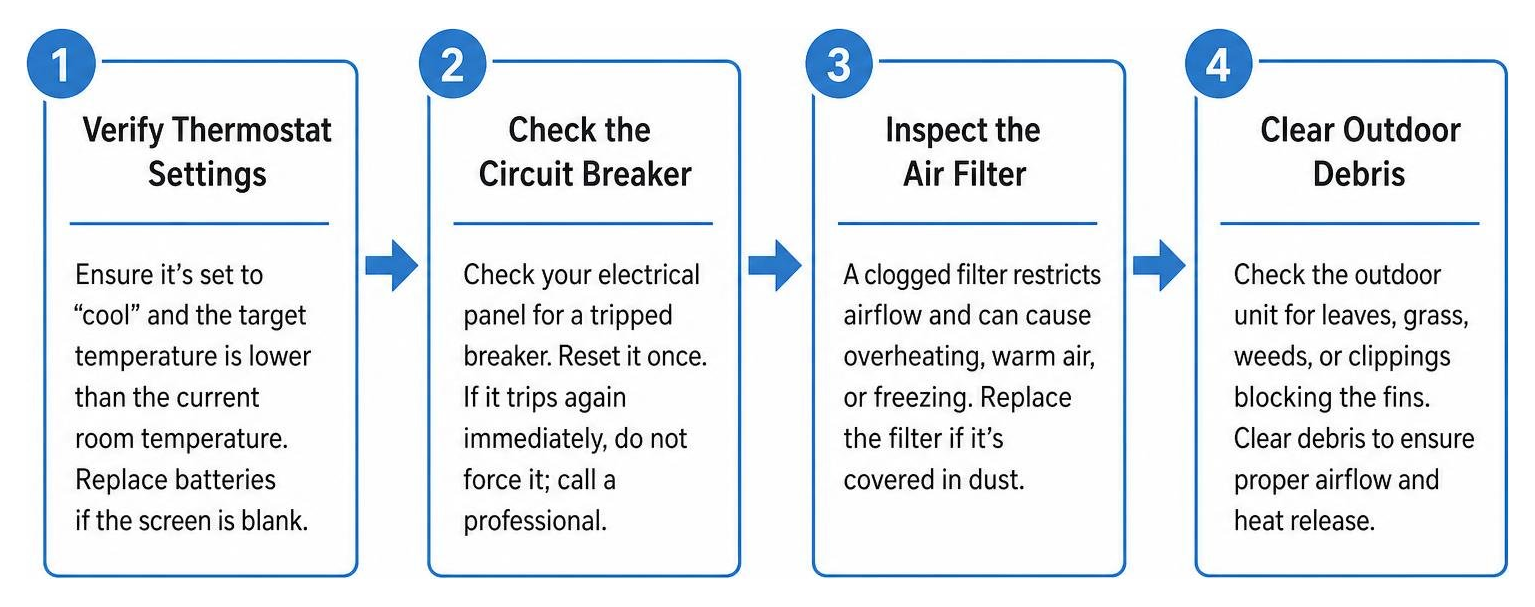
- Verify Thermostat Settings: Ensure your thermostat is set to “cool” and that the target temperature is set at least a few degrees lower than the current room temperature. If the screen is blank, replace the batteries.
- Check the Circuit Breaker: Air conditioners draw a significant amount of power. Check your home’s electrical panel to see if the breaker for the AC unit has tripped. If it has, reset it once. If it trips again immediately, do not force it; call us to inspect for an electrical short.
- Inspect the Air Filter: A heavily clogged air filter restricts airflow so severely that your system cannot pull enough warm air across the coils. This can cause the system to overheat, blow warm air, or even freeze up entirely. Replace your filter if it is covered in dust.
- Clear Outdoor Debris: Walk outside and inspect your condenser unit. Ensure there are no leaves, high grass, weeds, or lawn clippings blocking the metal fins. Your outdoor unit needs plenty of clearance to release the heat it absorbs from inside your home.
If you have gone through these steps and your system still refuses to cool, it is time to call in the professionals. Whether you are seeking tips from national resources like this guide on Tampa AC repair services or looking for regional best practices, basic troubleshooting is always the safest starting point.
Major Issues Requiring Professional Air Conditioner Repair
When basic troubleshooting fails, you are likely dealing with a complex mechanical or chemical issue that requires specialized tools and licensing to resolve. Attempting to fix these issues yourself can void your manufacturer warranty or create severe safety hazards.
- Refrigerant Leaks: If your system is low on refrigerant, it will not cool efficiently. Because refrigerant operates in a closed loop, low levels mean you have a leak. A sweet, chemical odor near your indoor or outdoor unit is a strong indicator of a refrigerant leak. Our technicians must locate the leak, repair the copper line, and recharge the system.
- Frozen Evaporator Coils: When airflow is restricted or refrigerant is low, the temperature of your evaporator coil can drop below freezing, causing moisture to turn to ice. If you see ice buildup on your outdoor lines or indoor cabinet, shut the system off immediately to let it thaw.
- Failed Compressor: Often considered the “heart” of your air conditioner, the compressor circulates refrigerant. If it fails, your system cannot cool.
- Bad Capacitors: Capacitors act like temporary batteries that give your motors the high-voltage boost they need to start up and run. If your outdoor fan or compressor hums but won’t start, a failed capacitor is the usual suspect.
- Electrical Control Failure: Wire corrosion, pest damage, or simple wear and tear can cause electrical connections to fail, preventing communication between your thermostat, indoor air handler, and outdoor condenser.
Repair vs. Replace: Costs, Lifespans, and Decisions
When your air conditioner breaks down, you face a major financial decision: do you pay for another repair, or is it time to invest in a brand-new system?
The age of your system is the most critical starting point. A well-maintained central air conditioner typically lasts between 15 and 20 years, but its operating efficiency tends to decrease significantly after the 10-year mark. In hot and humid climates like Birmingham and Hoover, the intense summer heat accelerates wear and tear, meaning systems here may experience more frequent breakdowns around the 10 to 12-year mark.
Another critical factor is the type of refrigerant your system uses. Older systems manufactured before 2010 often rely on R-22 (Freon), which has been phased out due to environmental regulations. Repairing an R-22 system is incredibly expensive because the refrigerant is scarce. If your older system has a leak, replacing the unit is almost always the more practical and eco-friendly choice.
| Decision Factor | Choose Repair | Choose Replacement |
|---|---|---|
| System Age | Under 10 years old | Over 10–15 years old |
| Refrigerant Type | Modern R-410A or eco-friendly alternatives | Outdated, phased-out R-22 (Freon) |
| Breakdown Frequency | Rare, minor issues | Frequent, compounding breakdowns |
| Energy Bills | Stable and predictable | Constantly rising due to declining efficiency |
| Repair Cost | Less than 50% of system value | Exceeds 50% of system value |
If you are researching options across different regions, you will find that top-tier companies—whether they are providing air conditioning repair services in Sacramento or local service in other states—always recommend weighing these exact variables before committing your hard-earned money to an older unit.
The $5,000 Rule and the 50% Cost Threshold
To take the guesswork out of this decision, HVAC professionals rely on two straightforward mathematical guidelines:
- The $5,000 Rule: Multiply the cost of the proposed repair by the age of your air conditioning unit. If the result is over $5,000, you should replace the system. If the result is under $5,000, repairing it is generally a sound investment.
- Example A: A $400 capacitor repair on an 8-year-old system ($400 x 8 = $3,200). Repair it.
- Example B: A $1,200 compressor repair on a 12-year-old system ($1,200 x 12 = $14,400). Replace it.
- The 50% Cost Threshold: If the cost of repairing your current air conditioner is more than 50% of the cost of purchasing and installing a brand-new unit, it is highly recommended to opt for replacement. Paying half the price of a new system just to keep an old, inefficient unit running only delays an inevitable breakdown.
Average Costs and Financial Logistics of System Fixes
Understanding the typical costs involved in air conditioner repair can help you budget and avoid surprise bills. While exact prices depend on the specific component that has failed, general industry cost ranges can give you a clear baseline.
Across the industry, the average cost of fixing an AC unit typically ranges from a couple hundred dollars to over a thousand. Minor repairs—such as replacing a capacitor, contactor, or condensate pump—usually fall on the lower end of the spectrum. Moderate repairs, like replacing a blower fan motor or repairing a small refrigerant line leak, represent the middle ground. Major component replacements, such as a new evaporator coil or compressor, represent the high end and can easily exceed $2,000 to $3,500.
Most reputable HVAC companies charge a diagnostic fee to cover the technician’s travel time and initial system inspection. At Nick’s Heating and Cooling, we believe in complete transparency and integrity, which is why we provide free, no-obligation inspections to help you understand exactly what your system needs without any upfront financial pressure.
What to Expect During a Professional Service Visit
When you schedule a professional air conditioner repair visit, you should expect a seamless, respectful, and highly thorough process from the moment the technician arrives at your home.
A high-quality service visit always begins with respect for your property. Technicians should wear protective shoe covers and use drop cloths to ensure they leave your home just as clean as they found it.
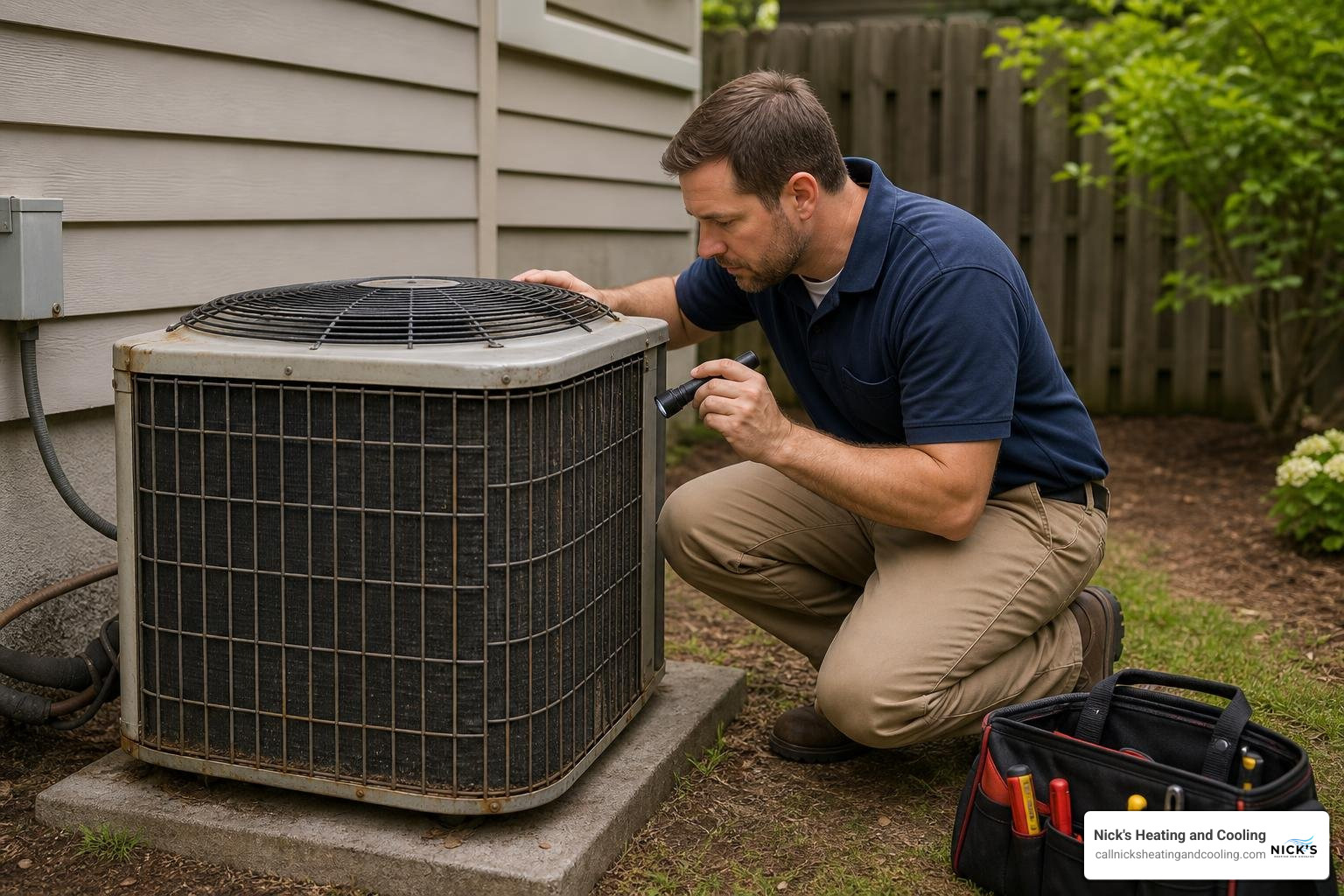
The diagnostic process involves checking electrical connections, testing voltage levels, measuring refrigerant pressures, and inspecting physical components like the fan blades and coils. Once the root cause of the issue is identified, the technician should present you with a clear, upfront explanation of the problem and an accurate price estimate before starting any work.
After you authorize the repair, the technician will replace the faulty parts and perform comprehensive post-repair testing to verify that the system is cooling efficiently and safely. This level of meticulous care is standard practice among top-rated providers nationwide, from companies offering expert air conditioner repair in Corpus Christi to our own local team here in Alabama.
How Preventive Maintenance Prevents Costly Breakdowns
The easiest way to avoid the stress of an emergency AC breakdown is to invest in routine preventive maintenance. Just like getting the oil changed in your car, your air conditioner requires regular tune-ups to operate at peak efficiency.
- Prevents Dust Accumulation: During the winter months when your AC sits idle, dust and debris accumulate inside the cabinet and on the coils. Turning the system on in the spring without cleaning this dust can cause immediate airflow issues and strain your compressor.
- Identifies Minor Issues Early: During an annual tune-up, a certified technician can spot tiny cracks in a belt, a slightly weak capacitor, or a minor refrigerant leak before these issues spiral into catastrophic, expensive system failures.
- Improves Energy Efficiency: Cleaning your system’s coils and optimizing its electrical components reduces the workload on your AC, helping it keep your home cool while lowering your monthly energy bills.
- Extends System Lifespan: Regular maintenance keeps your system running smoothly, helping you get the maximum possible lifespan out of your investment—often reaching that 15 to 20-year mark.
Typical Repair Timeframes and Process
We understand that when your home is hot, every minute counts. Fortunately, most standard air conditioning repairs do not take long to complete once the technician is on-site.
An average air conditioner repair takes between 30 minutes and 3 hours to complete. Simple tasks like replacing a capacitor, swapping out a thermostat, or clearing a clogged condensate line are often resolved in under an hour. More complex tasks, such as replacing a fan motor or repairing a refrigerant leak and recharging the system, may take two to three hours.
To ensure rapid service, we keep our service vans fully stocked with common replacement parts, allowing us to complete most repairs on the spot during our very first visit. If your system is beyond repair and requires a complete replacement, a standard installation typically takes between 4 and 6 hours.
Frequently Asked Questions about HVAC Systems
How long does it take for a house to cool down after a system fix?
Once your air conditioner is repaired and turned back on, it will take some time to remove the heat and humidity that accumulated while the system was down. As a general rule of thumb, a typical 3-4 bedroom home cools down by approximately five degrees every three hours.
If your home reached 85 degrees while the AC was broken, it may take six hours or more to pull the temperature back down to a comfortable 75 degrees. To help your system cool the home faster, keep your blinds closed, avoid using heat-generating appliances like the oven or dryer, and run ceiling fans to circulate the air.
Does homeowners insurance cover the cost of HVAC fixes?
Homeowners insurance rarely covers standard air conditioner repair or replacement costs. Insurance policies are designed to protect against sudden, accidental perils—such as fire, lightning strikes, or severe storm damage. They do not cover normal wear and tear, mechanical breakdowns, or neglect.
If your outdoor unit is crushed by a falling tree during a storm, your insurance policy will likely cover the replacement. However, if your compressor fails simply because the system is 12 years old, you will be responsible for the repair costs. For standard mechanical failures, a home warranty or a dedicated HVAC maintenance plan is a much more reliable source of coverage.
What is the ideal thermostat setting to reduce system strain?
To balance personal comfort with system longevity, the Department of Energy recommends setting your thermostat to 78 degrees Fahrenheit during the summer months when you are at home. Every degree you raise your thermostat above 72 degrees can save you up to 3% on your cooling utility bills and significantly reduces wear and tear on your compressor.
When you are away from home for extended periods, consider raising the thermostat to 82 degrees to prevent your system from wasting energy cooling an empty house. For the cooler fall and winter months, the Department of Energy suggests that 68 degrees Fahrenheit is the ideal indoor thermostat setting to maximize energy savings.
Conclusion
A reliable, working air conditioner is not a luxury in Birmingham and Hoover, Alabama—it is an absolute necessity for your family’s health, safety, and comfort. When your system begins to blow warm air, make unusual noises, or spike your energy bills, addressing the issue quickly is the best way to prevent compounding damage and expensive emergency breakdowns.
At Nick’s Heating and Cooling, we are proud to be your trusted, locally-owned HVAC experts. We serve our neighbors across Birmingham, AL and Hoover, AL with certified, professional technicians who prioritize integrity, transparency, and rapid, reliable service.
We believe you should never have to pay just to find out what is wrong with your system, which is why we offer completely free, no-obligation inspections. Whether you need a minor component fix, a routine seasonal tune-up, or a complete system replacement, we are here to restore comfort to your home quickly and affordably.
Don’t sweat out the Alabama heat. Schedule your professional AC repair today and let our family take care of yours!