

When Your AC Breaks Down, You Need the Right Help Fast
Finding a reliable AC fixing company is one of the most important decisions you’ll make as a homeowner — especially in the middle of a Birmingham summer when temperatures climb and your system suddenly stops cooling.
Here’s a quick overview of what to look for and what to expect:
How to find and hire a reliable AC fixing company:
- Verify licensing and insurance — Always confirm the technician holds a valid state mechanical license and carries liability insurance.
- Check certifications — Look for EPA Section 608 and NATE-certified technicians.
- Get upfront, flat-rate pricing — A trustworthy company quotes the cost before starting any work.
- Read verified reviews — Look for consistent, high ratings from local customers.
- Ask about warranties — Reputable companies offer at least a 90-day labor warranty and parts guarantees.
- Confirm emergency availability — Same-day or 24/7 dispatch matters when heat becomes a health risk.
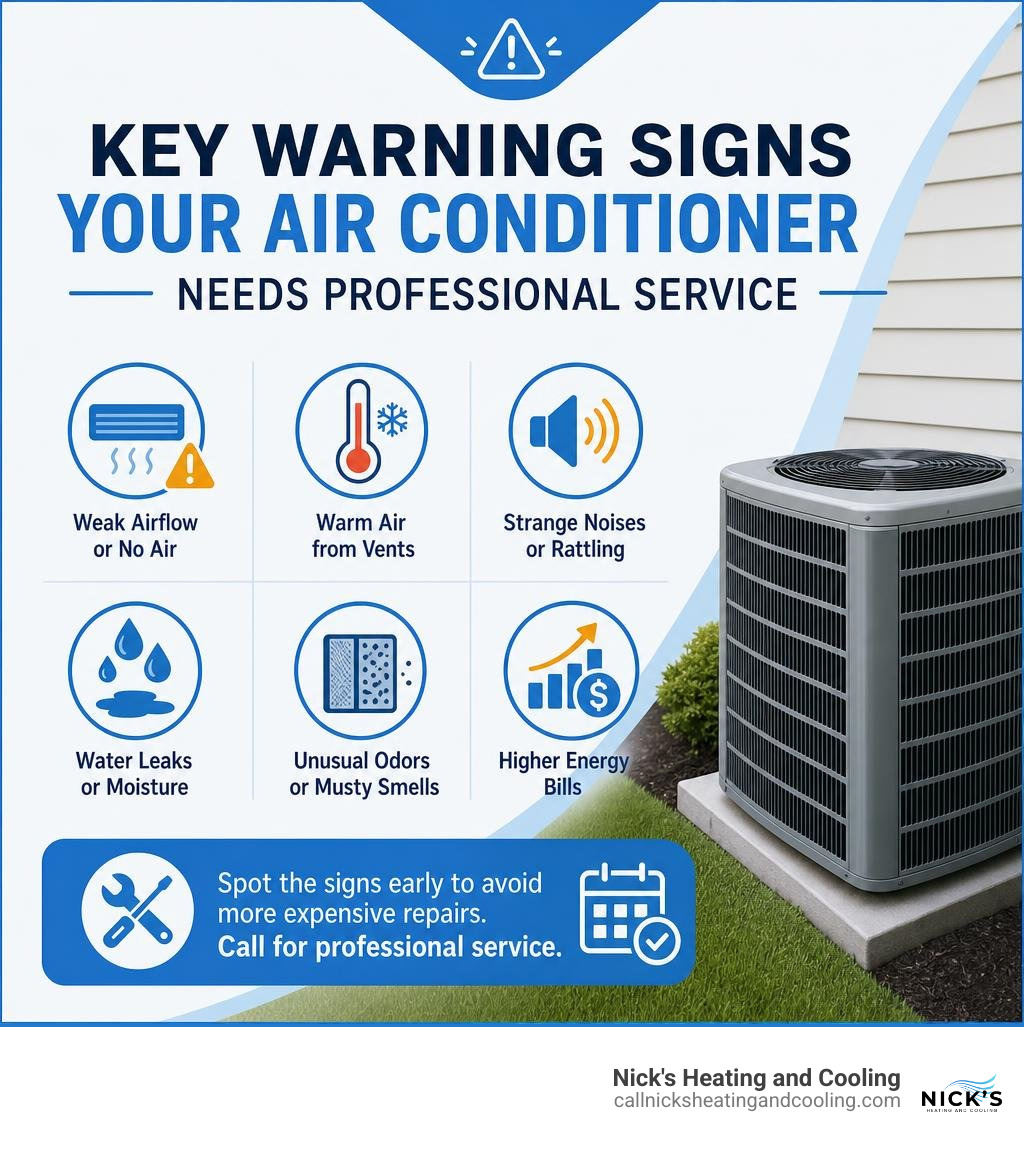
The average AC repair costs around $350, though complex jobs like compressor replacements can run $750 to $2,000 or more. Knowing the warning signs early — weak airflow, warm air from vents, strange noises, or spiking energy bills — can save you from a much bigger repair bill down the road.
Nick’s Heating and Cooling currently services Birmingham, Hoover, Vestavia Hills, Mountain Brook, Alabaster, Chelsea, Homewood, Trussville, Pelham, and Irondale for all your HVAC and Heating needs.
Common Signs You Need an AC Fixing Company
Living in central Alabama, I know how punishing the summer heat can be. When your air conditioner begins to struggle, it rarely fails without giving you a few warning signals first. Recognizing these red flags early allows you to call a professional ac fixing company before a minor hiccup escalates into a complete system breakdown during a heatwave.
Here are the most common indicators that your cooling unit requires immediate expert attention:
- Weak Airflow from Vents: If you feel only a faint whisper of air coming from your supply registers, your system may be struggling with a failing blower motor, clogged air filters, or severe ductwork leaks. Leaky ductwork in hot attics can waste 20% to 30% of your cooling efficiency, forcing your equipment to work twice as hard.
- Blowing Warm Air: When your thermostat is set to “cool” but the air blowing out feels lukewarm or outright warm, your system isn’t absorbing heat properly. This usually points to low refrigerant levels, a dirty outdoor condenser coil, or a malfunctioning compressor.
- Frozen Evaporator Coils: Finding ice accumulation along your indoor copper coils or exterior refrigerant lines might seem ironic during summer, but it is a severe performance symptom. Frozen coils happen when restricted airflow (often from dirty filters) or low refrigerant prevents the coil from transferring heat, causing moisture to freeze solid.
- Water Leaks and Moisture Pooling: While a little condensation draining outside is normal, water pooling around your indoor air handler is not. Clogged condensate drain lines or broken drain pans can cause water to backup, potentially leading to ceiling damage and mold growth.
- Short Cycling: An air conditioner that turns on, runs for two or three minutes, shuts off, and immediately turns back on is “short cycling.” This constant restarting places immense strain on electrical components and accelerates wear.
- Loud, Unusual Noises: While every cooling unit makes a gentle hum, loud grinding, squealing, rattling, or clicking sounds mean internal parts are failing. Grinding often signals bad bearings in the motor, while squealing points to a damaged belt or motor issue.
- Unexplained Utility Bill Spikes: If your electric bill suddenly jumps dramatically without an increase in outdoor heat or home usage, your AC unit is losing operational efficiency rapidly due to internal component failure.
When these warning signs appear, scheduling professional AC repair promptly preserves your equipment and keeps your home comfortable. You can also research local service ratings on trusted Birmingham service directories to see how neighbors rate response times and diagnostic accuracy.
Common Diagnostic Red Flags
During an inspection, an experienced technician digs beneath high-level symptoms to find the technical root cause. In my years evaluating residential systems across Jefferson and Shelby counties, several specific component failures pop up repeatedly:
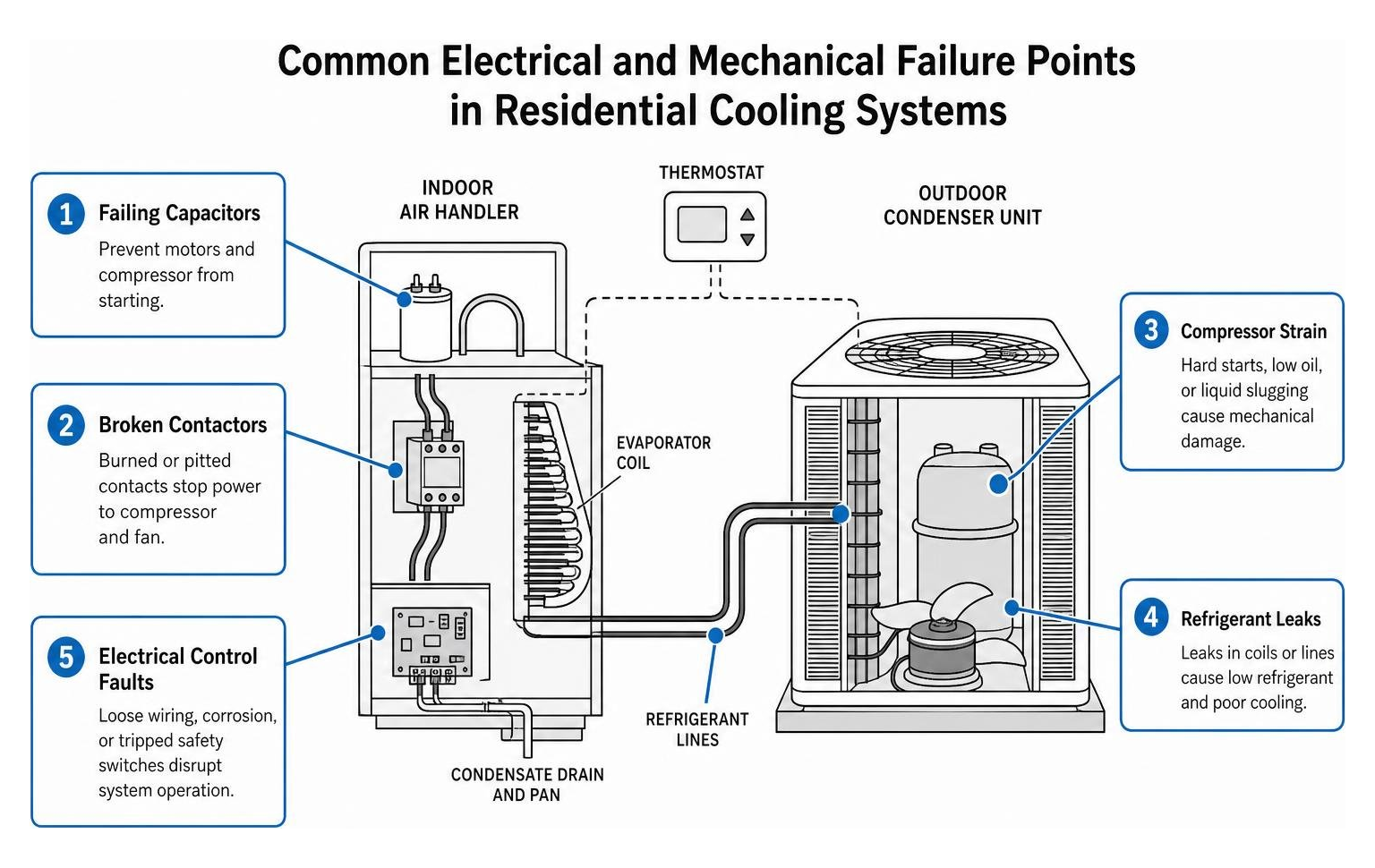
- Failing Capacitors: The capacitor acts like a short-term battery that gives your compressor and fan motor the energy boost needed to start up. When a capacitor bulges, leaks, or loses capacitance, your outdoor unit will hum loudly but fail to kick on. Replacing a capacitor is a common fix, typically running between $100 and $500.
- Broken Contactors: Contactors are high-voltage switches that control electricity flowing to the compressor and fan. Over time, electrical arcing burns or pits the contactor points, preventing the system from engaging or sticking in the “on” position.
- Compressor Strain: The compressor is the heart of your air conditioning system, circulating refrigerant between the indoor and outdoor coils. Hard starts, low oil, or liquid slugging cause severe mechanical strain. Replacing a damaged compressor is a major repair, usually ranging from $750 to $2,000 or more.
- Refrigerant Leaks: Air conditioners operate on a closed-loop system; they do not naturally “use up” refrigerant. If levels are low, there is a leak in the copper lines, evaporator coil, or condenser coil. Simply adding more refrigerant without locating and repairing the leak violates EPA regulations and leaves the core problem unresolved.
- Electrical Control Faults: Corrosion, loose wiring connections, or tripped safety switches can disrupt communication between your digital thermostat and the air handler, preventing reliable cooling cycles.
Emergency Services Provided by an AC Fixing Company
When central Alabama summer weather pushes ambient temperatures past 90°F with stifling humidity, a broken air conditioner isn’t just uncomfortable — it can become dangerous for children, elderly family members, and pets. That is why a premier ac fixing company offers emergency service options.
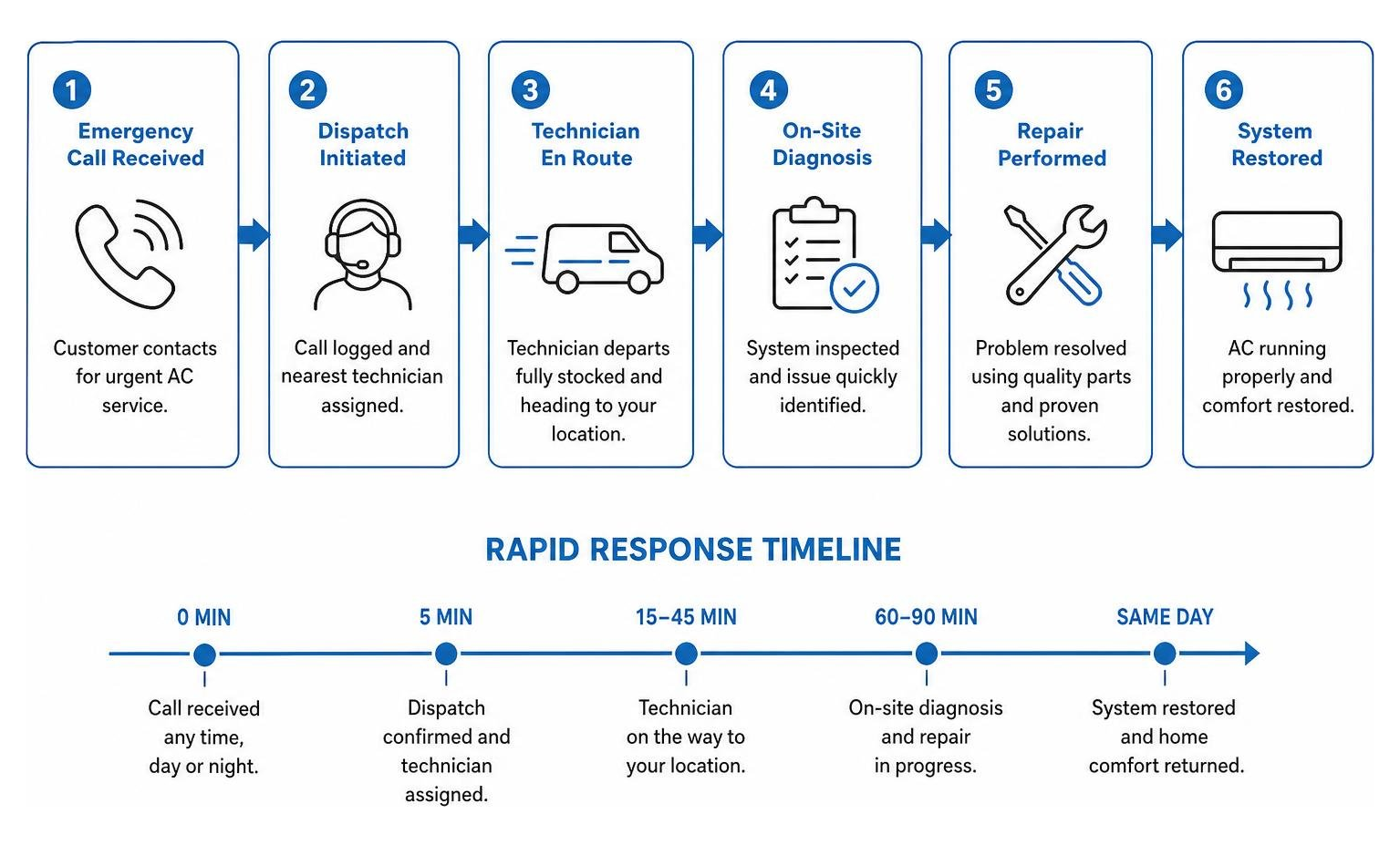
Emergency HVAC services provide:
- 24/7 Service Dispatch: Direct phone access to local technicians, regardless of whether your system breaks down at 2:00 PM on Tuesday or 10:00 PM on Sunday.
- Rapid Response Times: Local dispatching ensures a fully stocked service vehicle arrives at your door rapidly to diagnose the breakdown.
- Extreme Heat Protection: Priority dispatching during severe weather warnings keeps vulnerable households safe from heat exhaustion.
- Same-Day Repair Capabilities: Vans stocked with universal capacitors, contactors, fan motors, hard-start kits, and refrigerants allow technicians to resolve most common failures during the very first visit.
What to Look for in a Professional AC Repair Service
Selecting the right contractor to work inside your home requires careful consideration. You want a team that combines high-level technical expertise with complete honesty and transparent business practices.
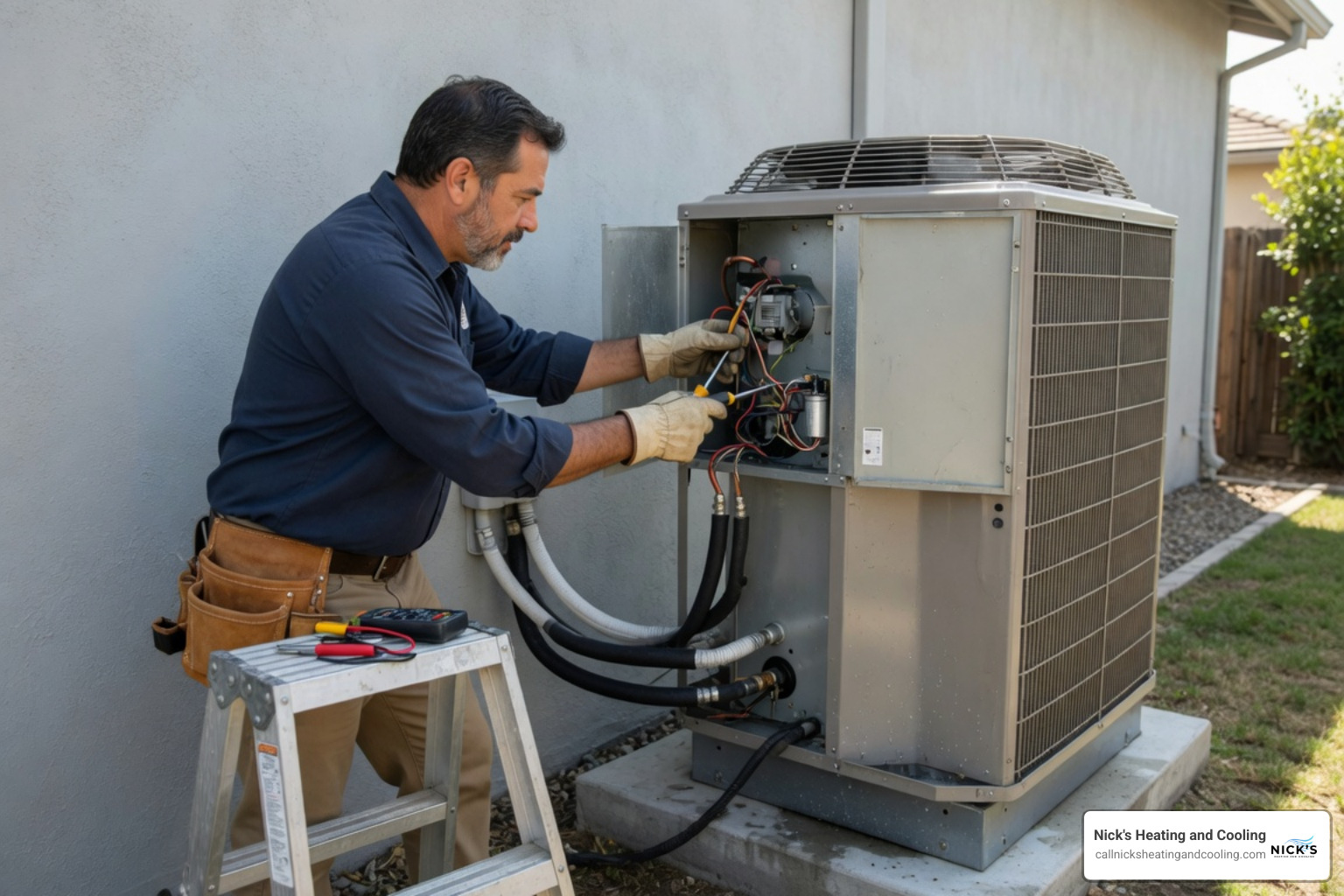
When evaluating a local HVAC service company, check for the following fundamental qualifications:
- State Mechanical Licensing: Verify that the company holds a valid state license (such as Alabama Board of Heating, Air Conditioning & Refrigeration Contractors). Licensing guarantees that the business meets rigorous state education, testing, and safety standards.
- Comprehensive Insurance Coverage: Never hire an uninsured contractor. Ensure the business carries active general liability insurance and worker’s compensation protection to safeguard your property and finances in the event of an accidental injury or damage.
- Upfront, Flat-Rate Pricing: Top-tier companies operate on transparent flat-rate pricing guides rather than vague open-ended hourly estimates. You should always receive a written quote detailing parts and labor before any repair work begins.
- Strong Local Community Reputation: Check online customer reviews and local feedback across Birmingham and Hoover. Look for long-standing consistency, polite technician conduct, and reliable follow-through.
If you are located in Jefferson County, working with a dedicated AC repair in Birmingham AL provider ensures your service team understands local home layouts, humidity patterns, and regional building codes.
Essential Technician Certifications and Licensing
Beyond company-level licensing, individual field technicians should carry recognized industry credentials:
- EPA Section 608 Certification: Mandated by federal law under the Clean Air Act, this certification proves a technician has been trained and tested on the safe handling, recovery, and recycling of ozone-depleting refrigerants.
- NATE Certification (North American Technician Excellence): NATE is the nation’s leading non-profit certification program for heating, ventilation, and air conditioning technicians. Passing NATE’s rigorous core and specialty exams demonstrates real-world technical mastery.
- Background Checks and Drug Screening: Trustworthy HVAC companies perform thorough pre-employment background screening and regular drug testing on all technicians who enter your private residence.
- Local Code Compliance: Qualified technicians ensure all repair work, replacement parts, and electrical hookups comply with municipal safety codes across Birmingham, Hoover, and surrounding areas.
Guarantees, Warranties, and Transparent Pricing
Clear financial policies protect you from surprise charges and sub-par workmanship. Reputable companies build customer confidence through clear guarantees:
- Transparent Upfront Diagnostic Fees: Standard diagnostic inspection fees generally range between $74 and $150. Many ethical contractors waive or credit this diagnostic fee toward the total bill if you approve the recommended repair during the same visit.
- Written Repair Estimates: Before a technician loosens a single screw, they should provide a clear document itemizing necessary replacement components, labor fees, and total costs.
- 90-Day Labor Warranties: A quality repair should stand the test of time. Look for service providers offering at least a 90-day warranty on all repair labor.
- Long-Term Manufacturer Parts Guarantees: Replacement parts should carry manufacturer warranties (often ranging from 1 to 10 years depending on equipment age and registration status).
What to Expect During Your AC Service Appointment
If you haven’t scheduled professional cooling service recently, knowing what happens during a repair call helps ease stress and ensures a smooth visit.
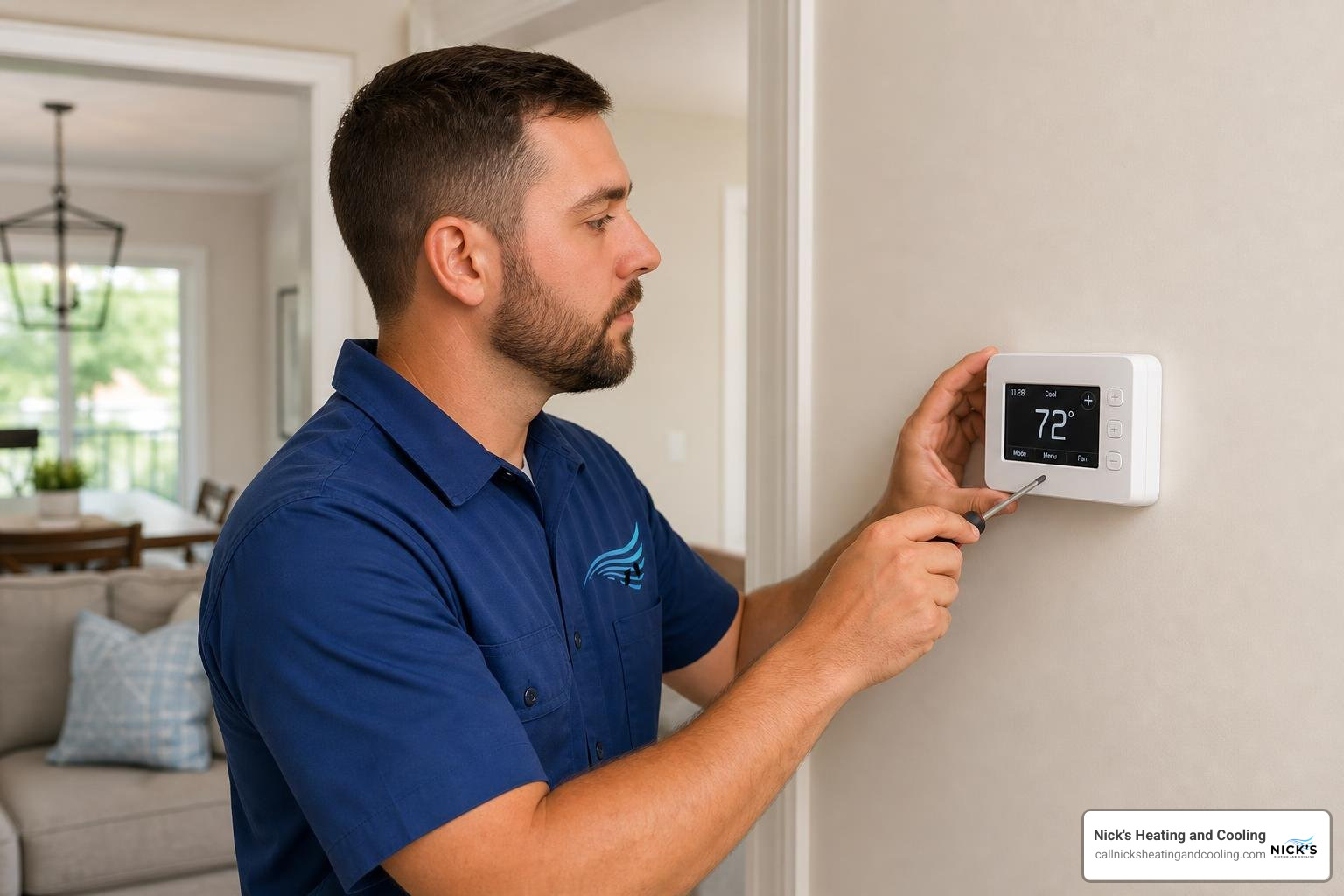
When you book an appointment with a reliable ac fixing company, the standard workflow proceeds as follows:
- Dispatch and Arrival Window: You’ll receive a confirmation with an estimated arrival window, often followed by a call or text message from the technician when they are en route to your residence.
- Initial Client Consultation: The technician listens to your observations — detailing unusual noises, warm spots in specific rooms, or when the cooling issue first started.
- Comprehensive System Assessment: The professional inspects both your indoor air handler and outdoor condenser unit, evaluating electrical connections, moving mechanical parts, airflow, and refrigerant pressure levels.
- Clear Explanation and Written Estimate: Once the diagnosis is complete, the technician explains what failed, provides options, and delivers a flat-rate quote for your written approval.
- Execution of Approved Repairs: Upon your consent, the technician installs replacement components using proper tools and industry standards.
- Post-Repair Testing and Quality Control: After finishing work, the technician tests the entire operating cycle, checking thermostat calibration, airflow, and temperature splits to confirm the issue is fully resolved.
How an AC Fixing Company Diagnoses System Issues
Modern diagnostic testing relies on precision equipment rather than guesswork. Here is how a skilled technician pinpointed system faults during a diagnostic visit:
- Multimeter Electrical Checks: Technicians use digital multimeters to measure voltage, amperage draw, and resistance across electrical contacts, capacitors, and motor windings, spotting weak components before they blow out entirely.
- Airflow and Static Pressure Measurement: Using specialized gauges, technicians verify that air volume moving across your indoor evaporator coil meets system specifications. Restricted airflow severely reduces cooling capacity.
- Temperature Split Verification: The technician measures the temperature difference between the return air duct (air entering the system) and the supply vents (cooled air blowing out). A healthy air conditioner typically maintains a 15°F to 20°F temperature drop across the coil.
- Condensate Line Inspection: Checking the drain line, trap, and emergency float switch ensures condensation drains safely outside without risking backup into your living space.
- Refrigerant Pressure and Superheat/Subcooling Analysis: Using digital manifold gauges, technicians assess refrigerant charge accuracy to determine whether low performance stems from a physical leak or an airflow restriction.
How to Prepare Your Home Before the Technician Arrives
To ensure your technician can work efficiently and safely, take a few simple prep steps before their scheduled arrival window:
- Clear Physical Access to Units: Ensure a clear 3-foot perimeter around your outdoor condenser unit by trimming back overgrown shrubs or weeds. Indoors, clear away boxes, laundry, or furniture surrounding your closet or attic air handler access doors.
- Clear Access to Controls: Remove furniture or wall hangings blocking clear access to your central thermostat.
- Secure Household Pets: Place dogs, cats, or other pets in a separate room or crate to keep them safe and prevent distractions while exterior doors are opened for tool transport.
- List Your Symptoms: Jot down key observations, such as specific times of day the unit struggles or strange sounds you’ve heard, so you can share them during the initial consultation.
- Inspect Your Air Filter: Check your furnace or return filter. If it is caked in dust, replace it. Sharing when the filter was last swapped helps the technician narrow down diagnostic variables quickly.
If you ever need comprehensive HVAC support in adjacent Shelby County communities, choosing an established Hoover HVAC Contractor guarantees fast local service paired with deep familiar knowledge of local neighborhood construction standards.
AC Repair vs. Replacement: Making the Financial Decision
When an older air conditioner suffers a major breakdown, homeowners face a tough economic decision: should you sink money into another repair, or invest in a modern replacement?
Evaluating key factors like system age, component failure severity, seasonal efficiency ratings (SEER2 standards), and long-term energy savings helps clarify the best financial path.
| Consideration | Favor Repair | Favor Replacement |
|---|---|---|
| System Age | Under 10 years old | Over 10 to 15 years old |
| Repair Frequency | First or rare breakdown | Multiple service calls every summer |
| Repair Cost vs New Unit | Less than 30% of replacement cost | Exceeds 50% of new system cost |
| Refrigerant Type | R-410A or newer modern refrigerant | Obsolete R-22 (Freon) |
| Energy Efficiency | High SEER/SEER2 rating, low utility bills | Low SEER rating, steadily climbing power bills |
| Indoor Comfort | Even cooling, controlled humidity | Cold/hot spots, high indoor humidity |
When equipment reaches the end of its useful lifespan, opting for a professional new AC installation significantly improves home comfort while drastically lowering monthly utility expenses through modern high-efficiency technology.
The $5,000 Rule and Repair Cost Factors
To eliminate guesswork when weighing repair against replacement, many industry experts use a practical mathematical guideline called The $5,000 Rule:
$$\text{Age of AC System (Years)} \times \text{Estimated Repair Cost (\$)} = \text{Decision Score}$$
- If the total score is UNDER $5,000: Repairing the unit is usually the smarter financial move.
- If the total score EXCEEDS $5,000: Replacement is generally the far wiser long-term investment.
For example, if your air conditioner is 12 years old and requires a $600 repair ($12 \times \$600 = \$7,200$), the score exceeds $5,000. Investing $600 into an aging system near the end of its typical 15-year life expectancy offers poor returns compared to putting that money toward a modern, warrantied unit.
Additionally, keep general industry component repair pricing benchmarks in mind when reviewing written estimates:
- Minor Component Repairs (Capacitors, Contactors, Relay Switches): $100 to $500.
- Moderate Component Repairs (Fan Motors, Condensate Pumps, Thermostats): $350 to $750.
- Major Repairs (Blower Motors, Refrigerant Leak Repair & Recharge): $750 to $1,500+.
- Severe System Overhauls (Compressors, Evaporator Coils): $2,000 to $5,000+.
Benefits of Preventative AC Maintenance
The single most effective way to avoid costly component repairs and defer major system replacement is scheduling routine preventative maintenance.
Signing up for annual or bi-annual routine AC maintenance delivers measurable home performance benefits:
- Reduced Monthly Power Bills: A clean, well-calibrated cooling unit consumes significantly less electricity, keeping your summer power expenses under control.
- Fewer Emergency Breakdowns: Technicians catch worn capacitors, dirty coils, and minor electrical loose ends during spring tune-ups long before they trigger full system shutdowns during mid-summer heat.
- Extended Equipment Longevity: While the average air conditioner lasts 15 to 20 years, neglected units often fail before reaching 10 years. Routine lubrication, coil washing, and filter swaps maximize service life.
- Protected Manufacturer Warranties: HVAC equipment manufacturers explicitly require proof of regular annual professional maintenance to honor multi-year parts warranties.
- Superior Indoor Air Quality: Deep cleaning indoor coils, drain pans, and air handler cabinets removes dust, mold spores, and allergens before they circulate through your living spaces.
Frequently Asked Questions About AC Repair
How much does professional AC repair typically cost?
The national average cost for residential air conditioner repair is approximately $350, with most typical repair bills landing between $150 and $750.
Labor charges for licensed HVAC contractors generally range from $50 to $150 per hour when billed hourly, though many ethical companies utilize standardized flat-rate pricing models so you know the full job cost upfront. Diagnostic inspection fees usually run $74 to $150, but top companies credit or waive this fee when you choose to complete the recommended repair with them.
Minor electrical fixes like capacitor replacements cost between $100 and $500, whereas major structural failures like compressor swaps range from $750 to $2,000 or more.
How often should an air conditioning system be serviced?
At a minimum, your central air conditioning system should receive a comprehensive professional tune-up once per year, ideally in early spring before hot weather sets in.
In southern regions with long, high-humidity cooling seasons like central Alabama, scheduling bi-annual maintenance — a cooling check in the spring and a heating tune-up in the fall — provides optimal protection against premature wear.
As a homeowner, you should also inspect your air filters monthly and replace them every 1 to 3 months depending on dust levels and pet ownership in your home.
Can I repair my air conditioner myself or should I hire a professional?
While homeowners can easily handle basic maintenance tasks like replacing disposable air filters, rinsing off loose yard debris from the exterior condenser housing, and cleaning supply registers, all actual diagnostic and repair work should be left to certified HVAC professionals.
Residential cooling units use high-voltage electricity (240 volts) that carries severe electrical shock hazards. Furthermore, handling refrigerants requires mandatory federal EPA Section 608 certification. Attempting DIY repairs on sealed refrigerant lines, complex electrical boards, or compressors risks personal injury, severe equipment damage, and immediate voiding of manufacturer warranties.
Conclusion
When your air conditioner stumbles during the peak of summer heat, finding a dependable ac fixing company makes all the difference between a quick, stress-free resolution and days of uncomfortable indoor humidity. By understanding key warning signs early, verifying state licensing and certifications, demanding flat-rate transparent pricing, and utilizing practical guidelines like the $5,000 rule, you can make confident, smart decisions for your home comfort and family budget.
At Nick’s Heating and Cooling, we prioritize your peace of mind above all else. Our certified, locally owned team provides free, no-obligation inspections, transparent explanations, and rapid, reliable service across central Alabama. When you need expert help without high-pressure upsells, visit our direct AC Repair page to request service today!
Nick’s Heating and Cooling currently services Birmingham, Hoover, Vestavia Hills, Mountain Brook, Alabaster, Chelsea, Homewood, Trussville, Pelham, and Irondale for all your HVAC and Heating needs.