

Start Hoover Duct Cleaning With a Clear Plan
For effective Hoover duct cleaning, start by checking supply and return registers for visible dust, weak airflow, or musty odors. Then hire a qualified HVAC professional to inspect the full duct system, use contained vacuum extraction and mechanical agitation to remove built-up debris, and confirm airflow is restored before the job is complete.
A household vacuum can clean the register cover and nearby dust. It cannot reliably clean long trunk lines, returns, or hidden duct sections. Professional equipment is designed to loosen debris inside the ductwork while capturing it instead of blowing it back into your home.
Clean ducts can support healthier indoor air, especially when dust, pet dander, renovation debris, or allergens are circulating through the HVAC system. Keeping airflow paths clear may also help your heating and cooling equipment operate with less strain.
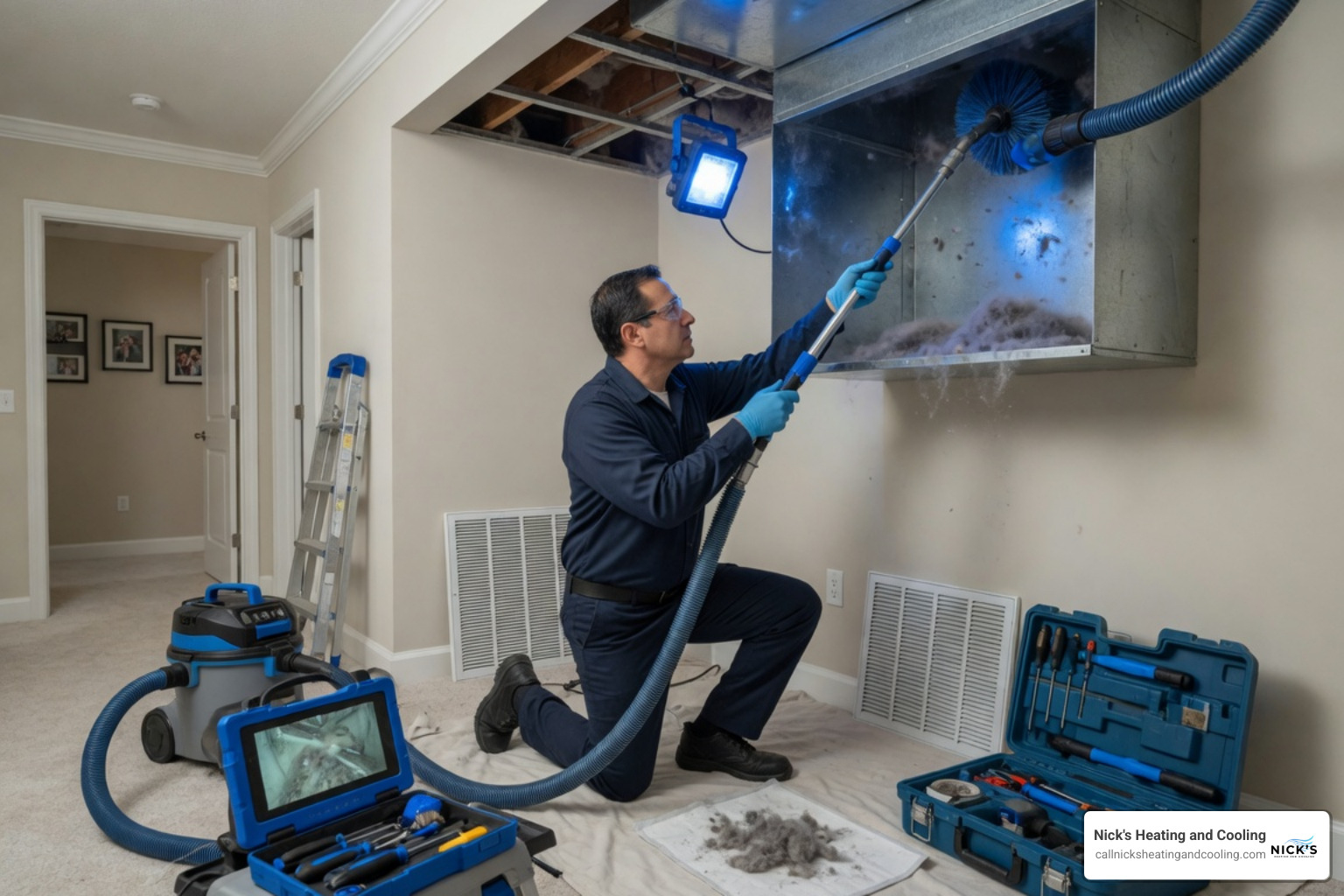
How Air Duct Contamination Impacts Your Living Environment
When you turn on your air conditioner or furnace, air circulates through supply and return pathways multiple times every day. Over months and years, your duct network collects settled particulate matter, lint, pollen, pet dander, and fine construction grit. Every time the blower kicks on, tiny particles re-enter the airstream and settle across furniture, countertops, and floors.
This steady circulation degrades overall indoor air quality throughout your home. For family members managing allergies, asthma, or other respiratory sensitivities, breathing unfiltered or dirty indoor air can cause irritated sinuses, persistent coughing, and morning congestion.
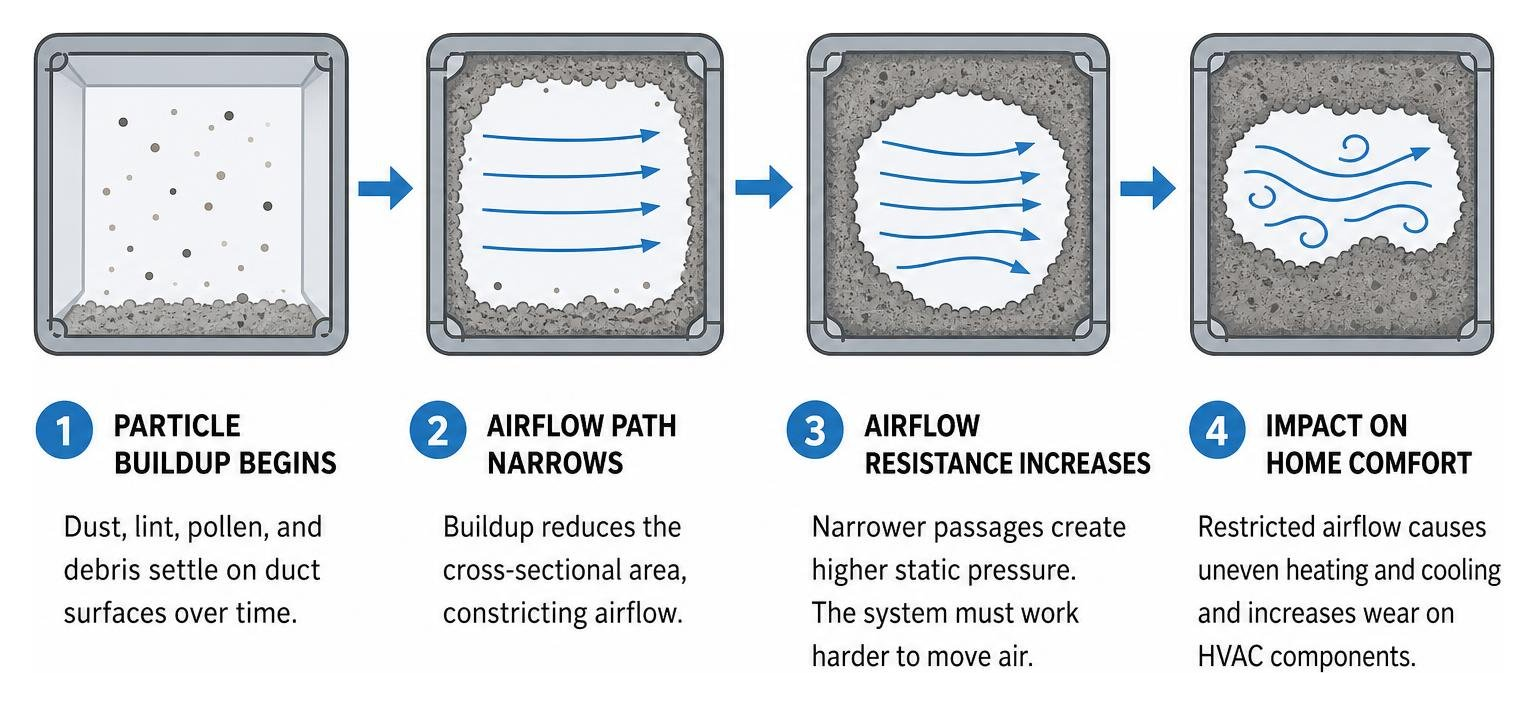
Beyond personal comfort, heavy dust deposits create airflow resistance. When duct walls become coated in grime, the cross-sectional area narrows, forcing your blower motor to work against higher static pressure. That added friction leads to uneven heating and cooling in distant rooms and increases mechanical wear across expensive system components.
Why Hoover Duct Cleaning Protects Indoor Air Quality
Dust mites, microscopic insect residues, and biological matter thrive in warm, undisturbed areas where organic debris collects. When moisture from high Alabama humidity mixes with settled organic matter in duct runs, you get the perfect breeding ground for musty odors and biological pollutants.
Routine duct maintenance clears these nesting grounds, delivering noticeable relief for households dealing with constant sneezing or heavy seasonal allergies. If you have ever felt like your air conditioning system is working hard but your home never feels fresh or cool, check out our Hoover Ac Repair Guide Keeping Your Cool When Your System Fails for deeper insights on maintaining balanced indoor climates.
Signs Your HVAC Ductwork Requires Immediate Attention
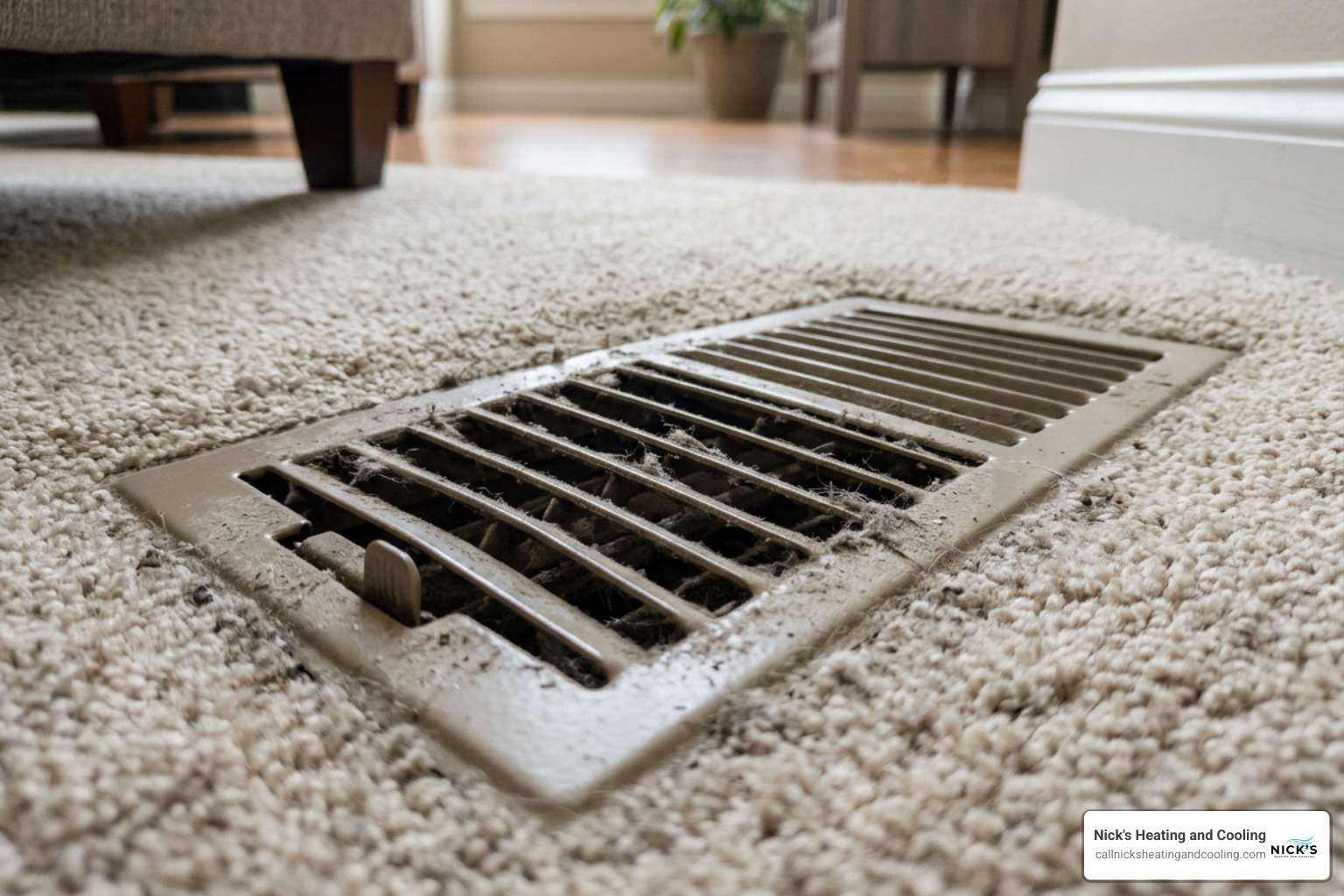
Ductwork remains hidden behind drywall, floors, and attic insulation, making it easy to forget until symptoms appear. Look out for these telltale signs that your ventilation system needs immediate service:
- Puffing dust plumes: You see small clouds of dust shoot out of supply vents whenever the fan cycles on.
- Rapid dust accumulation: Surfaces develop a visible layer of gray dust within 24 to 48 hours after dusting.
- Musty or earthy smells: Lingering odors emerge specifically when the HVAC fan runs.
- Uneven room temperatures: One bedroom feels stuffy and warm while the next room feels frigid, pointing to restricted air paths or disconnected trunklines.
- Visible black debris on grates: Vent grates and surrounding ceiling drywall display dark streaks or soot-like deposits.
- Rattling or whistling noises: Debris buildup or loose sheet metal creates unusual acoustics inside the airflow run.
If you suspect mechanical damage or air leaks alongside heavy buildup, professional air duct repair should be completed prior to high-pressure cleaning to protect duct integrity.
Consumer Vacuums vs. Professional Cleaning Equipment
Homeowners often ask me if they can tackle duct cleaning using their household vacuum cleaner. Regular floor vacuums excel at surface register maintenance. Standard canister units, detailed in manuals like the Canister Cleaner guide, are fantastic for running soft dusting brushes over outer grates, baseboards, and return louvers.
Similarly, upright models such as the Hoover® WindTunnel 2 Whole House Rewind offer handy hose wands and pivoting dusting brushes. These attachments help you clear out surface dust bunnies, pet hair, and lint directly behind a register opening. However, consumer vacuums lack the negative air pressure, reach, and agitation power needed to scrub deep interior trunklines without blowing fine dust back through exhaust filters into your living spaces.
Consumer Vacuums vs. Professional Hoover Duct Cleaning Equipment
Professional duct maintenance requires specialized, high-capacity machinery designed specifically for sheet metal, duct board, and flexible duct lines.
| Feature | Consumer Household Vacuums | Professional HVAC Duct Equipment |
|---|---|---|
| Primary Purpose | Surface dusting, carpet cleaning, vent covers | Whole-system trunkline and branch remediation |
| Reach Capacity | 5 to 16 feet of rigid wand/hose | 25 to 100+ feet of continuous drive cable |
| Mechanical Agitation | Static brush or small suction turbo tool | Drill-powered rotary systems with Perlon brushes |
| Airflow Extraction | 60 to 120 CFM (Cubic Feet / Minute) | 1,500 to 4,000+ CFM negative air machines |
| Filtration Standard | Standard household filter or small HEPA | Multi-stage commercial HEPA negative containment |
| Risk of Recirculation | High (fine dust bypasses exhaust seals) | Zero (sealed negative pressure draws dust outside) |
In my professional work, I rely on tools engineered specifically for ventilation mechanics. Specialized devices like the Wöhler Rotary Viper Duct M10 utilize a drill-powered, continuous flexible shaft enclosed in a protective outer sheath. This design lets me spin flexible Perlon brush heads bidirectionally inside ducts up to 10 inches in diameter. The soft bristles scrub away stubborn drywall dust and grime without tearing flexible duct liners or scratching rigid metal ductwork.
Step-by-Step Guide to Professional Hoover Duct Cleaning
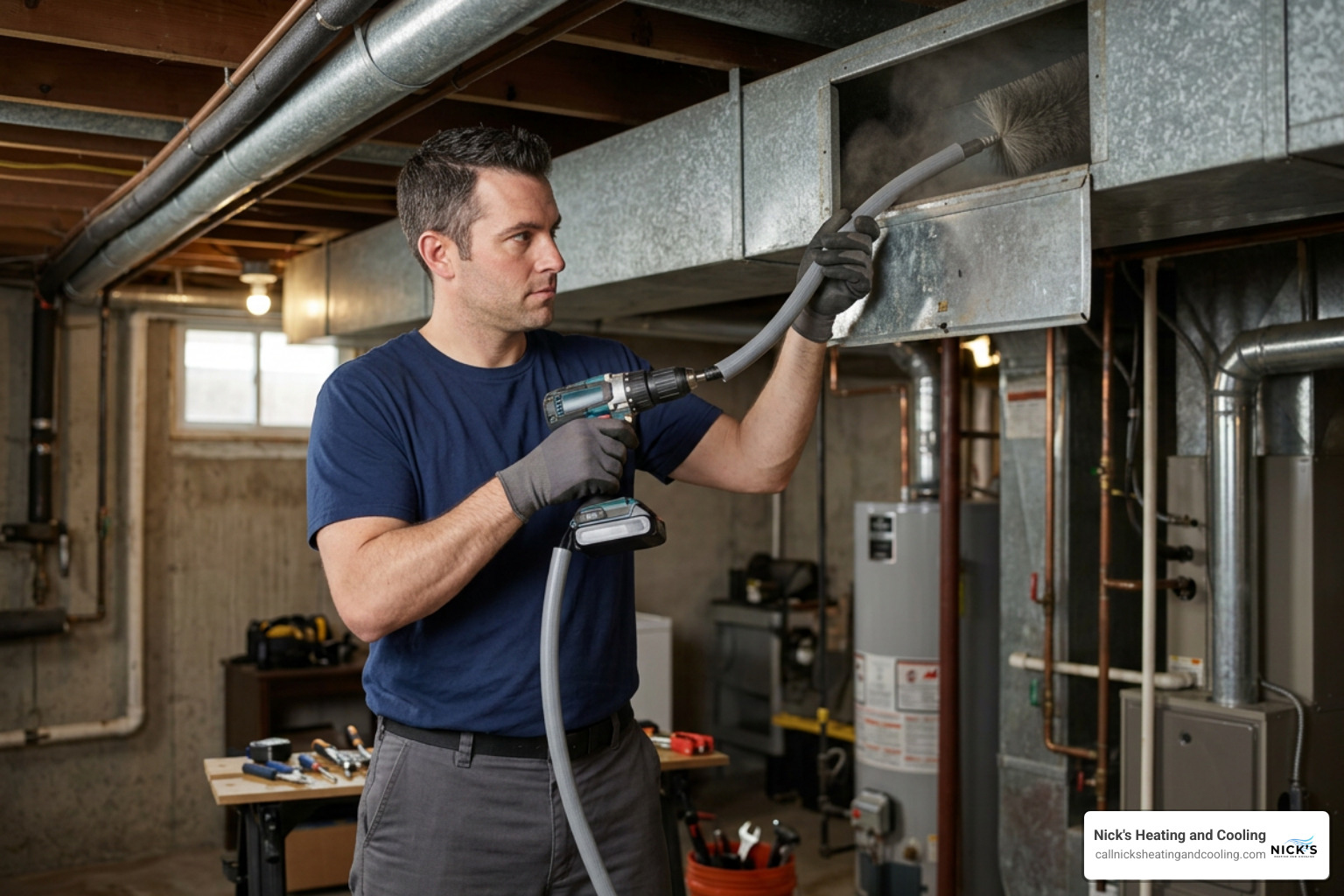
When our team performs whole-home duct maintenance, we follow a rigorous, methodical process to make sure every square inch of your air distribution network is thoroughly sanitized without contaminating your living space.
- Pre-Service System Inspection: I start by assessing your furnace or air handler, checking the filter condition, and visually inspecting supply and return plenum boxes for moisture or duct damage.
- Establishing Negative Air Pressure: We hook a high-capacity HEPA-filtered vacuum extraction unit directly into your main supply or return trunkline. This creates continuous negative pressure throughout your entire duct system, ensuring dislodged dirt is sucked out rather than pushed into your living areas.
- Sealing Supply and Return Registers: Every vent cover across your home is temporarily covered to concentrate the vacuum’s suction force on one single branch at a time.
- Mechanical Scrubbing and Agitation: Moving room by room, we insert rotary whips, high-pressure air snakes, or continuous flexible shaft brushes into each duct opening. We push these tools all the way to the main trunkline, breaking free settled dirt, pet dander, and construction debris.
- Main Trunkline Extraction: Once every individual branch run is cleaned, we send our heavy-duty rotary tools through the central trunkline to sweep loosened debris into the negative air capture unit.
- Register and Return Sanitization: We hand-clean every supply register and return louver, removing oil and dust buildup before reinstalling them securely.
- Final Airflow Verification: We fire up the system, balance dampers if needed, and confirm balanced, unobstructed airflow delivery throughout every room in your home.
When you need comprehensive, whole-home air duct cleaning, following this systematic multi-step protocol ensures deep, lasting results.
Integrating Duct Care with Comprehensive HVAC Maintenance
Cleaning your ductwork should go hand-in-hand with regular equipment checkups. A spotless duct system attached to a filthy evaporator coil or a dust-caked blower wheel will quickly get re-contaminated.
Scheduling routine ac maintenance allows us to wash the blower fan blades, clear the condensate drain pan, and clean the cooling coils. If our inspection reveals severely deteriorated, uninsulated, or crushed duct runs that cannot be restored through cleaning alone, we may recommend targeted air duct installation to permanently fix your system’s airflow performance.
How to Avoid Duct Cleaning Scams and Choose Certified Pros
The duct cleaning industry unfortunately attracts fly-by-night operators who advertise unrealistically cheap specials. Protecting yourself from scams comes down to knowing what real, certified service entails:
- Beware of “$99 Whole-House” Offers: These are almost always bait-and-switch tactics. Once the technician arrives, they claim to have found severe toxic mold and demand thousands of dollars for unnecessary, unverified treatments.
- Look for Transparent Pricing Models: Reputable contractors use clear pricing structures. A standard pricing model starts around $395 for a baseline of up to 10 ducts, with an honest per-duct fee (typically $35 to $45) for any additional vents.
- Insist on Proper Certification: Look for technicians who adhere to National Air Duct Cleaners Association (NADCA) standards and employ certified Air Systems Cleaning Specialists (ASCS).
- Demand Containment: Never hire a contractor who shows up with only a standard shop vacuum and no negative-air containment equipment. Uncontained brushing will blow settled allergens and dust directly into your living spaces.
- Verify Licensing and Insurance: Make sure your contractor holds active municipal licenses, general liability coverage, and worker’s compensation insurance.
Frequently Asked Questions About Duct Cleaning
How often should residential air ducts be cleaned?
For most standard residential homes, having your ductwork professionally inspected and cleaned every 3 to 5 years is ideal. However, you should schedule service sooner if you have completed major home remodeling, live with shedding pets, have smokers in the house, or notice unexplained allergy flare-ups among family members.
What is the typical cost for a whole-home duct cleaning?
The total investment depends on your home’s square footage, the number of HVAC systems, and the total duct count. High-quality service from a certified team typically follows a baseline pricing model around $395 for the first 10 vents, with additional duct runs priced individually at roughly $39 each. Be cautious of any quote that seems suspiciously cheap, as thorough negative-air cleaning requires specialized equipment and several hours of detailed labor.
Can dirty air ducts cause heating and cooling breakdowns?
Yes, dirty ducts can trigger severe mechanical failures. Thick dust layers restrict overall system airflow, which starves the blower motor, causes evaporator coils to freeze up during summer, and trips high-limit switches on furnaces during winter. If restricted airflow has already caused your cooling system to short-cycle or blow warm air, our technicians can quickly diagnose the issue and perform prompt ac repair to get your comfort back on track.
Conclusion
Restoring your air ducts directly improves your daily indoor air quality, reduces household dust, and eliminates airflow restrictions that drive up your monthly energy bills. If you are ready to refresh your home’s ventilation system, partner with a trusted, certified Hoover Hvac Contractor dedicated to doing the job right the first time.
Nick’s Heating and Cooling currently services Birmingham, Hoover, Vestavia Hills, Mountain Brook, Alabaster, Chelsea, Homewood, Trussville, Pelham, and Irondale for all your HVAC and Heating needs.