

Why AC Drain Line Cleaning Should Be on Every Homeowner’s Radar
AC drain line cleaning is one of the simplest maintenance tasks you can do — and one of the most overlooked. Here’s the quick answer:
How to clean your AC drain line:
- Turn off the AC at the thermostat and breaker.
- Attach a wet/dry vacuum to the outdoor drain exit and run it for 60 seconds.
- Pour 1 cup of distilled white vinegar into the indoor T-shaped cleanout access point.
- Let it sit for 30 minutes, then flush with warm water.
- Repeat monthly during the cooling season to prevent future clogs.
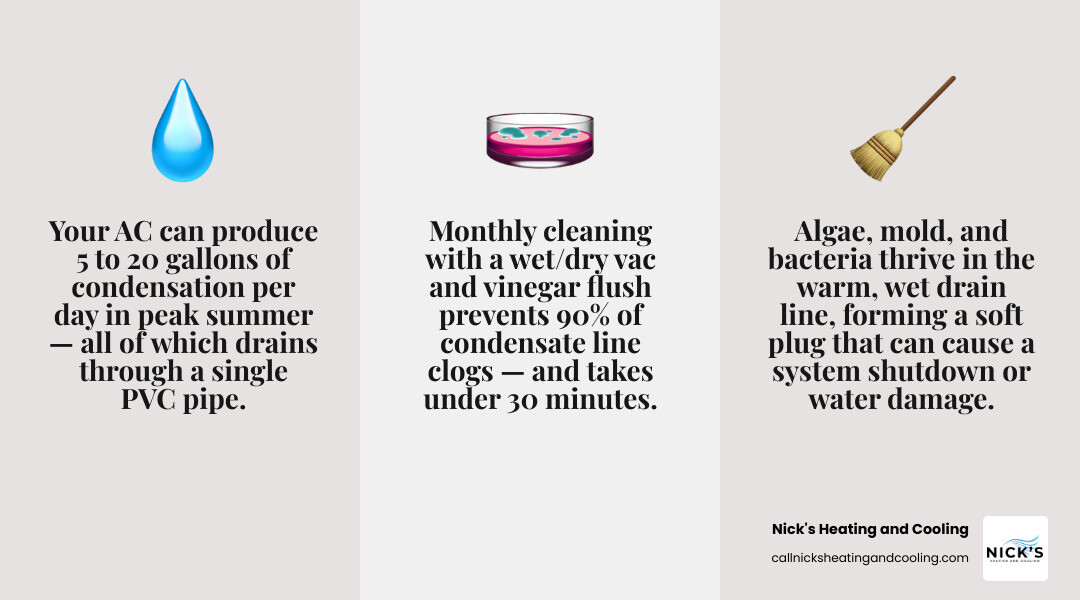
Your AC pulls warm, humid air across a cold evaporator coil. That process creates condensation — sometimes 5 to 20 gallons of water per day in peak summer. All that moisture has to go somewhere, and it exits your home through a small PVC pipe called the condensate drain line.
The problem? That warm, wet environment is perfect for algae, mold, and bacteria to grow. Over time, biological buildup forms a soft plug inside the pipe — and suddenly your AC shuts off, water pools near your indoor unit, or you notice a musty smell coming from your vents.
In humid climates like Birmingham, AL, this isn’t a rare event. It’s a regular reality.
The good news: most clogs are completely preventable with a simple monthly routine, and most existing clogs can be cleared in under 30 minutes with tools you likely already own.
What Causes Clogged Condensate Lines?
To stop a clog, you have to understand what you are fighting. When your air conditioner is running, it does double duty: it cools the air, and it dehumidifies it. As moisture condenses on the cold metal of your evaporator coil, it acts like a magnet for airborne particles.
Dust, pet dander, pollen, and mold spores that slip past your air filter stick to the wet coil. This mixture of water and organic debris wash down into your drain pan, creating a thick, muddy sludge.
When this sludge enters the narrow 3/4-inch PVC drain line, it slows down. In the warm, dark environment of your attic, closet, or crawlspace, this slow-moving organic soup becomes the perfect breeding ground for biological growth. Without regular AC drain line cleaning, this growth will eventually choke off the water flow entirely.
To keep your system running smoothly and maintain healthy indoor air, Learn more about maintaining indoor air quality.
Why Regular AC Drain Line Cleaning Matters in Humid Climates
In Birmingham, AL, and surrounding areas like Hoover, AL, our summer humidity levels are notoriously high. Because our air conditioners must work overtime to strip moisture from the air, they produce an incredible volume of condensate water.
This constant flow of warm water means the biological “incubator” inside your drain line is running 24/7. In fact, in large Southern apartment complexes with hundreds of units, AC drain line clogs can occur almost daily across the property. Individual household units in these humid climates frequently experience complete clogs at least once a year—even when homeowners use standard over-the-counter anti-clog tablets.
When a drain line clogs, those gallons of daily condensation have nowhere to go. They will back up, overflow the drain pan, and spill into your home. This leads to ruined drywall, warped floors, and expensive structural water damage. Regular preventative maintenance is your best defense against these costly disasters.
The Role of Biofilm and Zoogloea Bacteria
If you have ever cleared a clogged drain line, you have probably seen a jelly-like, white or light-gray slime come sliding out. This isn’t just simple algae. It is a biological biofilm primarily created by a naturally occurring bacteria called Zoogloea.
Zoogloea bacteria thrive in environments with constant, slow-moving water. They anchor themselves to the plastic walls of your PVC pipe and secrete a sticky, slimy matrix that protects them from drying out. This slime acts like a net, catching dust, pet hair, and other debris flowing down the line. Within weeks, a tiny colony can grow into a thick, rubbery plug that completely blocks the pipe.
Because biofilm is highly resilient, standard water flushes will not wash it away. You need a sanitizing agent that can break down the sticky matrix. While many homeowners reach for household chemicals, HVAC professionals often rely on specialized sanitizers like Steramine—a safe, highly effective compound commonly used in food service to sanitize equipment without damaging plastics or metals. You can read more about how professional-grade sanitizers target these specific bacterial blockages by visiting AC Drain Line Cleaners LLC.
Multi-Unit Building Challenges
If you live in a multi-unit building, condo, or apartment complex in the Birmingham area, drain line maintenance becomes even more complex. In these buildings, multiple individual AC units often drain into shared vertical stack lines.
If a resident on the third floor neglects their system, a biological clog can form further down the shared pipe. When that shared line backs up, the water will exit through the lowest available opening—which might be the drain pan of an unsuspecting second- or first-floor neighbor.
To prevent these nightmare scenarios, residents in multi-unit buildings must coordinate their maintenance efforts. Establishing a synchronized schedule where every unit flushes their line on the same weekend dramatically reduces the risk of shared-line backflows. Additionally, installing high-quality backflow prevention valves and secondary safety switches can protect your individual property from a neighbor’s plumbing oversight.
Step-by-Step Guide to AC Drain Line Cleaning
Cleaning your condensate line is a straightforward process that requires only a few basic household tools. By taking control of this task, you can save yourself the cost of an emergency plumbing or HVAC service call.
Before we dive into the steps, let’s look at how DIY maintenance compares to a professional clearing service:
| Feature | DIY Wet/Dry Vacuuming | Professional HVAC Clearing |
|---|---|---|
| Primary Tool | Standard Wet/Dry Shop Vac | Pressurized CO2 Gun / Flush Kits |
| Effectiveness | High for soft organic clogs | Maximum for compacted, solid clogs |
| Cost | Free (if you own a vacuum) | Moderate service fee |
| Risk of Pipe Damage | Extremely Low (Negative Pressure) | Low (when handled by certified pros) |
| Time Required | 15 – 30 minutes | 30 – 45 minutes (includes full system check) |
| Preventative Value | Excellent for monthly upkeep | Deep cleans pan, coil, and lines |
Step 1: Power Off and Safety Precautions
Safety should always be your first priority when working on any appliance. Before you touch your drain line, walk over to your thermostat and turn your AC system completely off. Next, locate your home’s main electrical panel (circuit breaker box) and flip the breaker that powers your indoor air handler and outdoor condenser unit.
Working around an active air handler carries electrical risks. Many modern systems feature low-voltage safety float switches or wet switches. These devices are wired into your system’s 24V control circuit. If water backs up, the switch trips and cuts power to your system to prevent a flood.
If you suspect your system has shut down due to an electrical issue or a faulty safety switch, do not try to hotwire or bypass the controls. Instead, keep your home safe and Schedule professional AC repair if electrical issues occur.
Step 2: Vacuuming the Line with a Wet/Dry Vac
The most effective way to clear an active clog without damaging your plumbing is to use negative pressure (suction) from the outside of your home.
- Locate the outdoor exit point of your PVC drain line. This is typically a small pipe sticking out near your outdoor condenser unit or foundation.
- Bring a standard household wet/dry vacuum to the exit pipe. Remove the paper filter from your vacuum canister first, as you will be sucking up water and wet slime.
- Attach your vacuum hose to the PVC pipe. To get a strong seal, you can use a universal silicone vacuum hose adapter, wrap a wet rag tightly around the joint, or use duct tape.
- Turn on the vacuum and let it run for 60 to 120 seconds.
You should hear a distinct change in the vacuum’s pitch as it pulls the wet, slimy plug out of the pipe. For a detailed, visual walkthrough of this highly effective method, check out this excellent guide on How to clear a condensate line with a wet/dry vac.
Step 3: Flushing the Line
Once you have vacuumed out the bulk of the clog from the outside, it is time to sanitize and flush the pipe from the inside to wash away any remaining biofilm.
- Go to your indoor air handler (usually located in a closet, attic, or basement).
- Locate the T-shaped PVC cleanout access point on your drain line. It is usually a vertical pipe pointing upward with a simple removable cap. If the cap is glued shut, do not force it; contact a professional to install a proper cleanout.
- Remove the cap and place a small funnel into the opening.
- Pour 1 cup of distilled white vinegar slowly down the line. Let it sit for 30 minutes to break down any remaining biological film.
- After 30 minutes, flush the line with a quart of warm (not boiling) water to ensure gravity is carrying the liquid smoothly outdoors.
If you do not have a wet/dry vacuum, or if you prefer a hands-off approach to system maintenance, you can easily Book an AC maintenance visit for a thorough system flush. For alternative manual clearing methods and tips on how to handle systems without a vacuum, you can also read this helpful article on how to Clean AC Drain Line: With or Without a Vacuum | The Cooling Company .
Vinegar vs. Bleach: Choosing the Right Cleaning Agent
When it comes to routine AC drain line cleaning, homeowners often debate whether distilled white vinegar or chlorine bleach is the better choice. While both chemicals can kill bacteria and algae, they interact with your HVAC system in very different ways.
- Distilled White Vinegar: This is the preferred choice for routine maintenance. Vinegar contains acetic acid, which is strong enough to kill mold, algae, and Zoogloea bacteria, yet mild enough that it won’t damage your system. It is eco-friendly, safe for PVC pipes, and does not degrade the glue at your pipe joints.
- Chlorine Bleach: While bleach is an incredibly powerful sanitizer, it comes with significant drawbacks. Bleach is highly corrosive to metals. If bleach fumes back up into your indoor air handler, they can eat away at your evaporator coil. Additionally, bleach can degrade the plastic in your drain pan and weaken the chemical bonds of PVC glue over time, leading to hidden leaks inside your walls.
Furthermore, pouring bleach down a drain line can react with organic materials inside the pipe to produce toxic chloramine vapor, which can then be pulled into your home’s ductwork and circulated through your living spaces. For a deeper dive into the chemical safety of various drain line treatments, refer to this guide on How To Clean AC Drain Line Safely And Effectively – Precision Air | 24/7 Emergency AC Repair Corpus Christi TX .
Evaporator Coil Materials: Copper vs. Aluminum
Your choice of cleaning agent is also heavily influenced by the metal your evaporator coil is made of. Older HVAC systems typically feature copper coils, while newer, highly efficient systems almost exclusively use aluminum coils.
Aluminum is exceptionally sensitive to chemical corrosion. Harsh chemical cleaners, commercial drain openers (like Drano), and even mild bleach fumes can rapidly pit and corrode aluminum. Once an aluminum coil is structurally compromised, it will develop microscopic pinhole leaks, allowing expensive refrigerant to escape. Replacing a corroded evaporator coil is a major, costly repair. To protect your investment, stick to gentle solutions like distilled white vinegar or warm, soapy water for your DIY flushes.
Commercial Tablets vs. Homemade Solutions
For ongoing protection, many homeowners use slow-release biocide tablets (such as Flow Treat Tabs) placed directly into the secondary drain pan.
- Commercial Tablets: These tablets dissolve slowly over several weeks, releasing a steady dose of antimicrobials that prevent bacteria and algae from colonizing your drain pan. They are highly effective at stopping clogs before they start.
- Homemade Solutions: A monthly flush with 1 cup of distilled white vinegar is incredibly cost-effective and excellent at clearing out loose debris.
For the ultimate preventative routine, combine both methods: place a slow-release tablet in your drain pan every three months to stop bacterial growth at the source, and perform a quick vinegar flush once a month to keep the line clear of dust and sludge.
How Often to Clean and How to Automate the Process
Maintaining a clear condensate line doesn’t have to be a constant worry. By setting a regular schedule or utilizing modern automation, you can protect your home with minimal effort.
Recommended Maintenance Schedules
In the hot, humid climate of Birmingham and Hoover, AL, your air conditioner runs almost continuously from May through September. During this peak cooling season, we recommend performing a vinegar flush once a month.
When the weather cools down in late autumn and your system transitions to heating, you can scale back. A thorough flush in the spring before you turn on your cooling system, combined with a mid-summer clean and an autumn check, is usually sufficient to keep your system safe.
Automating Your AC Drain Line Cleaning
If you are tired of remembering to flush your line every month, you can actually automate the entire process. Many homeowners in high-humidity areas are turning to automated chemical dispensing systems.
An automated system typically consists of a small, programmable liquid pump connected to a reservoir filled with a sanitizing liquid (such as white vinegar or a diluted biocide). The pump is plumbed directly into your PVC drain line near the indoor cleanout.
You can program the timer to dispense a small amount of solution—such as 50mL of white vinegar daily, or a small dose of sanitizer every few weeks. This consistent, automated micro-dosing completely prevents Zoogloea bacteria and algae from ever establishing a foothold, keeping your drain line perfectly clear year-round without you ever having to climb into your attic.
Frequently Asked Questions About AC Drain Line Cleaning
Can I use high-pressure compressed air to clear my drain line?
We strongly advise against using high-pressure compressed air or pressurized water hoses to clear a clogged AC drain line. Residential PVC drain lines are put together using slip-fit connections and PVC cement. These joints are designed to handle gravity-fed water flow, not high pressure.
Blasting the line with compressed air can easily rupture or blow apart hidden PVC joints inside your walls or attic. If a joint breaks behind your drywall, you won’t know it until you have a massive, hidden water leak that causes mold and structural rot. Stick to safe negative pressure (vacuuming) or gentle gravity flushes.
Why is my AC system shutting off on its own?
If your air conditioner suddenly shuts down—meaning your thermostat is calling for cool air but the indoor blower and outdoor condenser refuse to turn on—your safety float switch has likely tripped.
When your drain line clogs, water backs up into the secondary drain pan. Once the water reaches a certain level, the float switch rises, breaking the low-voltage electrical circuit and immediately shutting down your system to prevent an overflow. If this happens, do not try to bypass the switch. Clear the drain line using a wet/dry vac, let the pan drain completely, and your system should restart safely.
Can I pour boiling water down the AC drain line?
No, you should never pour boiling water down your AC drain line. Standard residential condensate lines are made of Schedule 40 PVC. PVC pipes and the glue used to connect them are only rated to withstand temperatures up to approximately 140°F.
Boiling water (which is 212°F) can easily soften the plastic, warp the pipe, and melt or loosen the glue at your pipe fittings. This leads to sagging pipes that pool water or active leaks. If you want to use water to flush your line, stick to warm tap water.
Conclusion
Keeping your air conditioner’s condensate line clear is one of the most effective ways to protect your home from water damage, maintain great indoor air quality, and keep your cooling system running at peak efficiency all summer long. While a monthly vinegar flush and a quick vacuum session are fantastic DIY habits, some stubborn clogs or complex system layouts require a professional touch.
If you are struggling with a persistent clog, worried about your system’s drainage design, or simply want the peace of mind that comes with professional care, Nick’s Heating and Cooling is here to help. Serving Birmingham, AL, and Hoover, AL, our certified, locally-owned technicians prioritize integrity, professionalism, and rapid, reliable service. We offer free, no-obligation inspections to help you identify and resolve your HVAC issues before they turn into costly emergencies.
Keep your home cool, dry, and comfortable this summer — Contact Nick’s Heating and Cooling for professional HVAC services or contact our team today to schedule your free inspection!