

Gas Furnace Installation in Birmingham: What to Do First
For gas furnace installation in Birmingham, I recommend starting with a professional heating load calculation, not a guess based on square footage. Compare furnace efficiency and written estimates, then ask your installer to confirm permit requirements before work begins. Installation should end with checks for gas leaks, safe venting, and proper airflow.
A $2,500 to $6,000 estimate is a useful starting range, but changes to ducts or venting can raise the price. This guide will help you understand the steps and questions to ask before you commit.
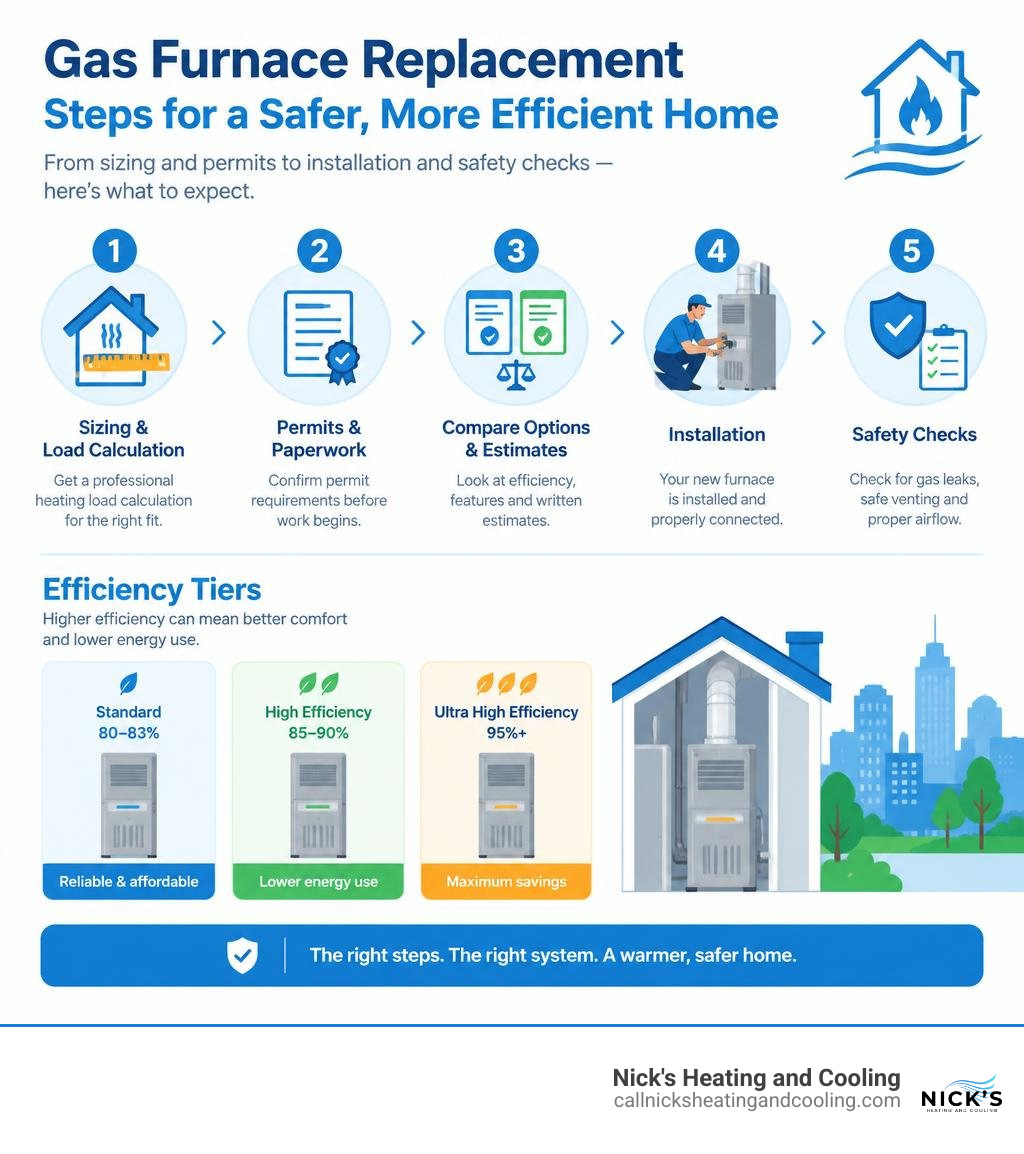
Simple gas furnace installation birmingham glossary:
When autumn rolls into Central Alabama, preparing your home for winter becomes a top priority. Approximately 65% of homes across the Birmingham metro area rely on natural gas for heating. That popularity makes sense: natural gas provides rapid, reliable heat when temperatures plunge below freezing during January and February nights. Upgrading to a modern system ensures your family stays warm without wasting energy.
Step-by-Step Gas Furnace Installation Birmingham Homeowners Should Expect
When you schedule furnace installation, knowing what happens on installation day removes any stress. Replacing a gas furnace is a detailed technical project that involves high-voltage electricity, natural gas lines, sheet metal fabrication, and precise combustion calibration.
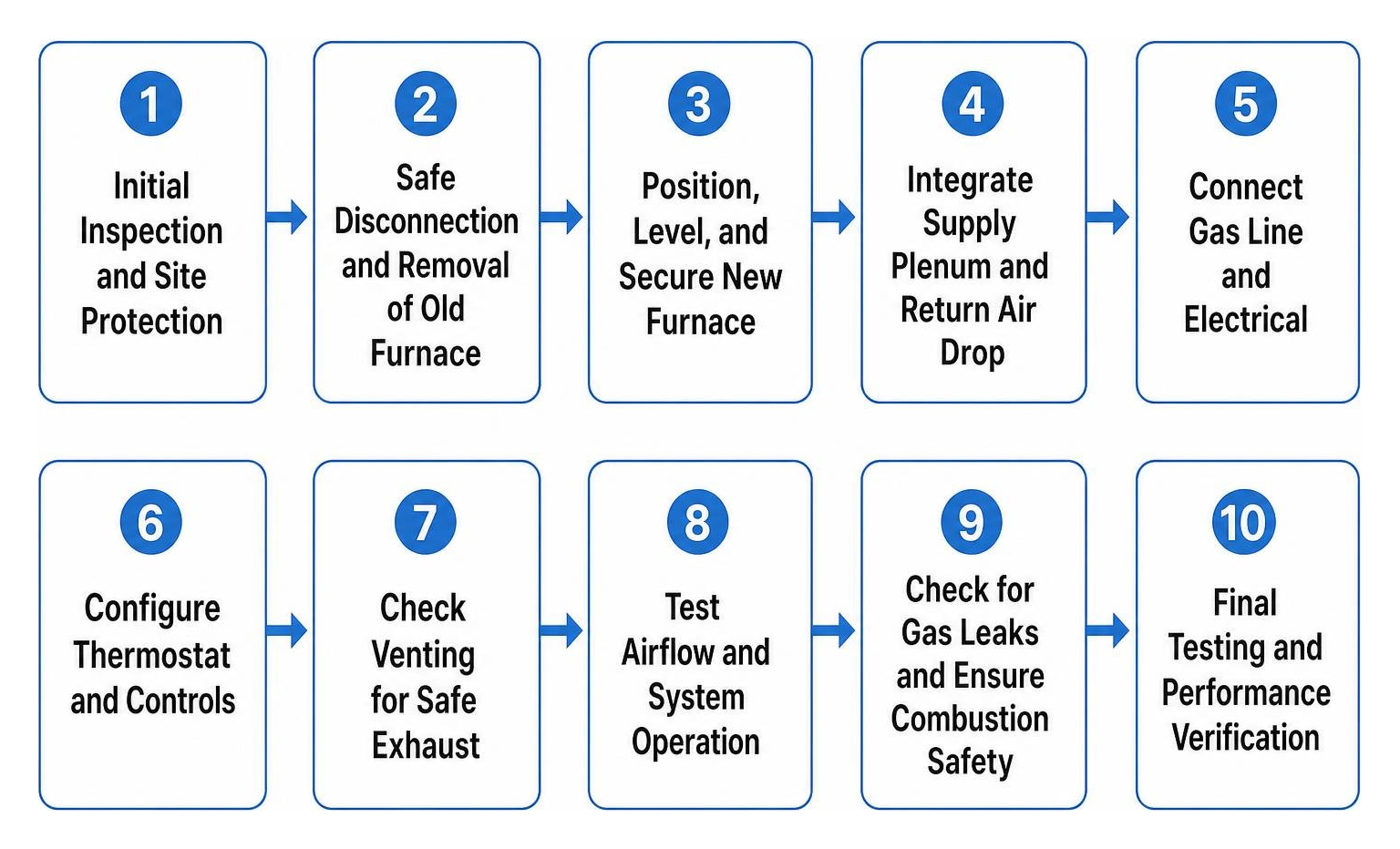
Every successful installation follows a structured process:
- Complete system inspection and site protection.
- Safe disconnection and removal of the old heating equipment.
- Positioning, leveling, and securing the new furnace cabinet.
- Integrating the supply plenum and return air drop.
- Connecting and testing gas lines, electrical wiring, and exhaust venting.
- Calibrating safety controls, airflow, and combustion output.
Choosing the right operating design is also crucial. Here is how the three main furnace types compare:
| Furnace Type | Operating Stages | Efficiency Range (AFUE) | Comfort & Temperature Consistency | Relative Cost |
|---|---|---|---|---|
| Single-Stage | Runs at 100% capacity whenever on | 80% to 90% | Basic; can create minor hot and cold spots | Lowest upfront cost |
| Two-Stage | Runs at low (around 65%) or high (100%) | 80% to 96% | Balanced; quieter with even heat distribution | Moderate |
| Modulating | Adjusts output incrementally (40% to 100%) | 96% to 98%+ | Superior; near-constant temperatures and whisper-quiet | Premium |
Step-by-Step System Removal and New Unit Placement
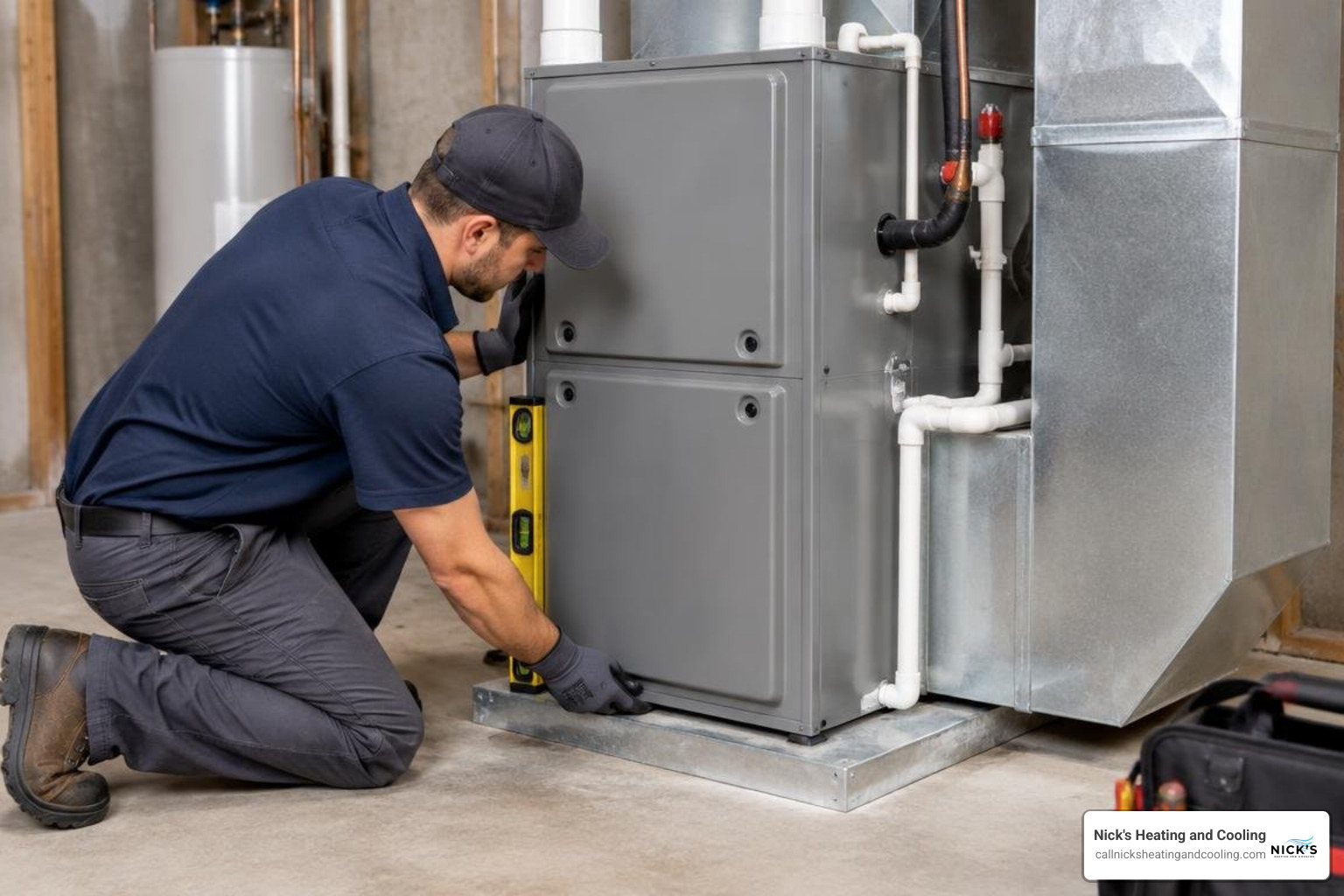
I always start by laying down protective floor coverings and shutting off both the gas supply line and electrical circuits. Removing an old, heavy heating unit requires care so we do not damage doorways, walls, or basement stairs.
Once the old unit is out, I inspect the transition between the supply plenum and the return air drop. If the new furnace has different dimensions, I fabricate custom sheet metal transitions to prevent air leakage. I mount the new cabinet on heavy-duty vibration dampening pads. This isolates mechanical vibration from your floor joists, preventing annoying humming noises in the living room above.
Gas Line Connections, Flue Venting, and Safety Verification
Natural gas demands absolute precision. I inspect the existing gas pipe for corrosion and proper sizing, install a new sediment trap (drip leg), and connect a fresh, flexible gas line with a dedicated shutoff valve. I pressure-test every single joint using electronic sniffer tools and bubbling solution to ensure zero leaks.
Flue venting depends on the furnace efficiency:
- Standard 80% AFUE furnaces use metal B-vent piping that routes hot exhaust gases up through the roof or an existing chimney.
- High-efficiency condensing furnaces (90%+ AFUE) produce cooler, acidic condensation. These systems require direct-vent PVC or polypropylene piping routed horizontally through an exterior wall or vertically through the roof.
Finally, I calibrate the flame sensor, check gas manifold pressure with a digital manometer, verify temperature rise across the heat exchanger, and conduct static airflow testing across your ductwork.
Sizing and Selecting the Right Gas Furnace for Birmingham’s Climate
Selecting a heating unit is not a “one size fits all” decision. If your furnace is oversized, it will short-cycle—turning on and off rapidly—wasting fuel and wearing out parts prematurely. If it is undersized, it will run continuously during freezing snaps without reaching your set thermostat temperature.
Careful heating replacement planning for Birmingham homes guarantees you receive the exact heating capacity you need. Birmingham sits in IECC Climate Zone 3, meaning we experience moderate winters with several severe freezing spells. Natural gas remains the most reliable fuel source for overcoming sudden cold snaps, as detailed in U.S. Energy Information Administration residential energy data.
Manual J Load Calculations and AFUE Efficiency Ratings
To size your furnace correctly, I perform an industry-standard Manual J load calculation. This calculation analyzes several critical factors:
- Total conditioned square footage and ceiling heights.
- Quality and depth of attic and wall insulation.
- Window styles, orientation, and solar heat gain.
- Air infiltration rates through doors, windows, and framing.
Annual Fuel Utilization Efficiency (AFUE) measures how efficiently a furnace converts fuel into usable heat. An 80% AFUE furnace turns 80 cents of every fuel dollar into warmth, venting the remaining 20 cents as exhaust. In contrast, a 96% high-efficiency condensing model wastes only 4 cents per dollar, generating significant annual fuel savings.
Local Birmingham Permits, Codes, and Venting Regulations
Proper installation must comply with local building and mechanical codes across Jefferson and Shelby counties. Municipalities require valid mechanical and gas permits before replacing fuel-burning appliances.
Key regulatory checks include:
- Combustion Air: Ensuring adequate fresh air supply in enclosed closets or utility rooms so the burner does not starve of oxygen.
- Carbon Monoxide Safety: Complying with municipal codes that mandate working carbon monoxide detectors outside sleeping areas.
- Chimney Liners: Installing modern metal liners when venting standard furnaces into older masonry chimneys to prevent masonry degradation.
- Final Inspections: Scheduling city or county building inspections to certify that electrical, gas, and venting connections meet current safety standards.
Understanding Costs, Utility Rebates, and Long-Term Savings
A new gas heating system is a major household investment. Knowing the financial landscape helps you plan your budget without unexpected surprises.
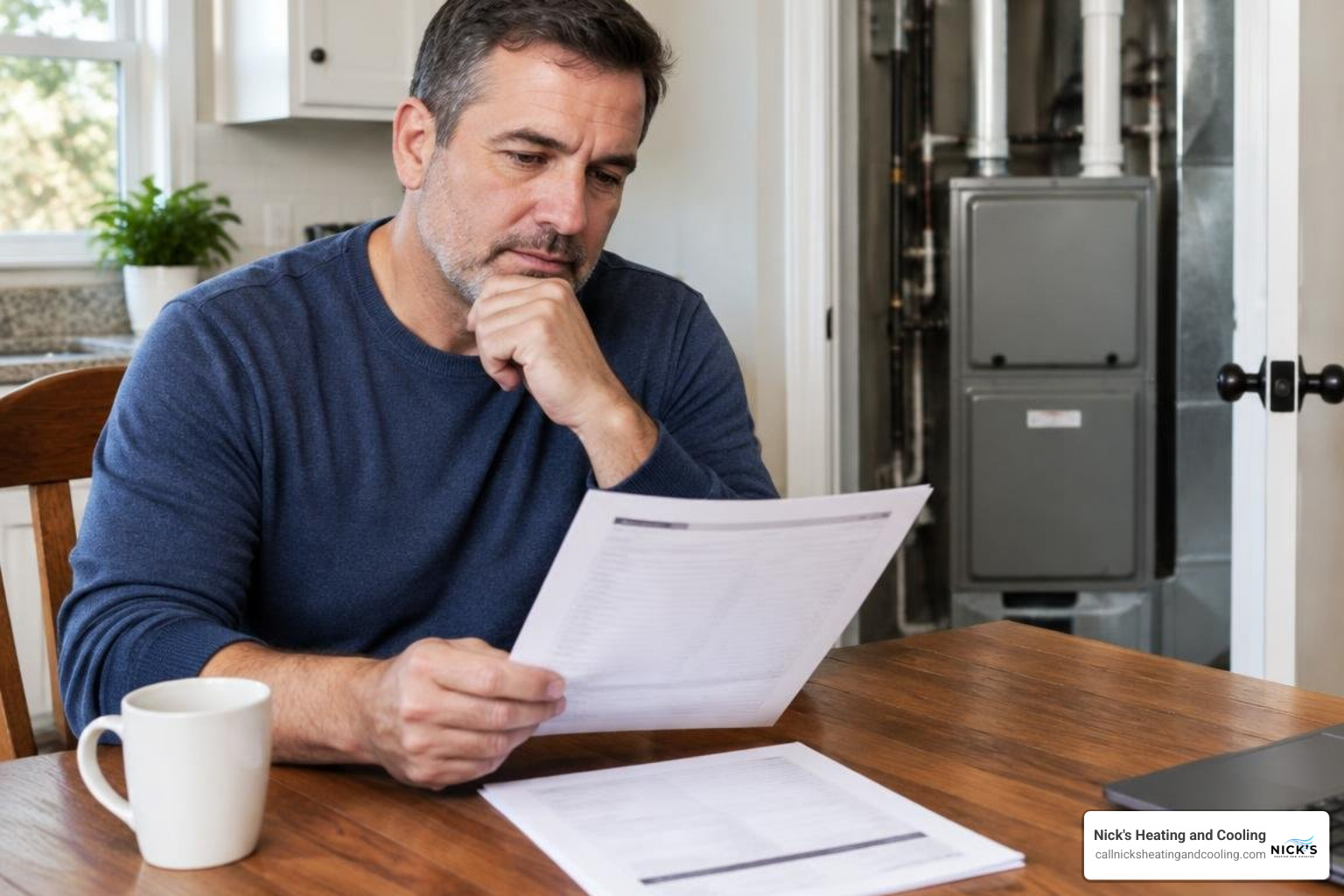
Average Cost of Gas Furnace Installation in Birmingham
In Birmingham, AL, the average cost for a gas furnace installation typically ranges from $2,500 to $6,000.
Several factors influence where your project falls within this range:
- Heating Capacity (BTUs): Larger homes require higher-capacity units, which cost more.
- Efficiency Tier: Standard 80% AFUE units represent the lower end of the pricing spectrum, while 96%+ modulating systems sit at the top.
- Ductwork Modifications: Adjusting cramped plenums or repairing damaged return drops adds labor and custom sheet metal costs.
- Venting Adjustments: Routing new direct-vent PVC lines through exterior walls requires additional materials and labor.
- Warranty Packages: Extended 10-year parts and labor warranties offer long-term peace of mind.
Local Utility Rebates and Energy Incentives
Replacing an aging, inefficient furnace with a high-efficiency model can reduce your annual heating bills by 20% to 30%.
To offset your initial investment:
- Local natural gas utilities periodically offer cash rebates for installing qualifying high-efficiency gas heating systems.
- Federal energy tax credits allow eligible homeowners to claim credits for installing high-efficiency heating equipment meeting specific ENERGY STAR standards.
Post-Installation Maintenance and Selecting the Right Contractor
A well-installed gas furnace boasts an average lifespan of 15 to 20 years, but reaching that milestone requires quality installation and routine care.
Key Criteria for Gas Furnace Installation Birmingham Contractors
When choosing a contractor, verify these credentials:
- State HVAC Licensing: Ensure the technician holds an active license from the State of Alabama Board of Heating, Air Conditioning & Refrigeration Contractors.
- Comprehensive Insurance: Confirm active general liability and worker’s compensation policies.
- Transparent Pricing: Insist on detailed, upfront written estimates with no hidden fees.
- Prompt Support: Select a contractor offering reliable furnace repair services and responsive emergency care when unexpected cold snaps arrive.
Demand peaks dramatically in October and November, bringing a 40% surge in heating service calls across Birmingham. Booking your installation early in the fall ensures you get your preferred schedule without delays.
Ongoing Maintenance and Safety Best Practices
Protect your heating system with simple habits:
- Filter Changes: Replace standard 1-inch filters every 30 to 90 days. Dirty filters restrict airflow, overheat the heat exchanger, and spike utility bills.
- Annual Tune-Ups: Schedule routine furnace maintenance every fall. I clean burners, test safety limits, check blower motor amperage, and test the heat exchanger for hairline cracks.
- System Protection: Reviewing why Birmingham homeowners need regular HVAC maintenance reinforces how preventive care preserves your equipment warranty and extends its operating life.
Frequently Asked Questions About Gas Furnace Installation in Birmingham
How long does a gas furnace installation take in Birmingham?
A standard residential gas furnace replacement usually takes between 4 to 8 hours. If we need to run new gas lines, reconfigure complex sheet metal ductwork, or route direct PVC venting through finished walls, the project may extend into a second day.
What size gas furnace is needed for an average Birmingham home?
Most 1,800 to 2,400-square-foot homes in the Birmingham area require a furnace rated between 60,000 and 80,000 BTUs. However, the exact size must always be determined by a certified Manual J load calculation that accounts for insulation, ceiling height, and window efficiency.
Can I replace my heat pump with a gas furnace?
Yes, provided your home has access to a natural gas line. Many Birmingham homeowners choose a dual-fuel (hybrid) system, pairing an electric heat pump for mild winter days with a gas furnace for freezing nights.
Conclusion
Upgrading your home’s heating system provides dependable warmth, lower monthly utility bills, and true peace of mind during chilly Alabama winters. Investing in a professional installation ensures your gas furnace operates safely, cleanly, and efficiently for decades.
When you are ready to explore your heating options, turn to a trusted, licensed Birmingham HVAC contractor like Nick’s Heating and Cooling. Our certified, locally-owned team provides free, no-obligation inspections, transparent estimates, and rapid service focused on honesty and craftsmanship.
Nick’s Heating and Cooling currently services Birmingham, Hoover, Vestavia Hills, Mountain Brook, Alabaster, Chelsea, Homewood, Trussville, Pelham, and Irondale for all your HVAC and Heating needs.