

What Does AC Coil Cleaning Cost in 2026?
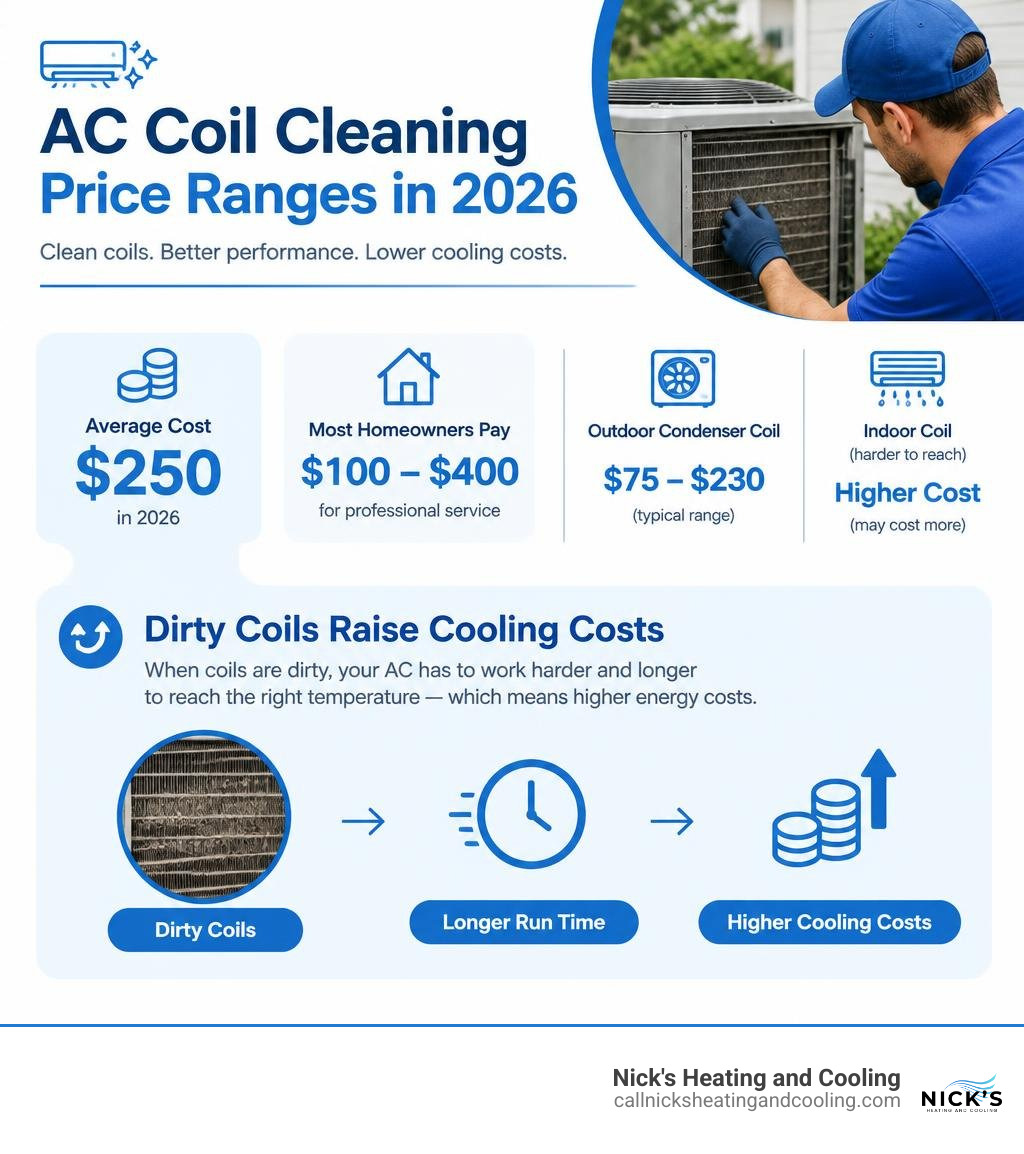
AC coil cleaning cost averages about $250 in 2026. Most homeowners pay $100 to $400 for professional service. A straightforward outdoor condenser coil cleaning may cost $75 to $230, while a hard-to-reach indoor coil can cost more.
If I were comparing quotes in Birmingham, I’d ask whether the price covers the indoor coil, the outdoor coil, or both. I’d also check whether the technician plans to clean the coil in place or remove it. Those details can change the bill far more than the cleaner itself. Dirty coils can make an AC run longer, so a clear quote helps you weigh the cost against the cooling problem you’re trying to fix.
AC coil cleaning cost word guide:
- AC servicing charges
- air conditioning repair
- commercial aircon servicing
AC Coil Cleaning Cost: 2026 National Averages and Price Ranges
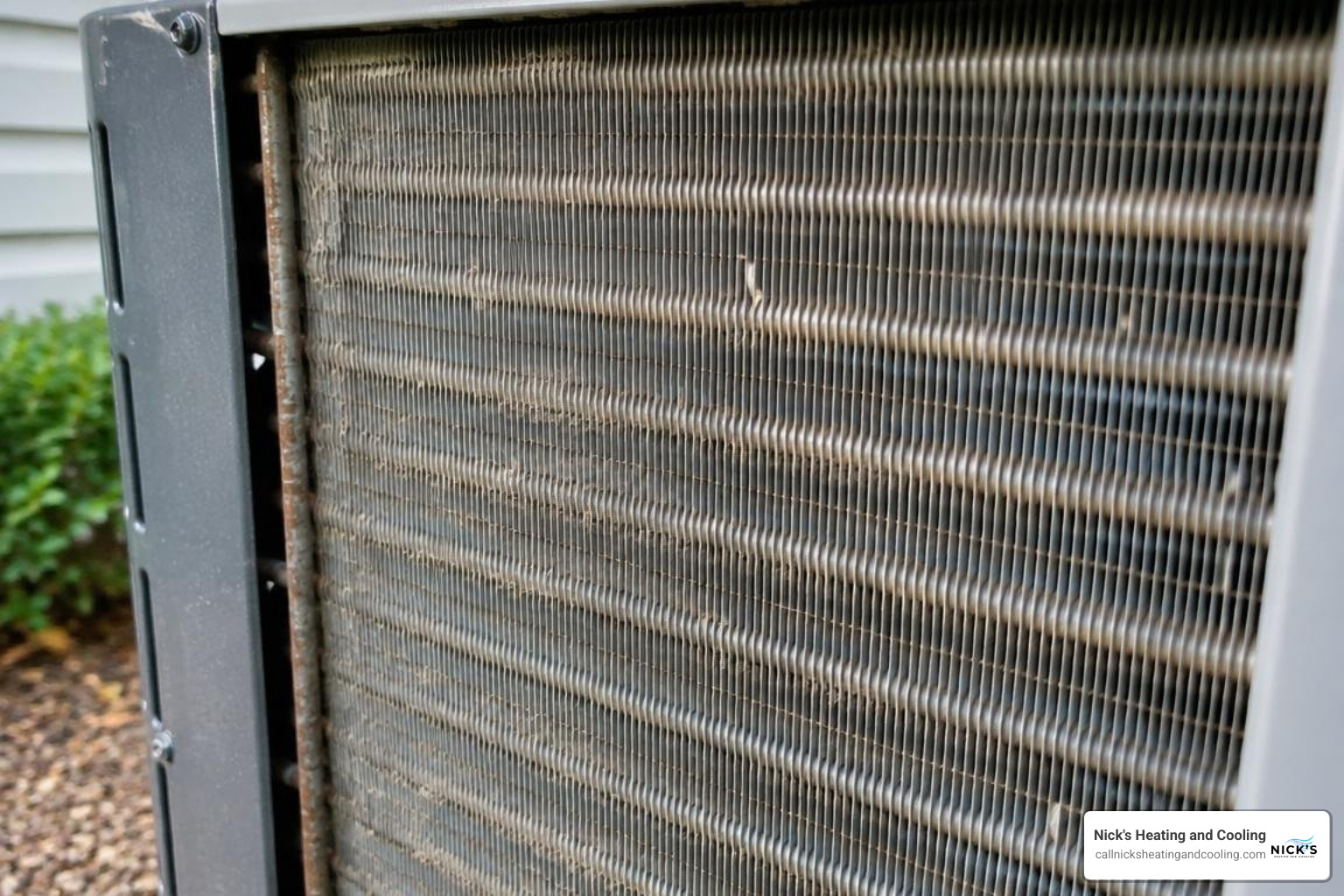
When I evaluate cooling systems in residential homes, I always look at the heat transfer surfaces first. Your air conditioner relies on two heat exchangers: the indoor evaporator coil (which extracts heat and humidity from your home’s air) and the outdoor condenser coil (which vents that absorbed heat into the outside air). Over time, both surfaces accumulate dust, pollen, pet dander, and environmental grime.
Across the United States, the overall price spectrum for professional coil cleaning ranges from $75 on the low end for a simple outdoor rinse to upwards of $700 for complex pull-and-clean jobs on heavily neglected units. According to recent 2026 coil cleaning pricing data, the national average sits right at $250, with most homeowners spending between $100 and $400.
HVAC technicians typically bill based on flat-rate task pricing or an hourly rate ranging between $100 and $250 per hour (averaging around $175 per hour). When you consider that dirty coils force your compressor to work significantly harder—driving up electrical consumption by 5% to 40% and adding $200 to $436 per year in avoidable energy waste—investing in regular HVAC maintenance quickly pays for itself.
| Service Type / Coil Location | Typical Cost Range | Average Cost | Service Duration |
|---|---|---|---|
| Outdoor Condenser Coil (In-Place) | $75 – $230 | $150 | 30 – 45 mins |
| Indoor Evaporator Coil (In-Place) | $100 – $400 | $250 | 45 – 90 mins |
| Deep Coil Removal & Clean (Pull & Clean) | $400 – $700 | $550 | 2 – 3+ hours |
| Chemical Acid Wash (Outdoor Unit Only) | $300 – $350 | $325 | 1 – 2 hours |
| Whole-System Coil Bundle (Indoor + Outdoor) | $150 – $400 | $275 | 1.5 – 2 hours |
Evaporator vs. Condenser AC Coil Cleaning Cost
The price discrepancy between your two coils comes down to location, moisture, and accessibility.
The indoor evaporator coil sits inside your air handler or furnace cabinet, often tucked away in a tight attic, basement, or utility closet. Because the evaporator coil constantly extracts moisture from humid indoor air, its fins remain wet during cooling cycles. This constant moisture combines with household dust and pet dander to form a thick, sticky layer or biological biofilm. Cleaning this indoor component in place usually runs between $100 and $400 due to the careful labor required to protect your home’s interior from chemical runoff and water damage.
In contrast, the outdoor condenser coil is readily accessible outside your house. It deals primarily with dry environmental buildup like lawn clippings, leaves, dirt, and spring pollen. A technician can clean an outdoor unit in about 30 to 45 minutes using specialized, self-rinsing or water-rinsed alkaline cleaners, keeping the price between $75 and $230. While homeowners can periodically rinse outdoor debris away, it is essential to clean your outdoor AC unit safely to avoid crushing the delicate aluminum fins.
In-Place Cleaning, Removal, and Chemical Acid Wash Costs
The specific cleaning method a technician chooses will determine where your final invoice lands on the pricing scale:
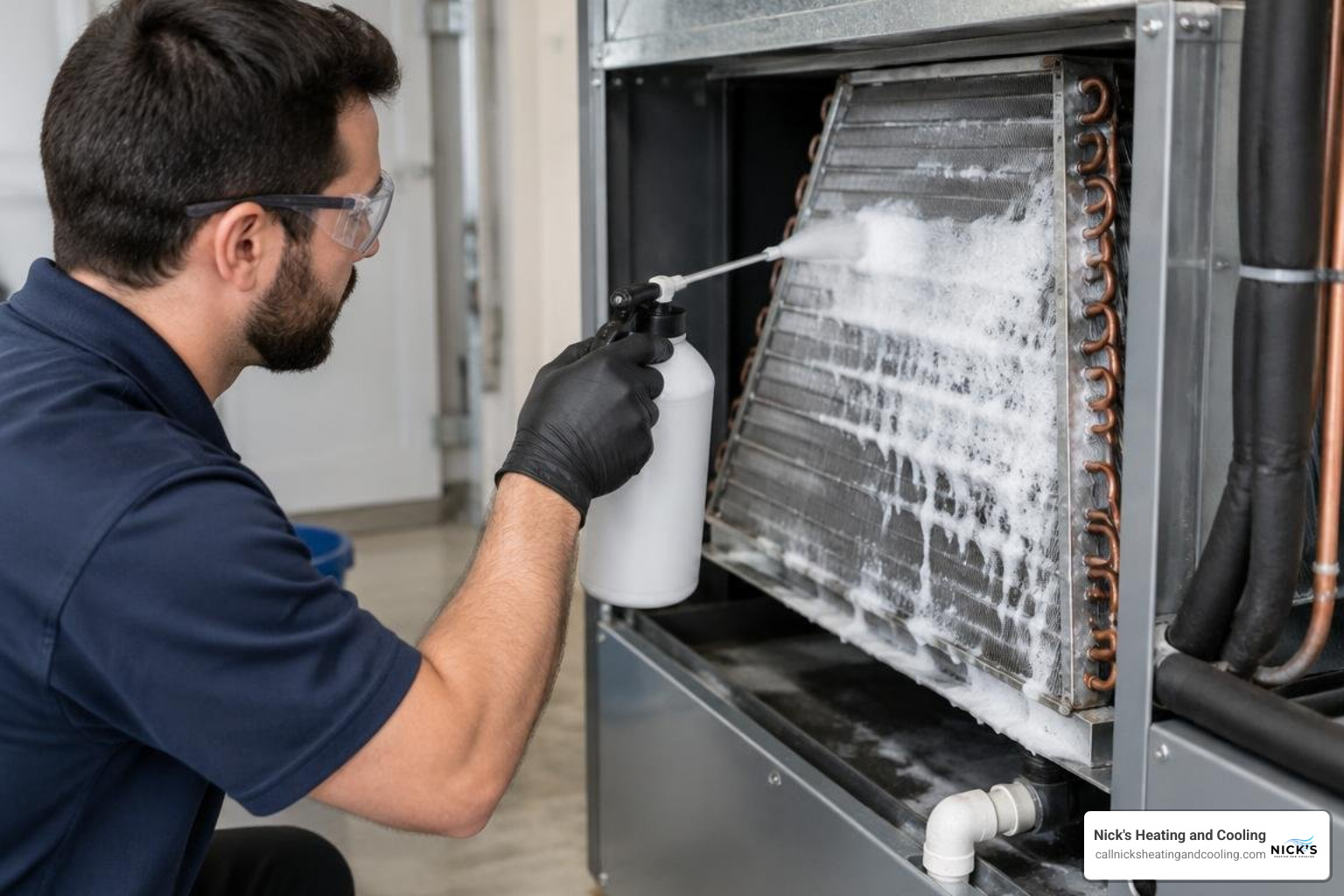
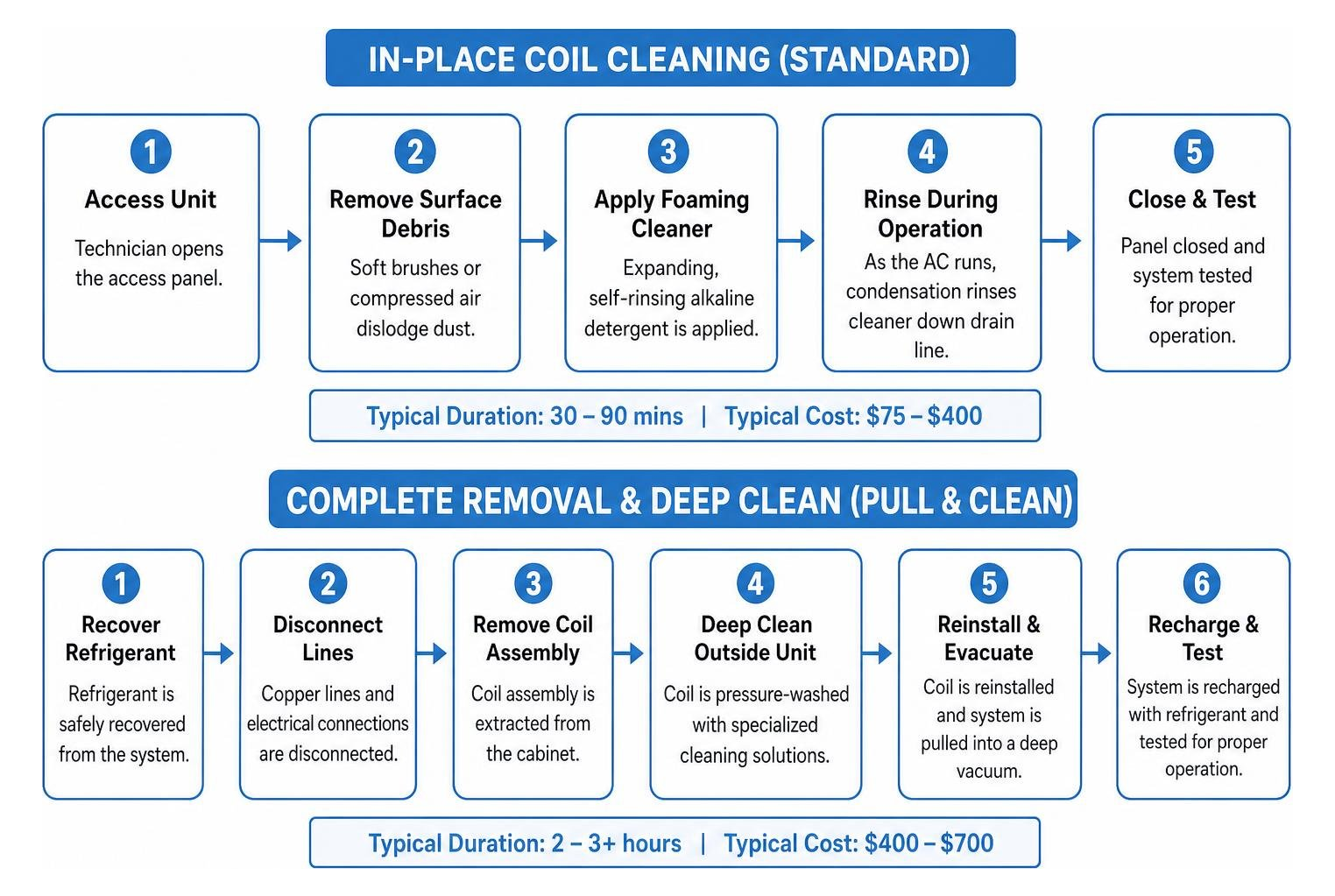
- In-Place Foaming Clean ($100 – $400): This is the standard procedure for routine maintenance. The technician opens the access panel, uses soft brushes or compressed air to dislodge surface dust, combs straight any bent fins, and applies an expanding, self-rinsing alkaline foaming detergent. As the AC runs, condensation naturally rinses the cleaner and emulsified grime down the drain line.
- Removal and Deep Clean ($400 – $700): When a coil has been neglected for years, dirt bakes deep into the fin pack where surface sprays cannot reach. To resolve this, a certified technician must recover the refrigerant, disconnect the copper lines, extract the entire coil assembly from the cabinet, pressure-wash it outside with specialized solutions, reinstall it, pull a deep vacuum, and recharge the refrigerant system. The heavy labor involved drives the cost up significantly.
- Chemical Acid Wash ($300 – $350): For severe grease, scale, or industrial grime on outdoor condenser coils, technicians apply an aggressive acid-based cleaner. The foaming acid chemically strips away a microscopic layer of oxidized aluminum, restoring bare metal contact. Because of dangerous fumes and potential corrosion risks, acid washing is strictly reserved for outdoor units.
Key Factors Influencing the Cost of AC Coil Cleaning
Every HVAC system setup is unique, and several variables dictate whether your cleaning falls on the budget-friendly or expensive side of the spectrum. To avoid surprise charges, it helps to understand how these variables affect the job:
- Physical Accessibility: If your indoor air handler is easily accessible in a ground-floor closet, labor time is minimal. If a technician must crawl through blown-in insulation in a scorching summer attic or access an awkward crawl space, expect labor costs to increase.
- Severity of Fouling: A light dusting of seasonal pollen takes 30 minutes to clean. A heavily matted, blanket-like layer of pet hair, mold, and compacted grease requires extensive chemical soaking, manual scrubbing, and multiple flushes.
- Unit Tonnage and Physical Size: Larger 4-ton and 5-ton systems have multi-row, high-surface-area coils that require more chemical volume and extended labor compared to compact 1.5-ton split systems.
- Cabinet Configuration: Uncased coils or sealed air handlers requiring custom sheet metal cutting and resealing to access the coil face will incur higher labor charges.
- Local Labor Rates: Regional labor rates fluctuate based on market demand and cost of living. Homeowners can review practical strategies for avoiding high maintenance costs before booking service appointments.
Common Maintenance Add-Ons and Service Bundles
Technicians frequently inspect complementary HVAC components during a coil cleaning visit. Bundling these services during a single visit almost always saves you money compared to scheduling them individually:
- AC Tune-Up & Inspection ($70 – $200): Many contractors include basic coil cleaning inside a comprehensive seasonal maintenance package that covers electrical checks, capacitor testing, and thermostat calibration.
- Condensate Drain Line Flush ($75 – $200): Dirty evaporator coils deposit slime directly into the drain pan. Having the technician clear and treat the line prevents water backups; you can also learn how to clean your AC drain line between seasonal visits.
- Blower Wheel Cleaning ($125 – $250): The blower wheel fan blades accumulate grime at the same rate as your evaporator coil. Cleaning the blower restores proper static air pressure throughout your ductwork.
- Ductwork Cleaning ($268 – $493): If your indoor coil is caked in dust, your ductwork likely holds debris too. Scheduling professional air duct cleaning prevents newly cleaned coils from becoming re-contaminated. Homeowners can check regional cost benchmark estimates to evaluate fair bundled pricing.
DIY vs. Professional AC Coil Cleaning Cost
Taking the do-it-yourself route for AC coil maintenance is tempting for hands-on homeowners looking to save money. Purchasing a can of commercial foaming coil cleaner, a plastic fin comb, and basic protective gear typically costs between $25 and $80.
While cleaning an outdoor condenser coil with low-pressure water and a gentle alkaline spray is well within the capability of many homeowners, tackling an indoor evaporator coil carries substantial risks:
| Factor | DIY Coil Cleaning | Professional HVAC Service |
|---|---|---|
| Average Cost | $25 – $80 (supplies only) | $100 – $400 (labor & chemicals included) |
| Equipment Used | Aerosol cans, garden hose, hand comb | High-volume chemical foamers, wet vacuums, fin tools |
| Depth of Cleaning | Surface-level fin rinse | Deep fin pack penetration, pan treatment, line flush |
| Fin Damage Risk | Moderate to High (using wrong pressure/tools) | Extremely Low (certified technicians) |
| Refrigerant Line Risk | High (accidental line puncture or bending) | Zero (handled by EPA-certified pros) |
| Warranty Protection | May void manufacturer warranty | Fully preserves manufacturer warranty terms |
The microscopic aluminum fins on your evaporator coil are exceptionally fragile. Bending them with excessive water pressure or stiff brushes will permanently restrict airflow. Furthermore, federal regulations under Section 608 of the Clean Air Act mandate certified handling of refrigerant-containing components. If you accidentally puncture a corroded copper tube while scraping grime, repairing that refrigerant leak will cost far more than a professional cleaning visit.
Warning Signs and When to Replace vs. Clean Your Coils
How do you know when your air conditioner’s coils are screaming for attention? Here are the most common symptoms:
- Spike in Monthly Power Bills: If your utility bill climbs 20% to 30% without a change in weather, your coils are likely insulated by dirt, forcing extended cooling cycles.
- Weak Airflow from Vents: Restricted heat exchanger fins block air movement through your duct system.
- Long, Unbroken Run Times: The system runs continuously for 30 to 45 minutes to achieve a temperature drop that should only take 15 minutes.
- Ice on the Indoor Coil or Copper Lines: Reduced heat absorption causes the refrigerant temperature inside the coil to drop below freezing, turning ambient condensation into a solid block of ice.
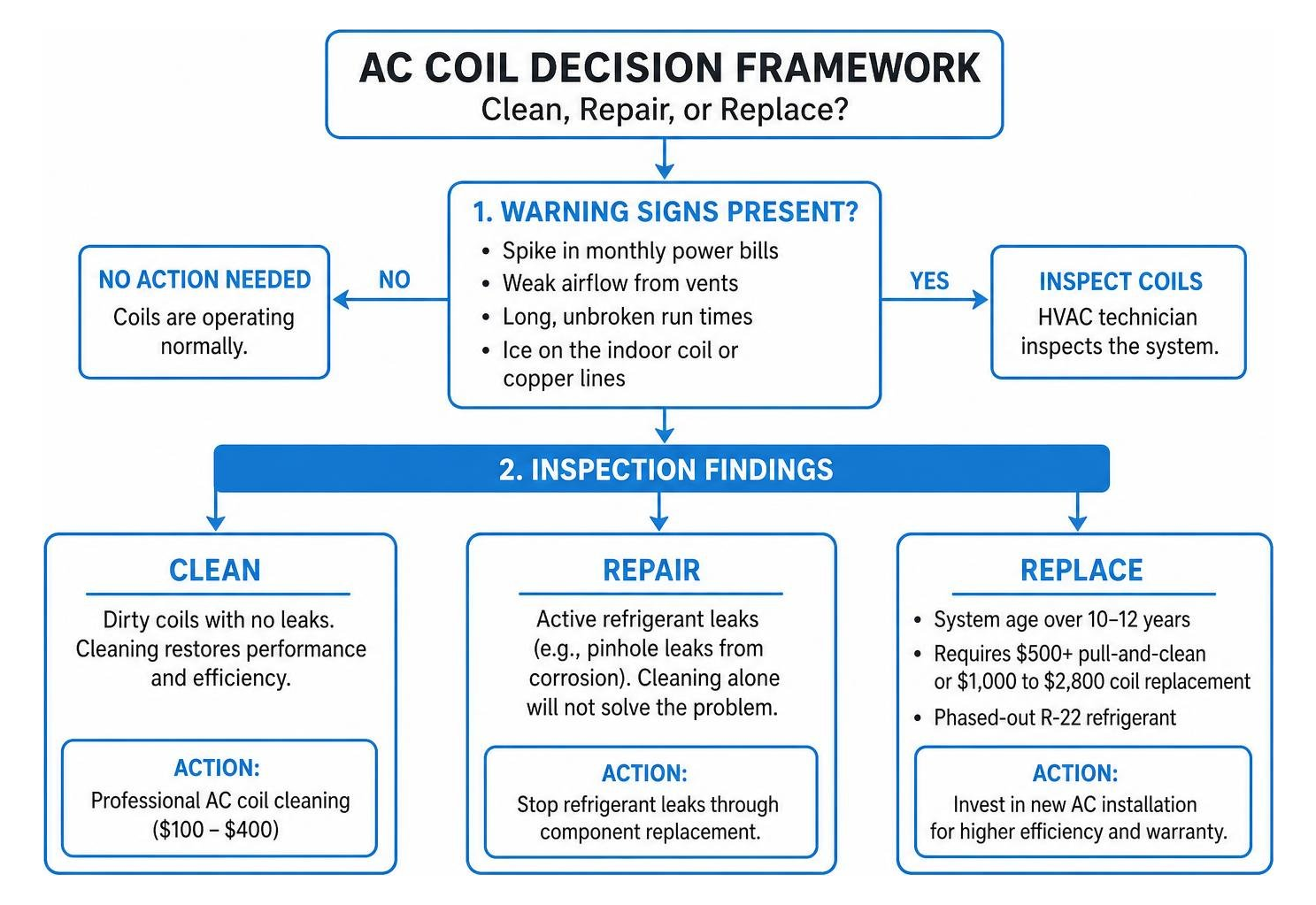
When an HVAC technician inspects your system, there are situations where paying for a cleaning is no longer a sound financial investment:
- Active Refrigerant Leaks: If your coil has developed pinhole leaks from formicary corrosion, cleaning it will not solve your cooling failure. In this case, stopping refrigerant leaks through component replacement is necessary.
- System Age Over 10–12 Years: The average central air conditioner lasts 12 to 15 years. If your unit is approaching this age and requires an expensive $500+ pull-and-clean service or coil replacement ($1,000 to $2,800), putting that money toward new AC installation options provides higher long-term efficiency and modern warranty coverage.
- Phased-Out R-22 Refrigerant: Older systems operating on obsolete R-22 Freon are prohibitively expensive to recharge if a coil extraction causes a leak. Replacing the system with an updated R-410A or next-generation refrigerant platform is recommended. Homeowners can consult industry literature such as the Department of Energy’s Measure Guideline: Air Conditioner Diagnostics, Maintenance, and Replacement for detailed equipment lifecycle benchmarks.
Frequently Asked Questions About AC Coil Cleaning
How often should AC coils be cleaned?
As a baseline, you should have your evaporator and condenser coils inspected and cleaned at least once per year during your routine spring maintenance appointment. If you live in an area with high summer humidity, dense pine pollen, nearby shedding cottonwood trees, or if you have multiple shedding pets indoors, scheduling a cleaning every 6 to 9 months ensures your system operates at peak efficiency.
Can dirty AC coils cause the system to freeze over?
Yes. When a thick blanket of dust, pet hair, and grime coats the evaporator coil, warm household air cannot make contact with the cold refrigerant circulating through the copper tubing. Because the refrigerant cannot absorb heat from your indoor air, its internal temperature drops below 32°F. The moisture condensing on the outside of the coil freezes solid, creating an insulating block of ice that blocks airflow entirely and can quickly cause catastrophic compressor burnout.
How long does a professional coil cleaning service take?
A standard in-place chemical cleaning for an accessible outdoor condenser coil or indoor evaporator coil takes approximately 30 to 60 minutes. If the technician is performing a complete system tune-up that includes clearing the condensate drain line, checking electrical contacts, and cleaning both indoor and outdoor coils, the visit typically takes 1.5 to 2 hours. A full pull-and-clean service, which requires evacuating refrigerant and removing the coil assembly, takes between 2 and 4 hours.
Conclusion
Neglecting your air conditioning coils is one of the easiest ways to shorten your HVAC system’s operational lifespan and waste hundreds of dollars each year on inflated electricity bills. Investing in routine, professional maintenance keeps your cooling system operating at manufacturer-rated efficiency, protects indoor air quality, and prevents premature component failures.
At Nick’s Heating and Cooling, we provide upfront pricing, certified technicians, and comprehensive cooling care across the greater Birmingham metro area. Whether you need a seasonal system tune-up, prompt diagnostic evaluation, or dependable professional AC repair, our team provides free, no-obligation inspections to keep your home comfortable year-round.
Nick’s Heating and Cooling currently services Birmingham, Hoover, Vestavia Hills, Mountain Brook, Alabaster, Chelsea, Homewood, Trussville, Pelham, and Irondale for all your HVAC and Heating needs.