

Why Hiring the Right HVAC Contractor Can Save You Money — and Headaches
Hiring a qualified HVAC contractor is one of the most important decisions you’ll make as a homeowner. Your heating and cooling system is one of the largest purchases in your home — and the person you trust to install, repair, or maintain it matters just as much as the equipment itself.
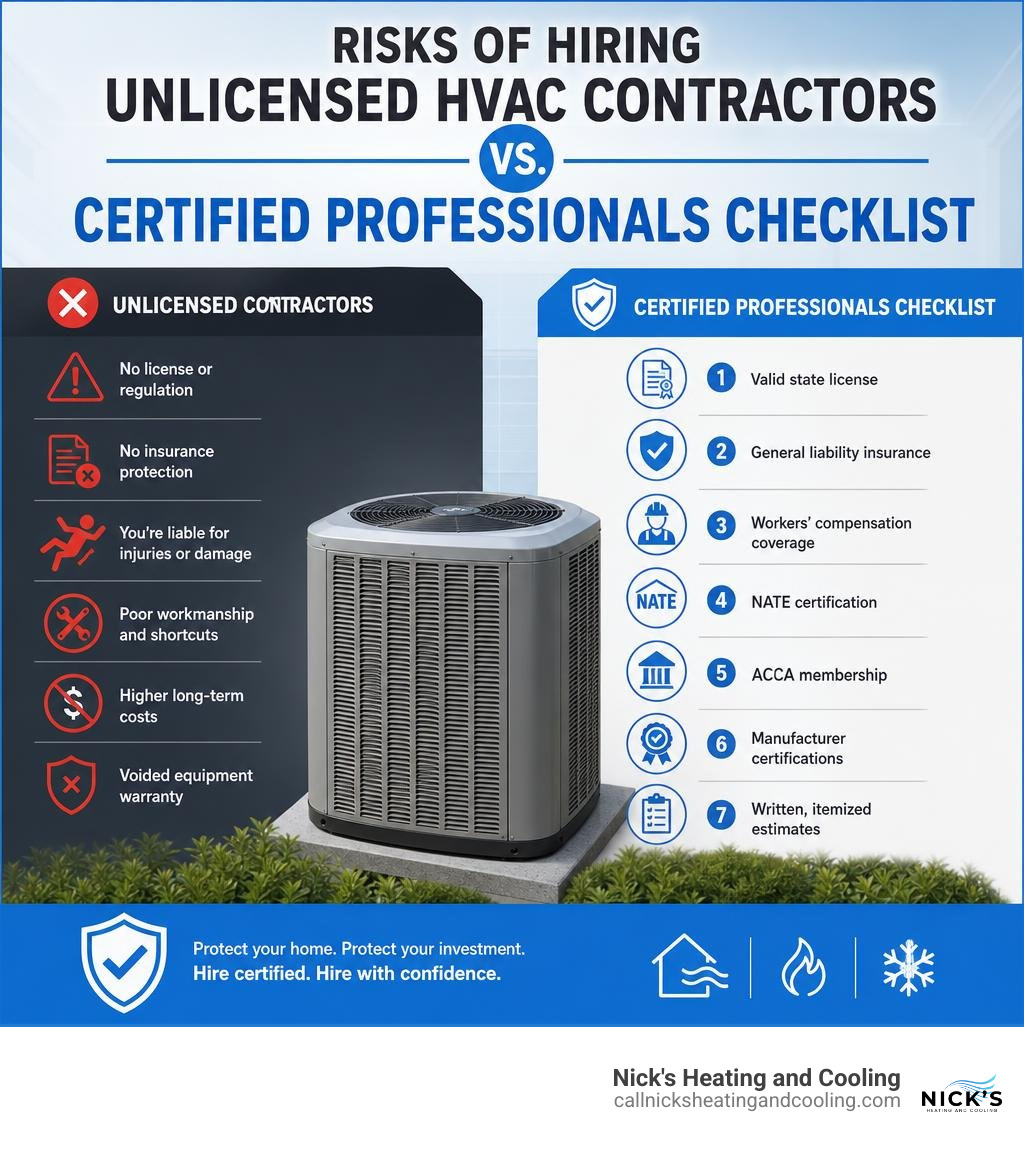
Here’s what to look for when verifying an HVAC contractor:
- Valid state license — confirm through your state’s licensing board
- General liability insurance — protects your home if something goes wrong
- Workers’ compensation coverage — protects you if a technician is injured on your property
- NATE certification — the industry’s leading credential for technician knowledge
- ACCA membership — signals adherence to national installation and service standards
- Manufacturer certifications — shows specialized training on specific equipment brands
- Written, itemized estimates — any reputable contractor will put it in writing
The problem? Not every company calling itself an HVAC contractor meets these standards. Unlicensed operators, lowball bids, and contractors who skip proper home evaluations are more common than most homeowners realize.
The result can be an oversized system that short-cycles, ductwork that leaks conditioned air, or a voided equipment warranty — all of which cost you far more in the long run.
This guide walks you through exactly how to protect yourself.
What Services Does a Professional HVAC Contractor Provide?
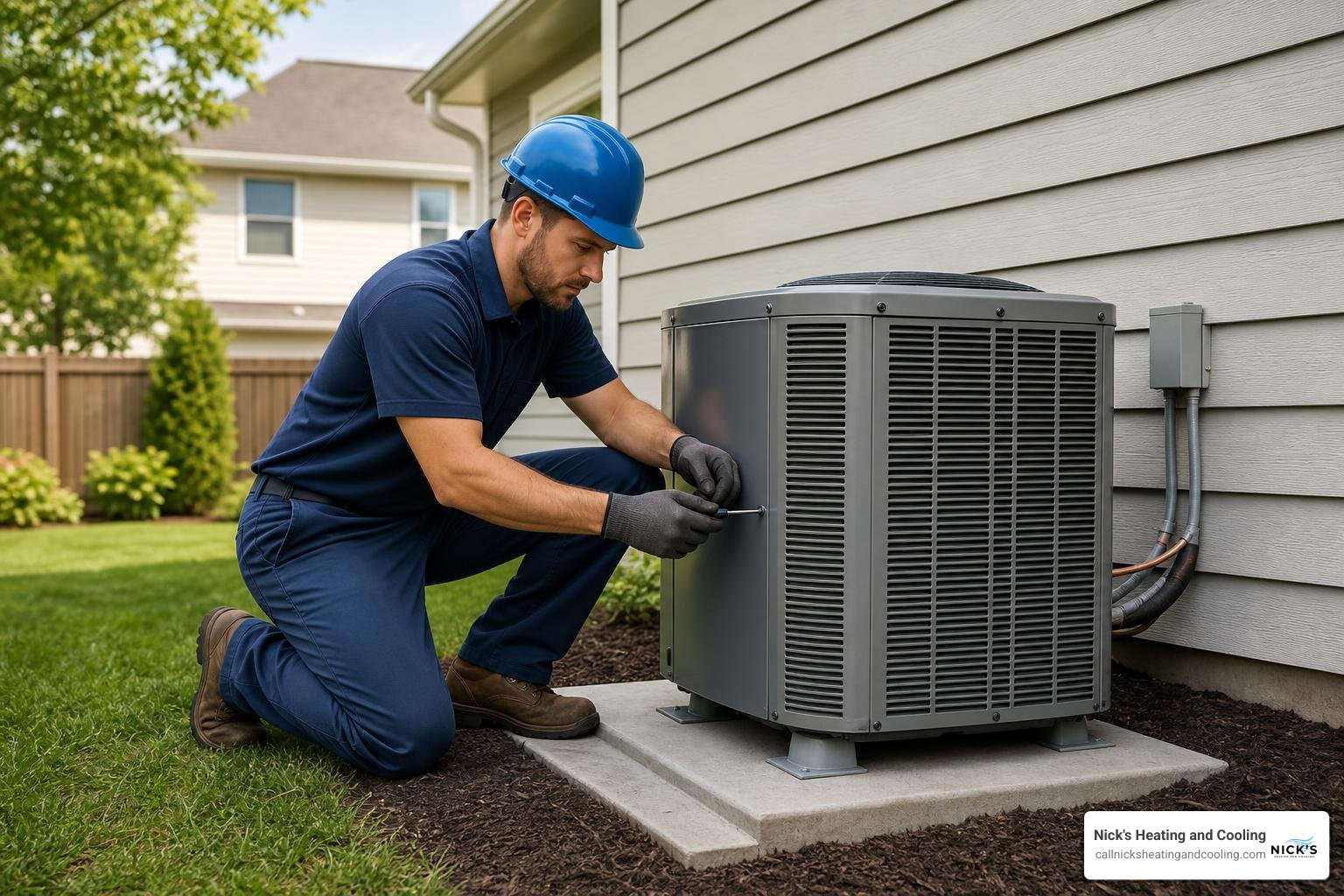
When your home’s temperature starts resembling an outdoor sauna or an arctic tundra, you realize just how vital your indoor climate control is. A professional HVAC contractor is a highly trained specialist who designs, installs, maintains, and repairs the systems that keep your home or business comfortable year-round.
But their job goes far beyond just kicking a stubborn furnace or refilling refrigerant. An expert heating and air conditioning contractor looks at your home as a complete, integrated ecosystem where heating, cooling, ventilation, and air quality all work in harmony.
Core Offerings of a Heating and Cooling Contractor
The foundation of any reputable HVAC company rests on a few core services. Understanding these offerings helps you know exactly when to call in the professionals before a minor hiccup turns into a costly system failure:
- Professional Installation: This is the most critical day in the life of your heating and cooling equipment. A system that is installed incorrectly can lose up to 30% of its operating efficiency from day one. Whether you are installing a traditional central air conditioner, a gas furnace, or a modern heat pump, a professional contractor ensures the equipment is safely wired, properly charged with refrigerant, and securely connected to your home’s infrastructure.
- Routine Maintenance and Seasonal Tune-Ups: Much like changing the oil in your car, your climate control systems require regular attention. Annual cleanings, 34-point safety inspections, electrical connection tightening, and airflow calibrations keep your systems running at peak efficiency. Regular preventative care can easily extend the lifespan of your system by several years and prevent up to 80% of common breakdowns.
- Rapid Repairs and Troubleshooting: When a system stops working in the middle of a sweltering July afternoon or a freezing January night, you need swift, accurate diagnostics. Professional technicians use advanced diagnostic tools to pinpoint issues—ranging from faulty capacitors and failing blower motors to refrigerant leaks—and resolve them safely without guesswork.
Specialized Solutions from an HVAC Contractor
As heating and cooling technology has evolved, so have the specialized solutions offered by leading contractors. Modern homes often require more than just a standard furnace and air conditioner box.
- Electric Heat Pumps: These systems represent the cutting edge of home electrification. Instead of creating heat through combustion, heat pumps transfer heat from the outside air into your home (and vice versa during summer), providing incredibly efficient year-round comfort.
- Ductless Mini-Splits: Ideal for homes without existing ductwork, home renovations, or specific hard-to-cool rooms, ductless mini-splits connect compact, wall-mounted indoor units to a single outdoor compressor. This allows for highly customizable, zoned temperature control.
- Dual Fuel Systems: For homeowners who want the absolute best of both worlds, a dual fuel system pairs an electric heat pump with a gas furnace. The system automatically switches to gas heating only during the absolute coldest winter days, optimizing energy efficiency and keeping utility bills as low as possible.
- Custom Ductwork Fabrication: Your HVAC system is only as good as the pathways carrying the air. Many comfort issues, hot and cold spots, or noisy vents stem from poor duct design. Leading contractors fabricate custom ductwork to optimize static pressure and ensure balanced airflow throughout your home.
While some residential contractors focus entirely on single-family homes, others specialize in complex commercial mechanical engineering. Commercial providers focus on large-scale commercial systems, rooftop package units, and complex industrial piping. On the residential side, professional companies emphasize custom ductwork adjustments, advanced residential electrification, and tailored home comfort solutions.
No matter the scale, a professional contractor works to deliver lasting comfort, lower utility bills, and true peace of mind.
How to Verify Credentials and Avoid Shady Operators
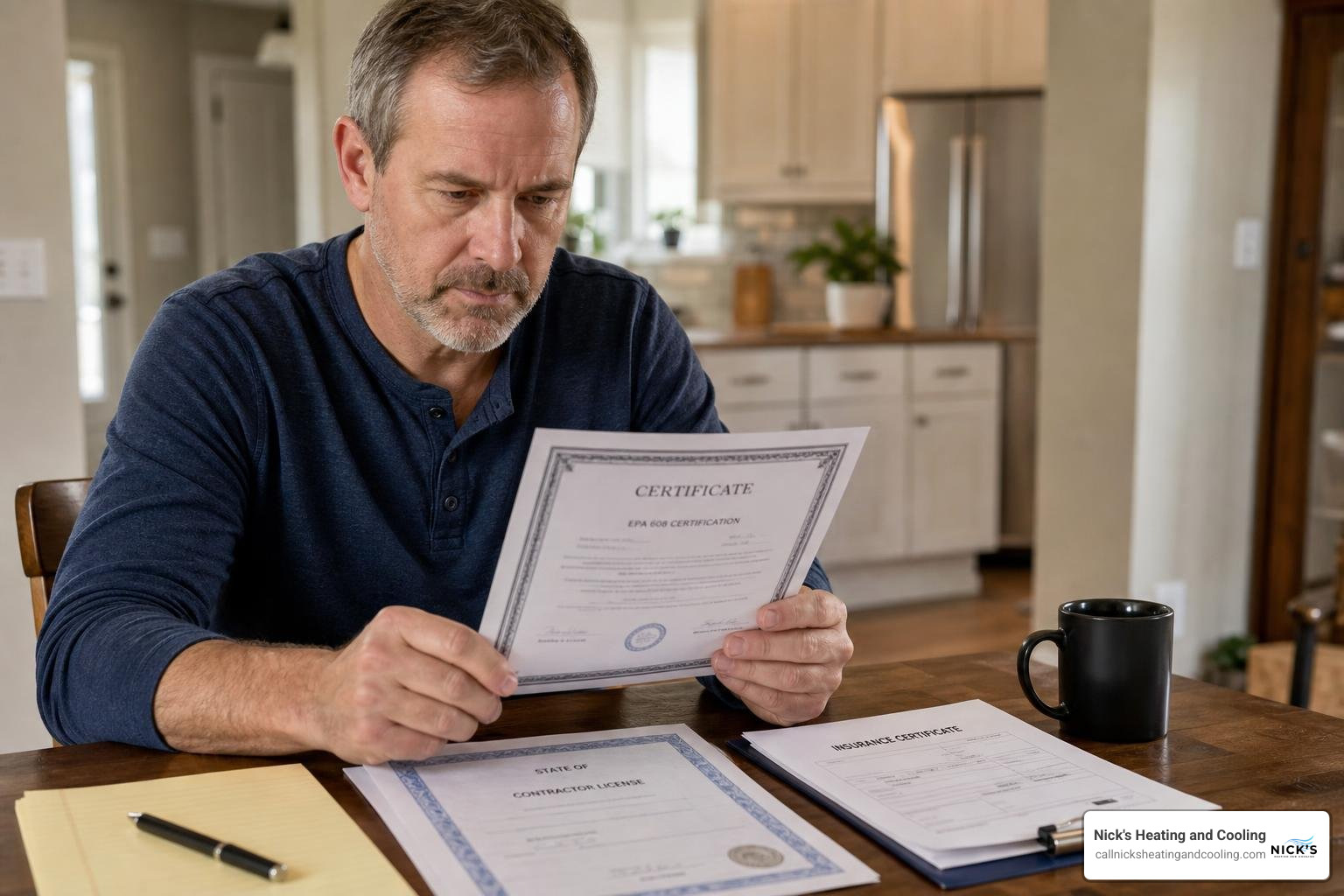
Let’s be honest: the HVAC industry has its fair share of “truck-and-a-ladder” operators who promise the world for a fraction of the price. While a lowball bid might look tempting on paper, hiring an uncertified or uninsured contractor is one of the riskiest moves a homeowner can make.
If you live in the Hoover area, verifying your contractor’s credentials is the single best way to protect your property and your wallet. If you are looking for a trusted, local professional who does things the right way, you can easily partner with a verified HVAC Contractor in Hoover to ensure your home is in safe hands.
Essential Certifications for an HVAC Contractor
When you are vetting potential contractors, look for specific, nationally recognized credentials that prove their technicians actually know what they are doing:
- NATE Certification: North American Technician Excellence (NATE) is the gold standard for technician certification in the HVAC industry. To earn NATE certification, a technician must pass rigorous, specialized exams testing their real-world knowledge of heating, ventilation, and air conditioning systems.
- ACCA Membership: The Air Conditioning Contractors of America (ACCA) is a non-profit national standard development organization. ACCA members commit to upholding strict industry standards regarding system design, installation, and ethical business practices.
- Manufacturer Certifications: Many major equipment brands require contractors to undergo specialized training to sell and install their premium systems. For example, some manufacturers require dealers to maintain consistent four-star consumer ratings to retain their factory-authorized status. This ensures that the technicians installing your high-end system are intimately familiar with its specific computerized components and wiring schematics.
Verifying State Licensing and Insurance
Certifications are fantastic, but legal compliance is non-negotiable. Before you sign any contract or allow a technician to open up your system, verify the following legal protections:
- State Licensing: Every legitimate contractor must be registered with their state’s licensing board (such as the State of Alabama Board of Heating, Air Conditioning & Refrigeration Under-Contractors). A valid license proves the contractor has passed state exams, understands local building codes, and is legally permitted to operate.
- General Liability Insurance: This insurance protects your home and property. If a technician accidentally causes a water leak or sparks an electrical fire while working on your system, the contractor’s liability insurance covers the damages—not your homeowner’s policy.
- Workers’ Compensation: If an uninsured worker slips, falls, or is injured while working in your attic or crawlspace, you could be held liable for their medical expenses. Always confirm that the company carries active workers’ compensation for all of its employees.
- Lead-Safe Certification: If your home was built before 1978, any renovation work that disturbs painted surfaces (like cutting a hole in a wall for a new duct or thermostat) must be performed by a lead-safe certified contractor. This protects your family from hazardous lead dust.
Taking a few minutes to verify these credentials separates the true professionals from the shady operators who cut corners.
The Hiring Roadmap: Sizing, Estimates, and Energy Efficiency
Ready to upgrade your system or schedule a major repair? Following a structured hiring roadmap will keep you from falling victim to high-pressure sales tactics or poorly sized equipment.
If you are located in the Birmingham area, starting your journey with a certified HVAC Contractor in Birmingham ensures you receive a thorough, professional assessment from local experts who understand our unique Southern climate.
Why Home Evaluations and Itemized Estimates Matter
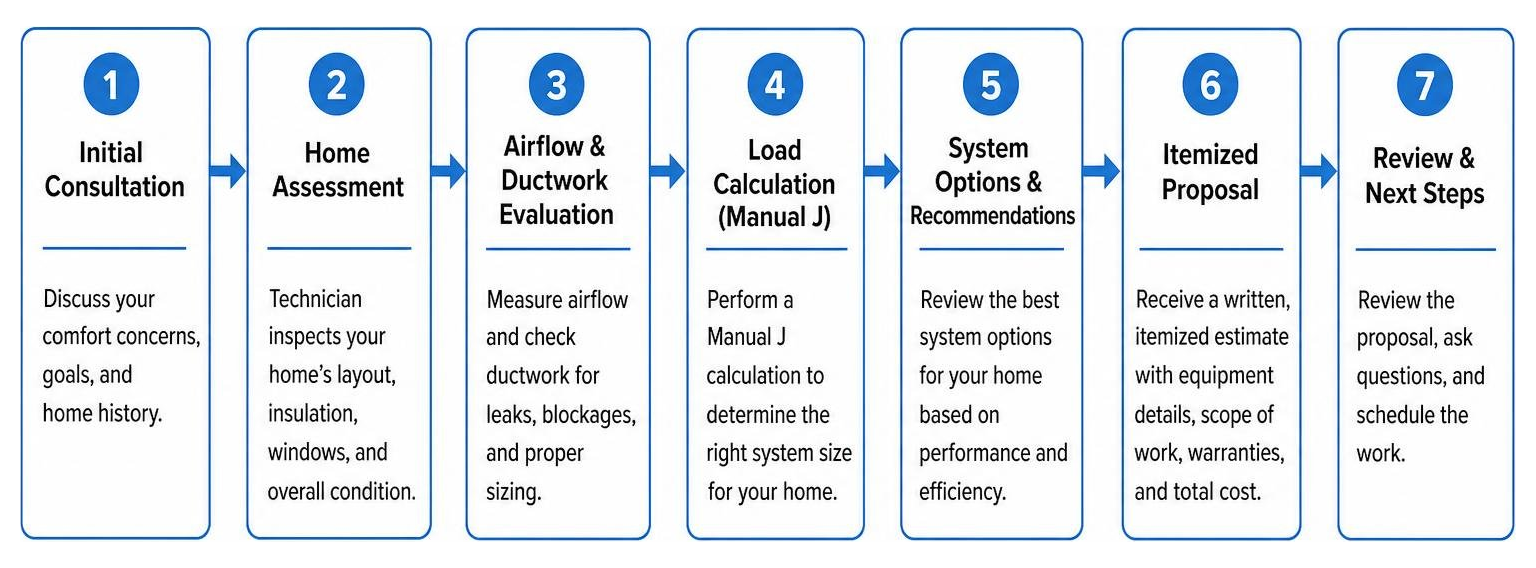
A reputable contractor will never sell you a new heating and cooling system over the phone based solely on your home’s square footage. Every house is unique. The direction your windows face, the quality of your insulation, the height of your ceilings, and the condition of your ductwork all impact how much heating or cooling your home actually needs.
Before any work begins, a professional technician should perform a comprehensive home evaluation. This includes measuring your airflow, inspecting your existing ductwork for leaks, and performing a Manual J load calculation to determine the exact system size your home requires. An oversized system will turn on and off rapidly (short-cycling), wearing out the compressor prematurely and leaving your home humid and uncomfortable. An undersized system will run constantly, driving up your power bills while failing to keep you comfortable.
Always insist on a written, itemized proposal. This document should clearly outline the scope of work, specific equipment model numbers, warranty terms, and the total cost.
Here is a quick look at why you should always demand a written, itemized estimate over a vague verbal quote:
| Feature | Written, Itemized Estimate | Verbal “Handshake” Quote |
|---|---|---|
| Equipment Detail | Lists exact manufacturer model and serial numbers | Vague descriptions (e.g., “a new 3-ton unit”) |
| Scope of Work | Details duct modifications, electrical work, and permits | Hidden fees often added mid-project |
| Warranty Terms | Clearly outlines labor and manufacturer parts warranties | Hard to enforce if the system fails early |
| Legal Protection | Acts as a binding contract protecting both parties | “He said, she said” if a dispute arises |
To understand what a thorough evaluation looks like, consider this step-by-step process:
Navigating ENERGY STAR Ratings and Rebates
When selecting new equipment, look for the ENERGY STAR label. ENERGY STAR certified products meet strict energy-efficiency guidelines set by the U.S. Environmental Protection Agency (EPA).
As a smart consumer, keep these key terms in mind:
- SEER2 (Seasonal Energy Efficiency Ratio 2): Measures the cooling efficiency of your air conditioner or heat pump. Higher numbers mean lower electricity bills.
- HSPF2 (Heating Seasonal Performance Factor 2): Measures the heating efficiency of a heat pump. The higher the rating, the more efficient the system.
Investing in high-efficiency systems pays off. In fact, 71% of consumers who purchased an ENERGY STAR qualified product would recommend it to a friend, and almost one-quarter of households knowingly purchased at least one ENERGY STAR product last year.
Further, utility-sponsored energy-efficiency programs have a proven track record of delivering massive savings. For example, the EmPOWER Maryland programs have saved $14.5 billion on installed measures at a cost of $4.1 billion since 2008. While those specific programs are local to Maryland, utility companies across the country, including right here in Alabama, frequently offer fantastic rebates, tax credits, and financial incentives when you upgrade to high-efficiency systems.
Top-tier contractors guide homeowners through these efficiency upgrades and custom system designs to ensure maximum savings. By focusing on proper system sizing and high-efficiency equipment, they help directly translate your initial investment into lower monthly operating costs and long-term reliability.
Frequently Asked Questions
How do I find a reputable technician in my area?
Finding a trustworthy professional doesn’t have to be a guessing game. Start by checking with reputable trade organizations like the ACCA, which offers a localized postal code directory to find certified contractors who adhere to national standards. You can also consult your local utility company’s directory of approved, participating contractors who are vetted to perform energy-efficiency upgrades.
Of course, word of mouth remains incredibly powerful. Ask your neighbors, friends, and family who they trust with their home comfort. To see how our family-owned business has spent years building a reputation for honesty, speed, and absolute integrity in the local community, visit our About Us page.
What are the benefits of ongoing maintenance plans?
An ongoing preventative maintenance plan is the single best way to protect your HVAC investment. These plans typically include two seasonal tune-ups per year—one in the spring for your AC, and one in the autumn for your heating system.
By enrolling in a maintenance plan, you enjoy:
- Lower monthly utility bills through optimized system performance
- Priority scheduling during peak summer and winter seasons
- Early detection of minor issues before they become emergency breakdowns
- Preservation of your manufacturer’s parts warranty, which often requires documented professional maintenance
If you are ready to protect your home and keep your system running like new, you can check out our available service plans or schedule your next tune-up on our Contact page.
How do contractors improve indoor air quality?
We spend up to 90% of our lives indoors, yet indoor air can be two to five times more polluted than outdoor air. Dust, pet dander, pollen, mold spores, and volatile organic compounds (VOCs) easily accumulate inside tightly sealed, modern homes.
A professional HVAC contractor can dramatically improve your indoor air quality by:
- Installing high-efficiency air filtration systems (MERV ratings of 8 to 16) to capture microscopic airborne particles
- Integrating whole-home dehumidifiers to manage muggy Southern summers, preventing mold growth and making your home feel naturally cooler
- Installing Energy Recovery Ventilators (ERVs) or Heat Recovery Ventilators (HRVs) to introduce fresh, filtered outdoor air into your home while expelling stale indoor air without losing heating or cooling efficiency
Conclusion
At the end of the day, your home’s heating and cooling system is far too important to leave to chance—or to an uncertified, uninsured operator. By taking the time to verify licensing, check for NATE and ACCA credentials, and insist on comprehensive home evaluations with itemized written estimates, you protect your family, your property, and your hard-earned money.
Building a long-term relationship with a reputable, certified contractor ensures your home remains a safe, comfortable, and energy-efficient haven year after year.
At Nick’s Heating and Cooling, we are proud to serve our neighbors across Birmingham and Hoover, AL. We combine highly trained, certified local technicians with absolute professionalism, rapid service, and a dedication to doing things right the first time. Whether you need a quick repair, a seasonal safety check, or a complete system replacement, we are here to provide the honest, high-quality service you deserve. Reach out to us today to schedule your free, no-obligation system inspection!