
Heating Replacement in Birmingham, AL: What to Know First
Budget about $3,690 for a furnace replacement in Birmingham in 2026. Reported prices range from roughly $2,050 to $6,150, but a heat pump or work on your ducts can change the total. If your current system is aging or needs frequent repairs, compare furnace and heat pump options before choosing a heating replacement in Birmingham, AL. A complete heating replacement in Birmingham, AL, should always start with a clear picture of your home’s needs.
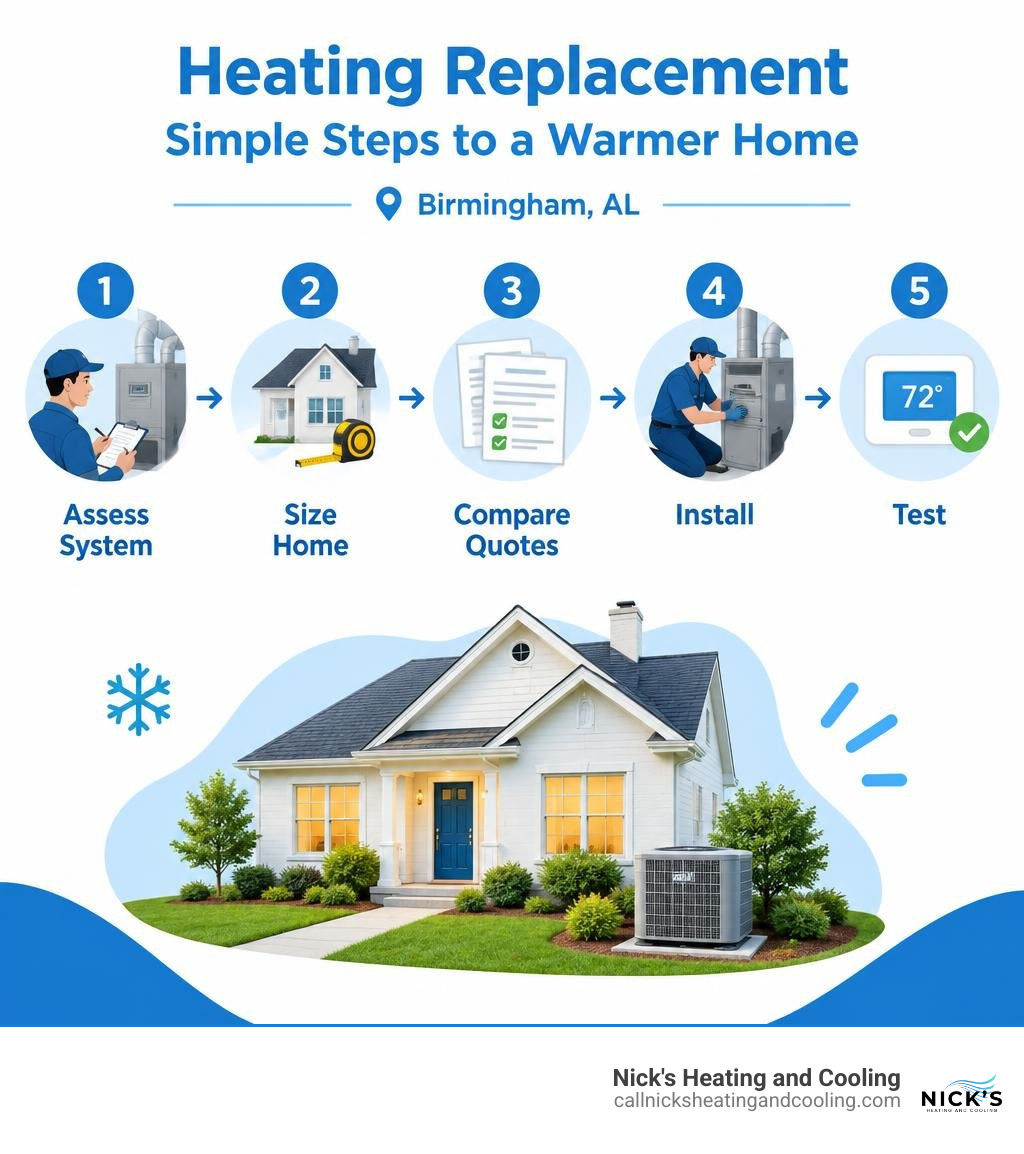
Ask each contractor for a Manual J load calculation to size the system for your home. Then get at least three written quotes that show the equipment, installation work, efficiency rating, and warranty.
Simple heating replacement birmingham al glossary:
Average Cost Breakdown for Heating Replacement Birmingham AL
When it comes to replacing your home’s central heating unit, knowing what other homeowners pay locally gives you a serious advantage. Based on data for Furnace Replacement Cost in Birmingham, AL (2026), the local average for a complete furnace replacement sits right at $3,690 per unit.
Depending on your home’s size, the accessibility of your equipment, and any necessary ductwork adjustments, local prices span from an entry-level low of $2,050 to a premium high of $6,150. In self-reported local surveys, Birmingham homeowners stated paying an average bill of $3,725, with standard projects falling between $2,608 and $5,401.
How does our Magic City market compare to the rest of the United States? Birmingham homeowners enjoy a significant price break. The national average cost for a furnace replacement is roughly $4,500, meaning our local installations run approximately 18% below what homeowners pay across the country.
| Metric | Birmingham, AL Average | National Average | Cost Difference |
|---|---|---|---|
| Entry-Level / Low-End | $2,050 | $2,500 | -$450 (-18%) |
| Typical Average Cost | $3,690 | $4,500 | -$810 (-18%) |
| Premium / High-End | $6,150 | $7,500 | -$1,350 (-18%) |
| Self-Reported Range | $2,608 – $5,401 | $3,200 – $6,800 | Lower across all tiers |
Cost by Heating System Type and Fuel Source
The fuel source powering your home plays a primary role in your final invoice. Electric, natural gas, and oil systems each demand different equipment engineering, safety controls, and venting requirements:
- Electric Furnaces ($2,000 – $4,500): Electric heating systems have the lowest upfront equipment and installation costs. They do not require exhaust flues, gas lines, or combustion ventilation, making labor straightforward. However, their higher operational electricity consumption can translate into higher monthly utility bills during extended cold snaps.
- Gas Furnaces ($3,000 – $6,000): Natural gas furnaces represent the most common replacement in established Birmingham neighborhoods. Because they involve gas piping connections, pressure testing, and dedicated venting, installation labor is slightly higher than electric models, but lower fuel rates yield excellent long-term operating costs.
- Oil Furnaces ($4,000 – $7,500): While less common across central Alabama today, older residential properties still utilize heating oil systems. Oil units carry heavier equipment prices and specialized venting protocols.
- Heat Pump Systems: For homes looking for combined heating and cooling versatility, exploring heat pump replacement options provides an all-electric, reverse-cycle alternative that works seamlessly in our moderate Southern climate.
Efficiency Ratings: Standard 80% vs. High-Efficiency 95%+ AFUE
Annual Fuel Utilization Efficiency (AFUE) measures how effectively a furnace converts fuel into usable heat. An 80% AFUE rating means 80% of the energy goes directly into heating your living space, while 20% escapes through the chimney or flue pipe.
- Standard Efficiency (80% AFUE): Costs between $2,500 and $4,000 fully installed in Birmingham. These units are affordable upfront and meet standard building codes for southern climates.
- High Efficiency (95%+ AFUE): Costs between $3,500 and $6,500 fully installed. These condensing systems feature secondary heat exchangers and sealed combustion vents that capture nearly all latent heat.
Upgrading from an old 70% or 80% unit to a modern 95%+ AFUE model can cut your seasonal heating bills by 20% to 30%. In a home that sees steady winter runtime, that operational savings offsets the higher initial purchase price over the equipment’s lifespan.
Heating Replacement Birmingham AL Cost Trends from 2022 to 2026
Equipment and labor costs have shifted noticeably over recent years. Between 2022 and 2026, the average furnace replacement cost in Birmingham increased by 17.7%, rising from $3,135 up to today’s $3,690 average.
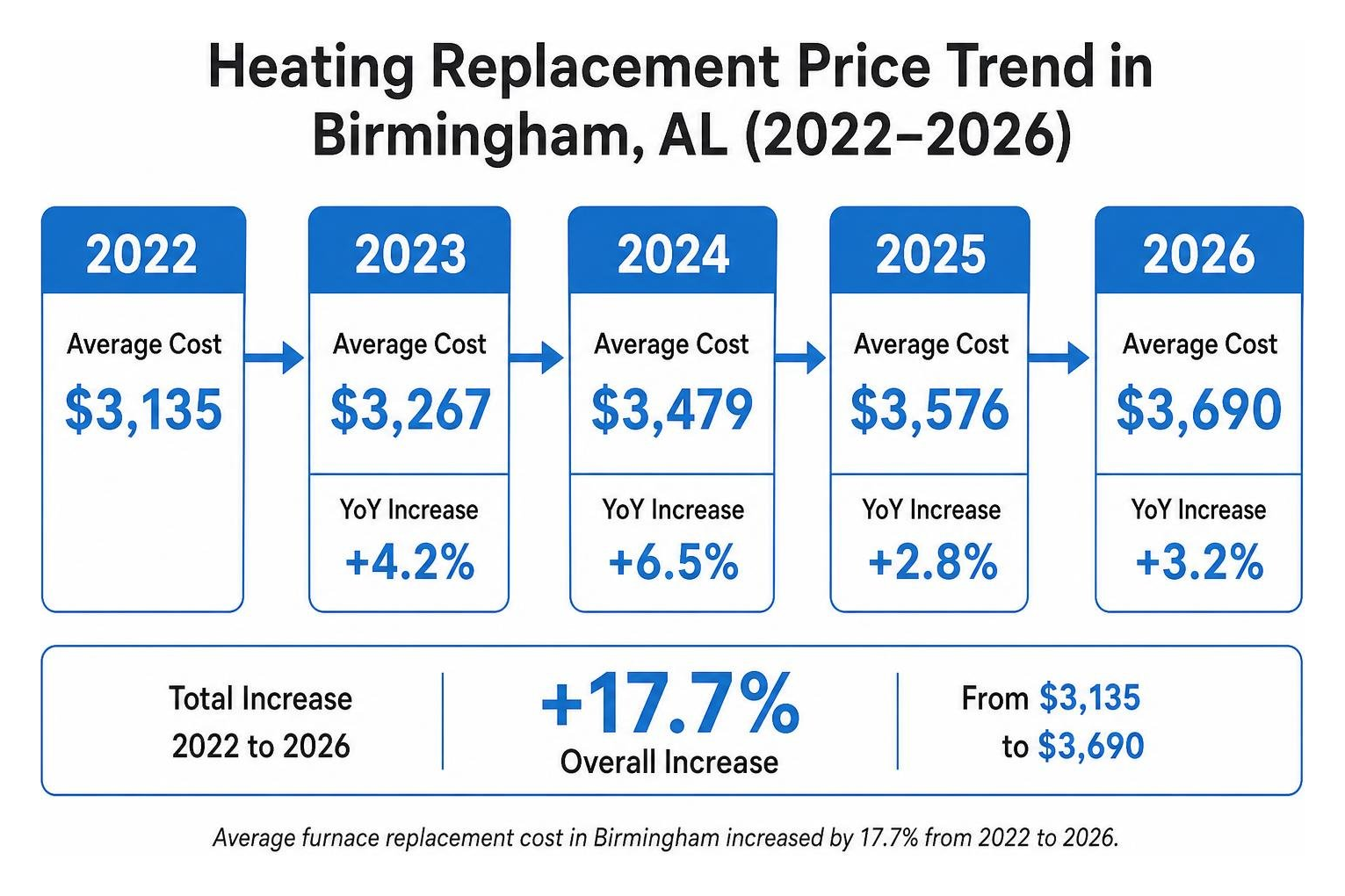
Here is how those annual price changes developed:
- 2022 to 2023: +4.2% increase as manufacturing and shipping adjusted post-pandemic.
- 2023 to 2024: +6.5% increase, representing the peak inflationary shift in raw materials like copper, steel, and aluminum.
- 2024 to 2025: +2.8% increase as supply chains stabilized.
- 2025 to 2026: +3.2% increase, aligning with standard regional cost-of-living and labor rate adjustments.
Key Factors Influencing Heating Installation and System Sizing
No two homes in Jefferson or Shelby County are built identically. Historical cottages in Homewood, mid-century ranches in Vestavia Hills, and new builds in Chelsea all exhibit unique thermal dynamics.
Beyond equipment pricing, several physical and technical variables impact your overall project cost:
- Ductwork Integrity: If your existing duct network is leaky, uninsulated, or undersized, static pressure will strangle your new heating system. Sealing or modifying sheet metal adds to initial labor but protects system longevity. For homes without existing duct infrastructure, evaluating the Birmingham guide to ductless AC installation offers targeted room-by-room heating without extensive renovations.
- Equipment Location: Units located in easily accessible utility closets require less labor than systems shoehorned into tight, unfloored attics or low-clearance crawl spaces.
- Electrical & Gas Infrastructure Upgrades: Switching from an older low-efficiency furnace to a modern condensing unit requires running dedicated PVC intake and exhaust lines through an exterior wall or roof deck.
Manual J Load Calculations and Sizing
One of the costliest mistakes a homeowner can make is purchasing an incorrectly sized furnace. A unit that is too small will run continuously without reaching your thermostat setpoint on freezing nights. Conversely, an oversized unit will short-cycle, turning on and off rapidly. Short-cycling creates unpleasant hot and cold spots, wears out electrical components prematurely, and fails to manage indoor humidity properly.
A rule of thumb for our region suggests roughly 30 to 60 BTUs (British Thermal Units) of heating capacity per square foot of living space. However, guessing based on square footage alone is never recommended.
A qualified technician must perform a comprehensive Manual J Load Calculation. This engineering standard evaluates:
- Total square footage and ceiling heights
- Insulation levels in your attic, crawl space, and exterior walls
- Window style, glazing, orientation, and solar heat gain
- Air infiltration and envelope tightness
Local Economic Factors and Permitting
Why do Birmingham homeowners pay less than the national average? Our balanced regional labor market and affordable cost of living help keep trade rates reasonable.
Installing a replacement heating unit also requires adherence to local municipal building and mechanical codes. Permitting ensures that gas lines are leak-free, electrical disconnects meet safety standards, and combustion gases vent outside your living area. Always confirm that your contractor maintains an active, verified entity registration via the Alabama Secretary of State: business entity search before signing any installation agreements.
How to Choose the Right Heating System and Contractor
Your heating unit’s performance is only as good as the technician who installs it. A poorly installed premium furnace will underperform, break down frequently, and void factory warranties.
When vetting potential HVAC companies, look for:
- Valid Licensing and Insurance: Ensure the company carries active Alabama State HVAC Board licensing, general liability coverage, and worker’s compensation. Partnering with the certified HVAC contractor safeguards your home against shoddy work and safety hazards.
- Transparent, Itemized Estimates: Never accept verbal quotes scribbled on a business card. Demand clear, written breakdowns detailing equipment model numbers, efficiency ratings, labor scope, and warranty terms.
- Comprehensive Service Capabilities: Choose a team equipped to provide professional AC repair and reliable heating and cooling solutions for every season of the year.
Tips to Maximize Savings on Heating Replacement Birmingham AL
Replacing your central heating system is an investment, but you don’t have to pay full retail price. Use these proven local strategies to keep more cash in your wallet:
- Buy During Off-Peak Shoulder Seasons: Most homeowners rush to replace their heating systems during the first severe winter freeze in December or January, when demand surges. If your system is limping along, schedule your replacement during late summer or early fall. Contractors often offer promotional equipment discounts and have more flexible installation schedules during these lulls.
- Leverage Federal Energy Tax Credits: Under current federal clean energy frameworks, high-efficiency heating systems and qualifying heat pumps can earn you substantial tax credits that reduce what you owe at tax time.
- Check Local Utility Rebates: Alabama Power and local natural gas providers frequently offer direct equipment rebates when you upgrade to qualified energy-efficient models.
- Collect Multiple Written Estimates: Secure at least three competitive quotes to compare equipment brands, labor warranties, and included services.
Protecting Your Investment with Ongoing Maintenance
Once your new heating unit is in place, consistent care is essential. Skipping seasonal tune-ups leads to clogged burner assemblies, dirty blower wheels, and cracked heat exchangers.
Scheduling regular HVAC maintenance each autumn ensures safe combustion operation, maintains factory warranty compliance, and keeps your system running at its peak efficiency rating year after year.
Frequently Asked Questions About Heating Replacement
How long does a furnace or heating system typically last?
A heating system’s operating life depends directly on its fuel type, usage patterns, and maintenance history:
- Gas Furnaces: 15 to 20 years
- Electric Furnaces: 20 to 30 years
- Oil Furnaces: 15 to 25 years
If your current furnace is past the 15-year mark and requires a repair costing more than 50% of a new replacement, investing in a new unit is the most financially sound choice.
What size heating unit does a Birmingham home need?
Most homes in our climate require between 30 and 60 BTUs per square foot. For example, a 2,000-square-foot home typically needs a system rated between 60,000 and 80,000 BTUs. However, older homes with minimal attic insulation require more heating capacity than newer, tightly sealed constructions. A certified technician must run a Manual J calculation to pinpoint your home’s exact requirement.
Why are heating replacement costs different in Birmingham compared to other cities?
Heating replacement costs in Birmingham run approximately 18% lower than national figures due to our regional economic conditions. Central Alabama benefits from lower overall trade labor rates, reasonable municipal permitting fees, and a favorable local tax climate compared to dense northern or western metropolitan areas. You can follow broader local business and cost-of-living updates on AL.com to see how our regional economy compares nationally.
Conclusion
Replacing your home’s heating system does not have to be an overwhelming or stressful experience. By understanding local pricing trends, selecting the right efficiency tier for your budget, and properly sizing your equipment with a Manual J load calculation, you can ensure reliable indoor warmth for decades to come.
At Nick’s Heating and Cooling, I believe in straightforward guidance without aggressive sales pressure. As a locally owned team of certified technicians, we provide free, no-obligation heating inspections and transparent quotes backed by professional integrity. When you are ready to evaluate your options, connect with your trusted Birmingham HVAC contractor to get started.
Nick’s Heating and Cooling currently services Birmingham, Hoover, Vestavia Hills, Mountain Brook, Alabaster, Chelsea, Homewood, Trussville, Pelham, and Irondale for all your HVAC and Heating needs.