
When You Need 24 Hour Emergency Heating Service
If your heat stops during a Birmingham freeze, call for 24 hour emergency heating service rather than waiting for regular business hours. Tell the dispatcher whether you have no heat, how cold the home is, and whether anyone there is especially vulnerable to the cold. I would ask for an arrival window and the after-hours fee before approving a visit.
If you smell gas or your carbon monoxide alarm sounds, leave immediately. Call 911 or your gas utility from outside. Do not stay inside to check the heater. If there is no immediate danger, you can check the thermostat setting, furnace power switch, and air filter while you arrange help.
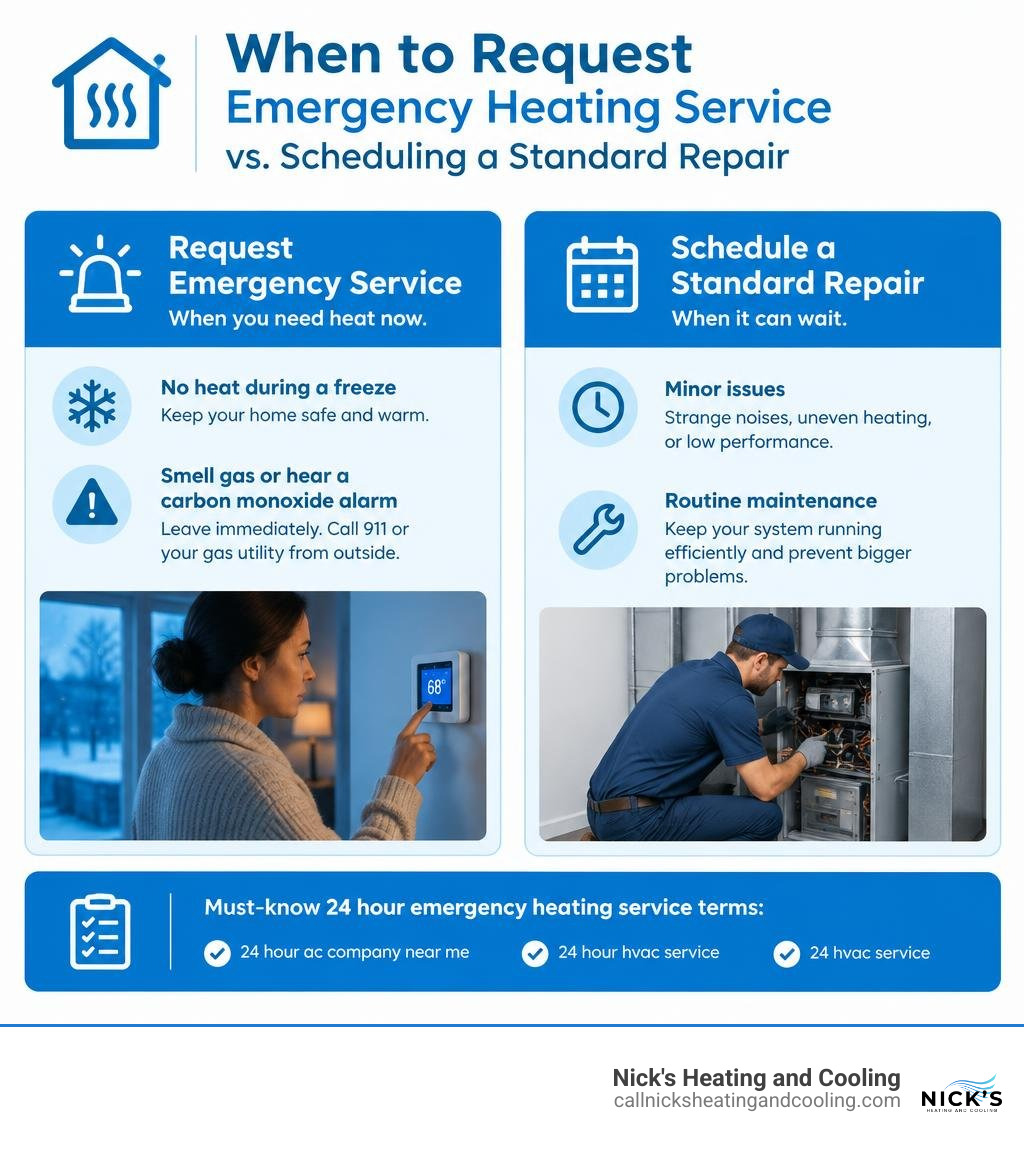
Must-know 24 hour emergency heating service terms:
When to Call for a 24 Hour Emergency Heating Service
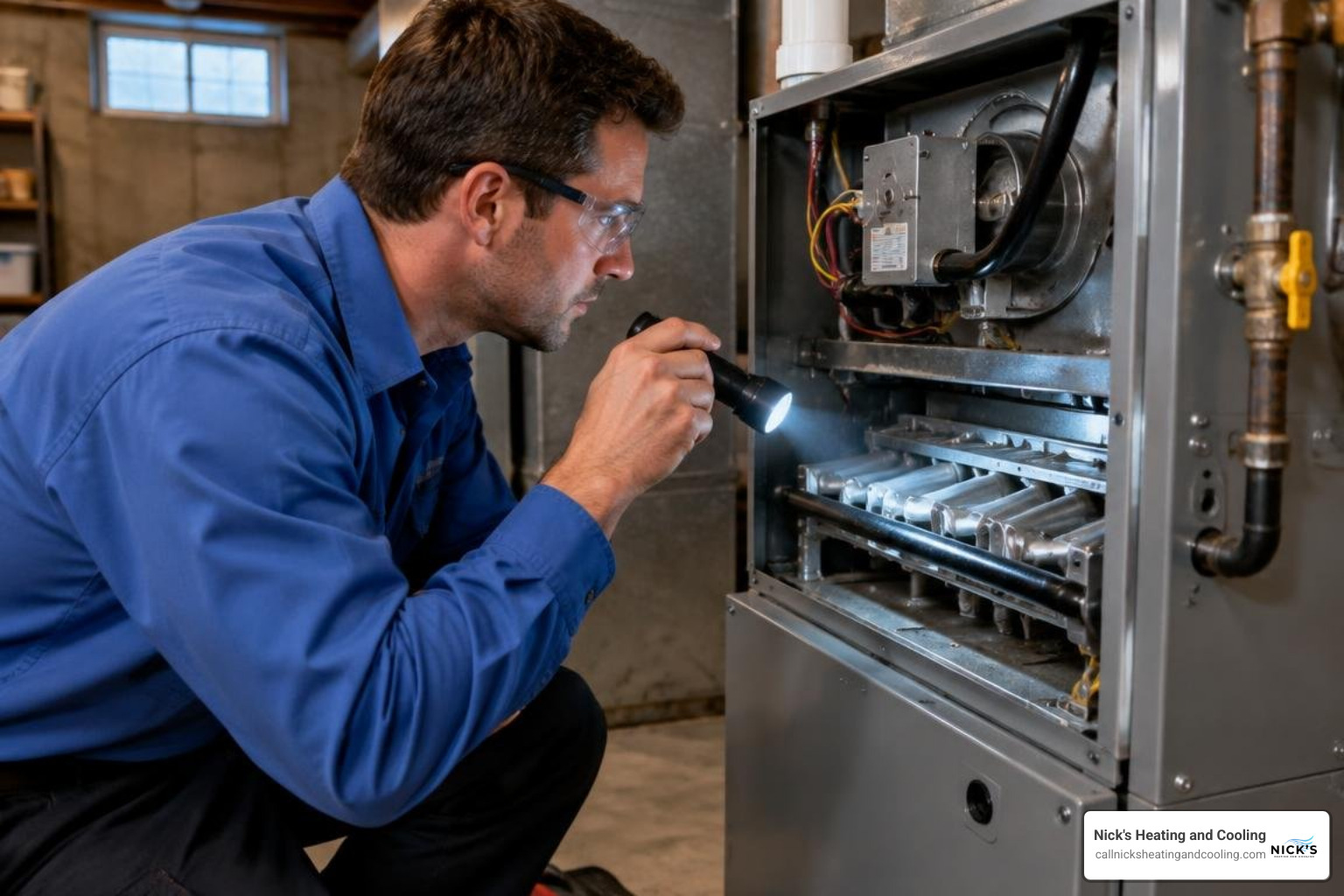
When an unexpected cold snap strikes Birmingham, heating equipment works under tremendous strain. I often see systems run continuously for the first time in months, which is when hidden component fatigue leads to sudden failures. In these moments, knowing whether to wait until morning or request immediate help is critical for your family’s safety and comfort. You can always keep your cool with the best HVAC services Birmingham has to offer by recognizing true heating emergencies early.
A sudden heating breakdown is not merely an inconvenience; sustained sub-freezing indoor conditions can put your home’s infrastructure at risk. Plumbing pipes routed through uninsulated crawlspaces, exterior walls, and basements can freeze and burst within hours of a system shutdown, resulting in catastrophic water damage.
Gas Odors, Smoke, and Carbon Monoxide Alarms
If you ever detect the distinct rotten-egg scent of natural gas, notice persistent smoke, or hear your carbon monoxide (CO) detector sounding, treat the situation as an immediate life-safety hazard.
- Evacuate every occupant and pet from the structure immediately without turning light switches on or off, as electrical sparks can ignite gas vapors.
- If accessible from the exterior, shut off your main gas meter valve.
- Call your local gas utility provider and 911 once you are a safe distance away.
- Contact an emergency HVAC professional to diagnose the root failure.
Cracked heat exchangers, blocked flue pipes, and improper burner combustion allow dangerous levels of carbon monoxide to leak directly into residential living areas. Because indoor air can naturally harbor two to five times more pollutants than outdoor air, an active combustion leak creates an immediate toxicity danger. Do not re-enter the property until emergency personnel give the all-clear.
Severe Sub-Freezing Drops and Vulnerable Occupants
When ambient outdoor temperatures plunge into the teens or single digits, indoor temperatures decline quickly. This drop poses severe health risks, including hypothermia, particularly for infants, elderly family members, and individuals with underlying medical conditions.
In my experience, certified HVAC dispatchers triage service queues specifically to prioritize homes housing vulnerable individuals during active hard freezes. Quick dispatch ensures heating restoration before indoor conditions fall to hazardous levels.
Safe Checks to Perform Before Requesting Emergency Repairs
Before you pick up the phone for after-hours service, there are a few simple, safe troubleshooting steps that could save you time and money. Some heating calls turn out to be minor control issues that take just seconds to correct.
| System Checkpoint | Safe Homeowner Action | Hazardous Action to Avoid |
|---|---|---|
| Thermostat | Replace dead batteries; set mode to HEAT above current room temperature | Attempting to rewire internal low-voltage terminals |
| Circuit Breaker | Reset a tripped heating breaker exactly once | Repeatedly resetting a breaker that immediately trips again |
| Equipment Switch | Confirm the furnace power switch (wall switch) is set to ON | Opening the sealed electrical control compartment |
| Air Filter | Inspect and replace a visibly clogged air filter | Operating the furnace without any filter installed |
| Registers & Vents | Ensure supply and return grilles are open and unobstructed | Modifying internal duct dampers or sealing vents shut |
For regular upkeep that prevents these issues altogether, scheduling routine furnace maintenance helps catch minor wear before a total system shutdown occurs.
Checking Thermostat Settings and Power Breakers
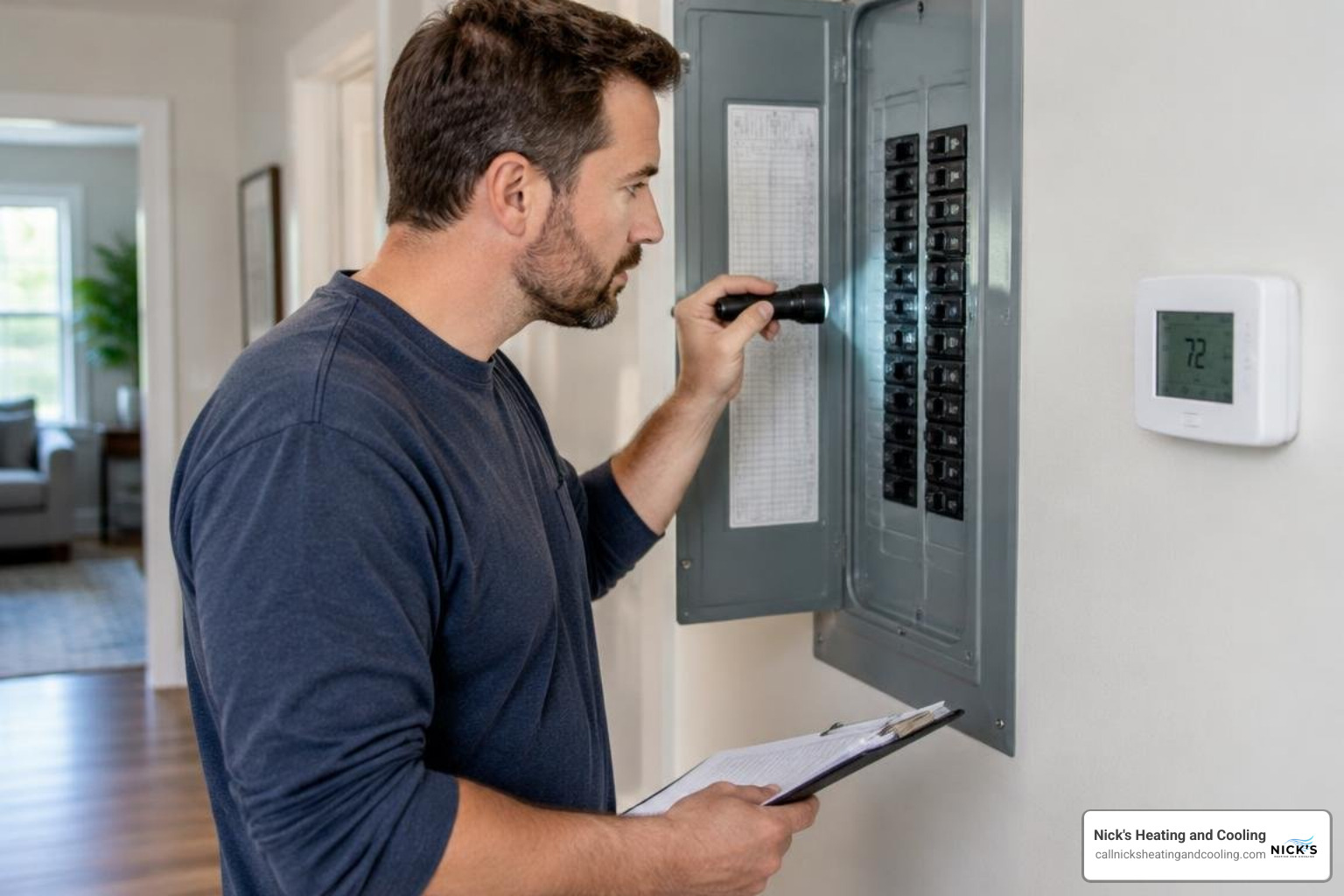
Thermostats can easily be switched off by accident or run out of battery power during a seasonal shift. I always recommend confirming that your thermostat display is active, the system selector is firmly set to “HEAT,” and the temperature setpoint is at least 3 to 5 degrees above the current room temperature.
Next, locate your home’s main electrical panel. Furnaces and heat pumps feature dedicated breakers that occasionally trip under peak electrical loads. If the breaker is in the tripped or neutral position, push it fully to “OFF” and then back to “ON” once. If it trips again immediately, stop. A recurring trip indicates a dead short or a failing motor that requires an experienced technician. If you have ever wondered why your HVAC system always fails at two in the morning, it is often due to sustained late-night heating cycles pushing electrical components to their limit.
Inspecting Air Filters and High-Limit Switches
A neglected, dust-choked air filter is one of the most common causes of complete furnace shutdowns. Modern heating systems include safety devices called high-limit switches. When a clogged air filter chokes off airflow across the heat exchanger, internal heat builds rapidly.
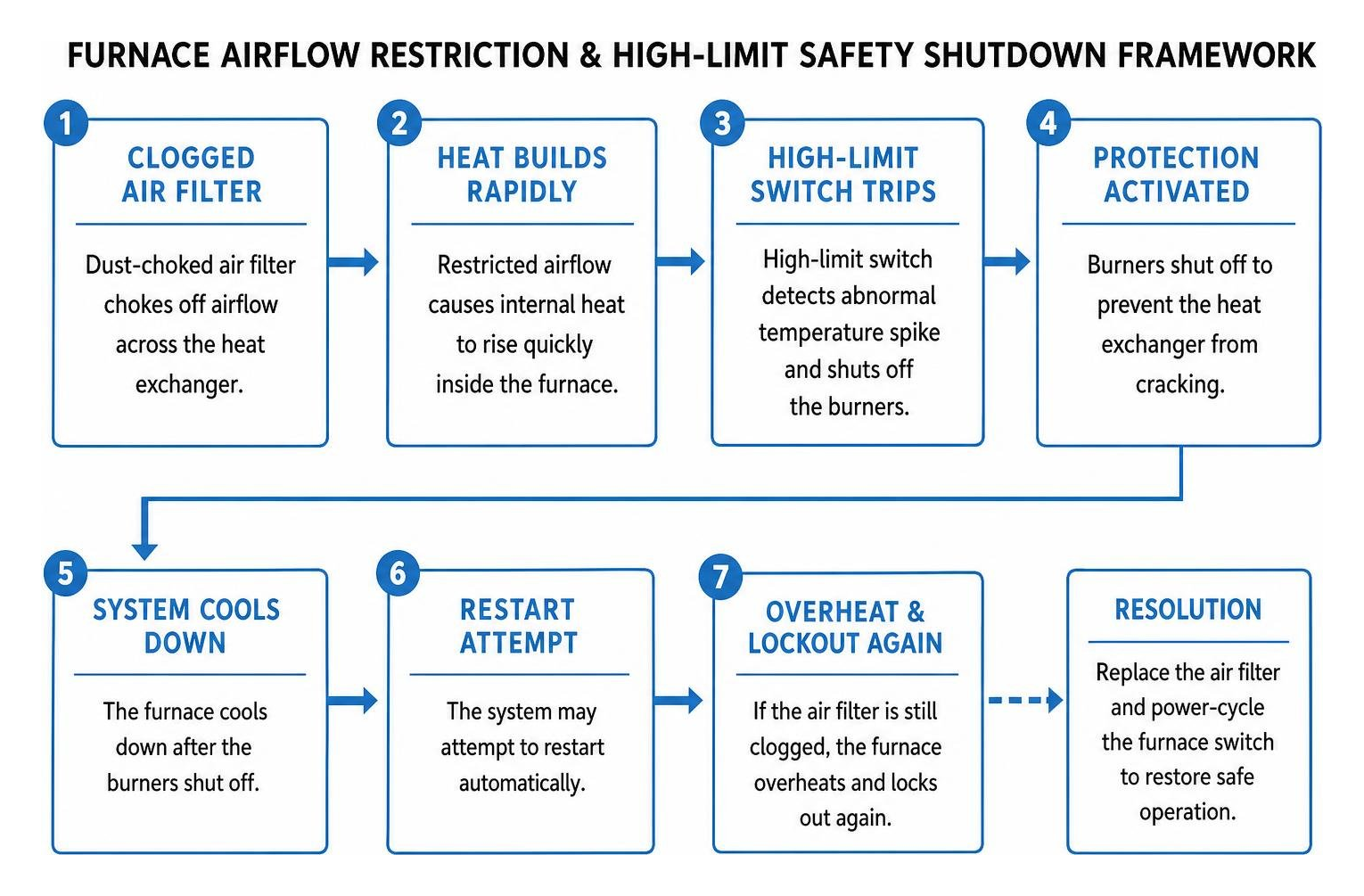
The high-limit switch detects this abnormal temperature spike and shuts off the burners to prevent the heat exchanger from cracking. Once the system cools down, it may attempt to restart, only to overheat and lock out again. Swapping in a fresh filter and power-cycling the furnace switch can resolve this issue without requiring an emergency parts replacement.
How Emergency Technicians Restore Different Heating Equipment
When basic checks fail, calling for a 24-hour emergency heating technician ensures a certified professional arrives with specialized diagnostic tools, including digital manometers, combustion analyzers, and multimeters.
Professional emergency teams operate fully stocked service vehicles carrying universal replacement parts. Having common igniters, flame sensors, run capacitors, blower motors, and contactors on board allows us to achieve first-trip resolution and restore heat without forcing you to wait for parts warehouses to open on Monday morning. If your unit requires extensive repairs, professional furnace repair ensures each mechanical component meets factory safety specifications.
What Systems Qualify for 24 Hour Emergency Heating Service?
Emergency repair support covers virtually all residential heating configurations, including:
- Natural Gas & Propane Furnaces: Resolving ignition lockouts, failed draft inducer blowers, sticking gas valves, and cracked heat exchangers.
- Electric Furnaces: Replacing burned sequencer relays, open limit switches, and failed heating elements.
- Air-Source Heat Pumps: Diagnosing stuck four-way reversing valves, malfunctioning defrost control boards, failed compressors, and seized fan motors.
- Dual-Fuel Hybrid Systems: Troubleshooting the intelligent controls that coordinate operation between electric heat pumps and secondary gas furnaces.
- Ductless Mini-Splits: Repairing inverter control boards, communication wiring errors, and refrigerant leaks.
Emergency Furnace and Heat Pump Repairs
On gas furnaces, dirty flame sensors and burnt-out hot surface igniters cause the majority of no-heat calls. Technicians can clean or replace these parts quickly.
For heat pump systems during freezing temperatures, problems often arise in the defrost cycle or auxiliary heat strips. When outdoor coils ice up, the defrost control board must reverse refrigerant flow to melt the frost while engaging electric resistance strips to keep indoor supply air warm. If the auxiliary heat elements fail, the system will blow cold air into the home, requiring immediate electrical troubleshooting.
Emergency Heating Repair vs. Immediate Replacement
When faced with a late-night heating breakdown, you might have to decide whether to repair the existing equipment or invest in an emergency system replacement.
If a furnace is under 10 years old and the repair cost is reasonable, restoring the unit makes economic sense. However, if your heating system is over 15 years old and suffers a major failure—such as a cracked heat exchanger, failed compressor, or burnt-out blower motor—repairing it may simply delay an inevitable replacement. In those situations, scheduling a new furnace installation delivers immediate peace of mind and improves long-term reliability.
Expected Costs and Rates for 24-Hour Emergency Heating Service
Emergency HVAC dispatches involve transparent after-hours rate structures designed to cover dedicated on-call staff. Standard after-hours dispatch fees typically average $160 for calls between 4:00 p.m. and midnight, while late-night emergency dispatches between midnight and 6:00 a.m. usually run around $240.
To better manage these expenses, review what you need to know about 24 hour heating and cooling service costs before authorizing major repairs. Homeowners enrolled in ongoing maintenance plans typically receive a 50% discount on emergency service dispatch fees, bringing those rates down to approximately $80 in the evening and $120 during late-night hours.
The $5,000 Rule and Equipment Age Benchmarks
An industry guideline I rely on is the “$5,000 Rule.” Multiply the age of your heating system in years by the estimated repair cost in dollars:
- If the result exceeds $5,000, replacing the system is generally the more economical choice.
- If the result is under $5,000, proceeding with the repair is usually practical.
Studies show that properly maintained HVAC systems last 40% longer and consume 25% less energy than neglected equipment. Furthermore, modern high-efficiency condensing gas furnaces deliver up to 98.5% AFUE (Annual Fuel Utilization Efficiency) ratings, offering up to a 50% efficiency improvement over systems installed two decades ago.
What to Do While Waiting for Your Heating Technician
Once your emergency heating call is dispatched, taking a few steps inside your home will help conserve heat and prepare for the technician’s arrival.
- Isolate Living Areas: Gather household members into a centrally located room. Close interior doors to unused bedrooms and bathrooms to trap remaining thermal energy.
- Use Supplemental Heaters Safely: If operating portable electric space heaters, plug them directly into wall outlets rather than extension cords. Maintain at least three feet of clearance from curtains, bedding, and furniture, and never leave space heaters unattended.
- Block Drafts: Place rolled towels or draft stoppers along exterior door thresholds and window sills to slow down heat loss.
- Clear Access Paths: Unlock gates, turn on exterior floodlights, clear interior pathways to the furnace or heat pump, and secure household pets in a separate room.
Homeowners in surrounding communities can easily keep your cool with top HVAC services in Hoover AL to ensure their homes remain safe during severe weather.
Frequently Asked Questions About Emergency Heating
How quickly will an emergency heating technician arrive?
Emergency dispatch response times vary based on severe weather road conditions and current call volume, but urgent calls are typically triaged for arrival within 45 to 90 minutes. Priority is always given to households without any functioning heat source during hard freezing temperatures or where vulnerable occupants reside.
Can a clogged air filter completely shut down my furnace?
Yes. A dirty, blocked air filter severely restricts the return airflow needed to cool the combustion chamber. This causes internal temperatures to spike, tripping the high-limit safety switch and forcing an automatic safety shutdown to prevent the heat exchanger from cracking.
Will maintenance plans reduce emergency service fees?
Yes. Enrolling in an annual HVAC maintenance plan typically grants you priority queue placement during severe weather freezes and provides significant discounts—often up to 50% off standard after-hours and late-night emergency dispatch diagnostic fees.
Conclusion
A mid-winter heating failure can be stressful, but you don’t have to face freezing indoor temperatures alone. When your heating system breaks down overnight or over the weekend, contacting a dedicated, locally owned team ensures fast diagnostics, transparent upfront pricing, and long-lasting repairs. Our certified technicians bring the expertise and stocked replacement components required to get your heat running safely again. For dependable repairs and free, no-obligation system inspections, trust Nick’s Heating and Cooling to keep your home warm and secure all winter long.
Nick’s Heating and Cooling currently services Birmingham, Hoover, Vestavia Hills, Mountain Brook, Alabaster, Chelsea, Homewood, Trussville, Pelham, and Irondale for all your HVAC and Heating needs.