

What 24-Hour HVAC Service Costs When You Need Help Now
If your heat or AC fails after hours in Birmingham, call a 24-hour HVAC service and ask for an arrival estimate and the cost of a diagnostic visit before booking. Emergency repairs may cost more than daytime work because of after-hours labor, travel, and the parts needed. Ask whether the diagnostic fee is separate from the repair price and request a quote before work begins.
If you smell gas or a carbon monoxide alarm sounds, leave the building and call emergency services first. Otherwise, check your thermostat and air filter while you wait. This guide explains which problems need urgent help and what drives the final bill.
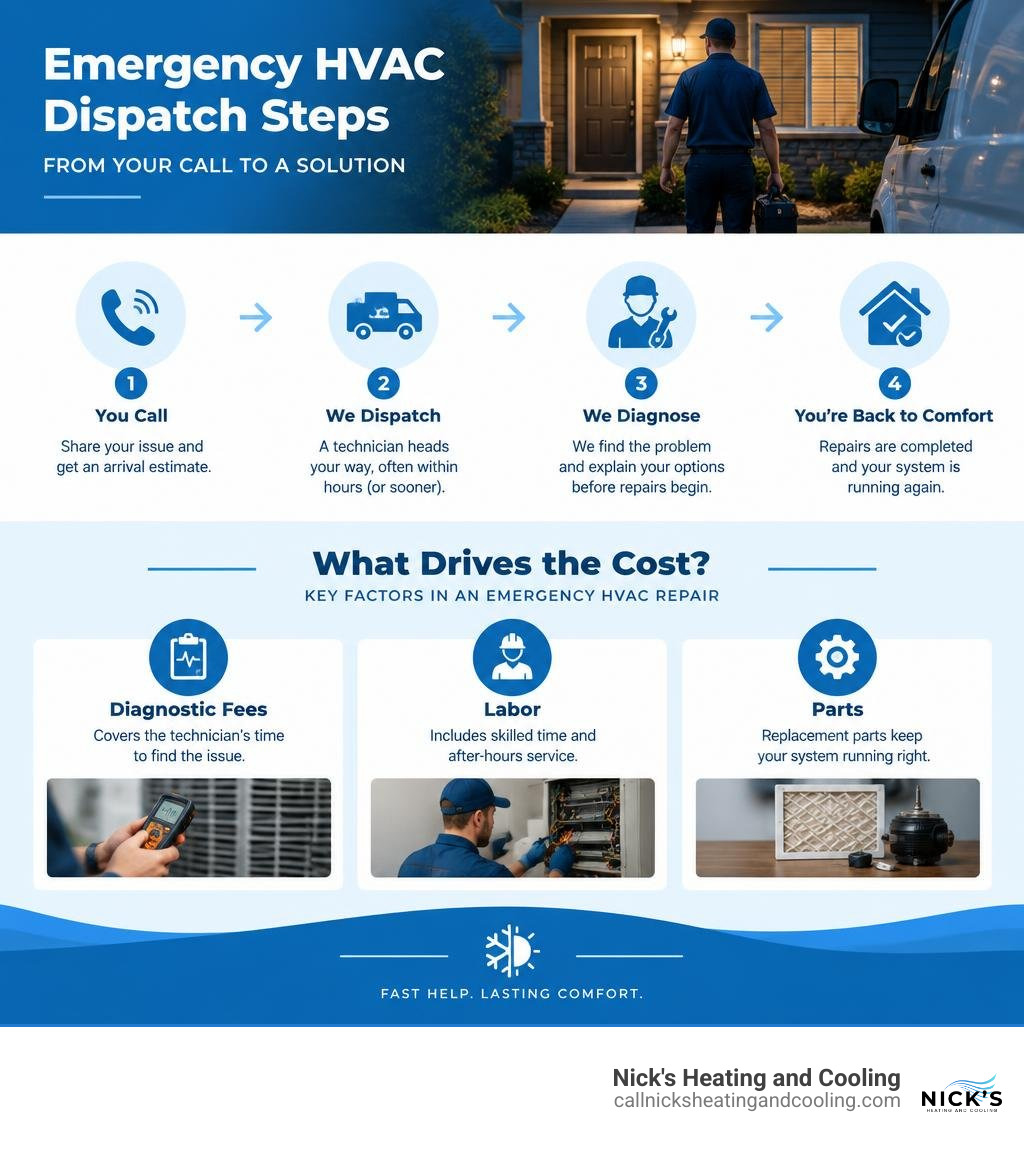
Easy 24 hvac service word list:
Understanding 24 HVAC Service Costs and What to Expect
When your system fails during a stifling July heatwave or an unexpected winter freeze, you cannot always wait until regular business hours. Calling for emergency service outside normal operational hours introduces unique pricing structures. Understanding how these fees are calculated helps you manage expenses without surprises.
Emergency HVAC pricing is generally composed of three primary elements:
- The Diagnostic or Trip Fee: The base cost to dispatch an on-call technician to inspect and pinpoint the mechanical or electrical failure.
- Emergency Labor Rates: Premium labor charges applied to work performed during nights, weekends, or statutory holidays.
- Replacement Parts and Materials: The specific components required to restore safe operation, such as capacitors, blower motors, or control boards.
Many reliable heating and cooling companies use flat-rate pricing guides, meaning you receive an upfront price quote before any physical repair begins. The table below outlines how typical standard daytime repair costs compare to urgent after-hours visits.
| Component / Repair Task | Typical Daytime Cost Range | Typical 24-Hour Emergency Range | Key Cost Drivers |
|---|---|---|---|
| Diagnostic / Trip Assessment | $75 – $150 | $150 – $300 | Travel distance, night dispatch premiums |
| Run / Start Capacitor | $120 – $250 | $220 – $400 | Voltage rating, electrical testing |
| Contactor Replacement | $150 – $300 | $250 – $450 | Single vs. dual-pole, coil voltage |
| Blower Motor Replacement | $400 – $900 | $650 – $1,300 | ECM vs. PSC motor, horsepower specs |
| Flame Sensor / Ignitor | $150 – $350 | $275 – $500 | Electronic vs. hot surface, access |
| Refrigerant Leak Diagnosis & Recharge | $250 – $800 | $450 – $1,200 | Refrigerant type (R-410A), leak location |
Whenever sudden cooling failures occur on the hottest summer days, scheduling timely emergency AC repair prevents minor component failures from damaging major parts like your compressor.
Emergency Diagnostic and Trip Fees
A diagnostic or trip fee covers the technician’s time, specialized testing equipment, fuel, and dispatch logistics. Standard daytime diagnostic fees usually range from $75 to $150. However, for calls placed late at night, on weekends, or during holidays, this fee frequently climbs to $150 to $300.
Some service providers offer diagnostic fee waivers or credits if you approve the necessary repair on the spot. Always verify whether the trip charge applies on top of the repair or rolls into the final invoice before the technician heads to your home.
Standard Labor Rates vs. After-Hours Flat Rates
Standard daytime HVAC labor rates typically average $90 to $175 per hour. For late-night or holiday dispatches, overtime labor multipliers (such as 1.5x or 2x regular rates) may apply if the contractor bills by the hour.
Alternatively, companies utilizing flat-rate pricing charge predetermined fees based on the repair category rather than tracking minutes on the clock. Flat-rate billing provides clarity because you approve the final price in writing before work begins, regardless of how long the technician spends on the repair.
Typical Cost Ranges for Urgent Heating and Cooling Repairs
Urgent repairs span a broad spectrum depending on the complexity of the failing component. Minor electrical issues, like a burned-out contactor or failed dual-run capacitor, are relatively inexpensive and fast to replace. Major mechanical breakdowns—such as a cracked heat exchanger, a grounded compressor, or a flooded blower assembly—require extensive labor and expensive hardware.
If your furnace quits during sub-freezing temperatures, securing urgent furnace repair ensures your home stays warm and your plumbing pipes avoid freezing.
What Qualifies as an HVAC Emergency?
Not every heating or cooling issue warrants paying an after-hours emergency surcharge. An HVAC breakdown becomes a true emergency when it threatens physical safety, endangers vulnerable family members during severe weather, or risks structural damage to your home.
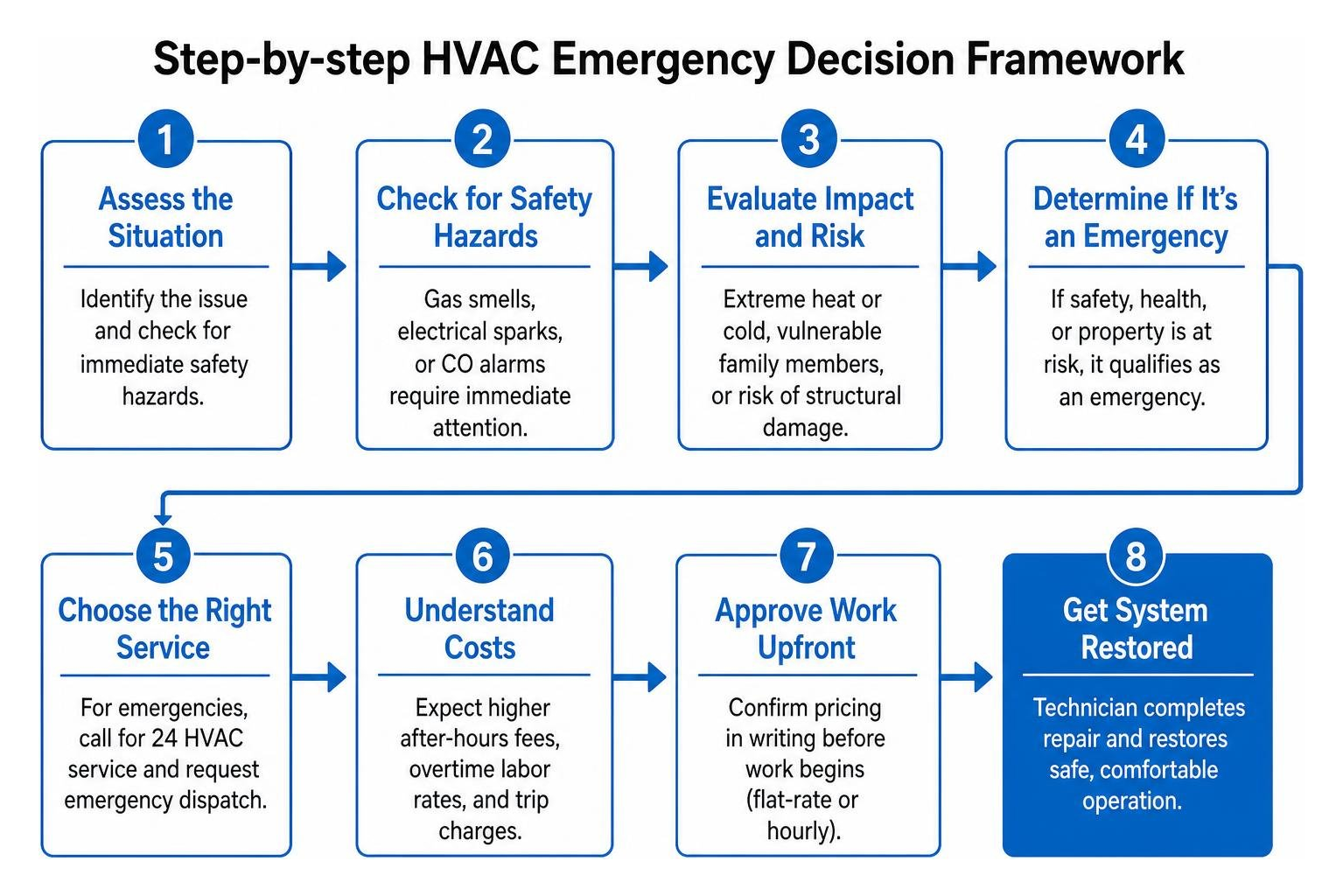
Understanding why systems fail during extreme night temperatures can help you determine whether your situation demands an immediate emergency call or if you can safely schedule a standard visit the next morning.
Safety Hazards: Gas Smells, Electrical Sparks, and CO Alarms
Safety hazards require immediate shutdown and professional attention:
- Natural Gas Odors: A distinct rotten-egg smell near your furnace indicates a gas leak. Shut off your system, evacuate your home immediately, and call the gas utility before contacting an HVAC technician.
- Carbon Monoxide (CO) Alarms: CO is a colorless, odorless, and potentially fatal byproduct of incomplete combustion. If your alarm sounds, leave the home immediately and call emergency services.
- Electrical Burning or Sparking: Acrid, fishy, or plastic burning smells from your vents or breaker panel suggest electrical arcing or overheating wiring, posing an immediate fire risk.
Extreme Weather and Vulnerable Household Risks
Extreme temperatures can turn an uncomfortable house into a health hazard:
- Freezing Conditions: When outdoor temperatures drop below freezing, a complete heating failure can cause household water pipes to burst within hours, resulting in costly water damage.
- Severe Heatwaves: Indoor temperatures exceeding 85°F to 90°F during high-humidity weather pose severe risks of heat exhaustion or heat stroke, particularly for infants, elderly relatives, or individuals with chronic illnesses.
Warning Signs That Demand Urgent 24 HVAC Service
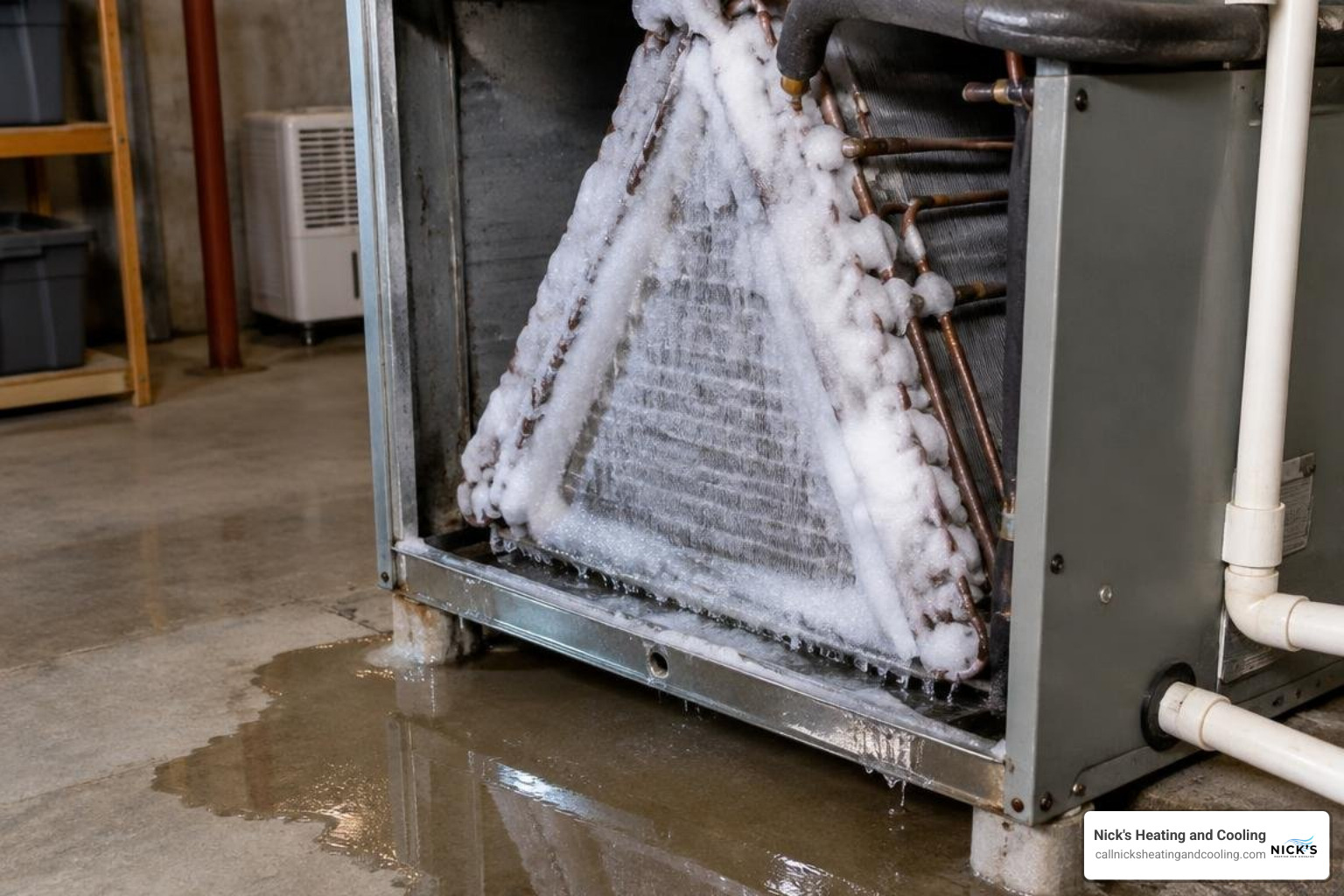
- Continuous circuit breaker tripping whenever the heating or cooling system kicks on.
- Loud metallic screeching, grinding, or banging sounds coming from the blower wheel or compressor.
- Severe water pooling around your indoor furnace or air handler that threatens ceilings and flooring.
- Thick ice accumulating across the indoor evaporator coil and external copper refrigerant lines.
What to Do During an HVAC Breakdown
Taking structured, immediate steps when your system fails protects your equipment and ensures a smooth repair visit. Carrier outlines a clear framework for emergency HVAC repairs that focuses on safety first, basic verification, and clear communication with your service provider.
Immediate Safety Actions and Pre-Call Troubleshooting
Before calling for emergency service, walk through these safe, basic checks:
- Turn Off the System: If you hear grinding, smell burning, or notice pooling water, switch the system off at the thermostat and the main circuit breaker.
- Check the Thermostat: Ensure the thermostat is set to the correct mode (Heat or Cool), verify the set temperature is at least 3 to 5 degrees beyond the current room reading, and replace dead AA/AAA batteries.
- Inspect the Air Filter: A clogged air filter restricts airflow, causing evaporator coils to freeze or furnaces to overheat and trip their high-limit switches. Replace dirty filters immediately.
- Inspect Breakers and Switches: Check that the dedicated HVAC breakers haven’t tripped in your main electrical panel. Also confirm that the emergency power switch near your indoor air handler wasn’t accidentally flipped off.
- Clear Access: Clear clutter, storage boxes, and overgrown brush away from both your indoor air handler and outdoor condenser to give the technician direct access.
What to Expect When Requesting 24 HVAC Service
When you call for 24-hour service, an on-call dispatcher collects key details regarding your system type, the symptoms you observed, and your home address. The dispatcher provides an estimated time of arrival (ETA) based on local road conditions and technician availability.
A certified technician arrives in a stocked service vehicle carrying essential testing gauges, meters, and universal replacement parts to resolve most common heating and cooling failures on the spot. If you need reliable help in nearby communities, finding reputable Hoover HVAC repair and replacement gives you peace of mind that local technicians understand area building styles and climate demands.
Residential vs. Commercial 24-Hour HVAC Service Demands
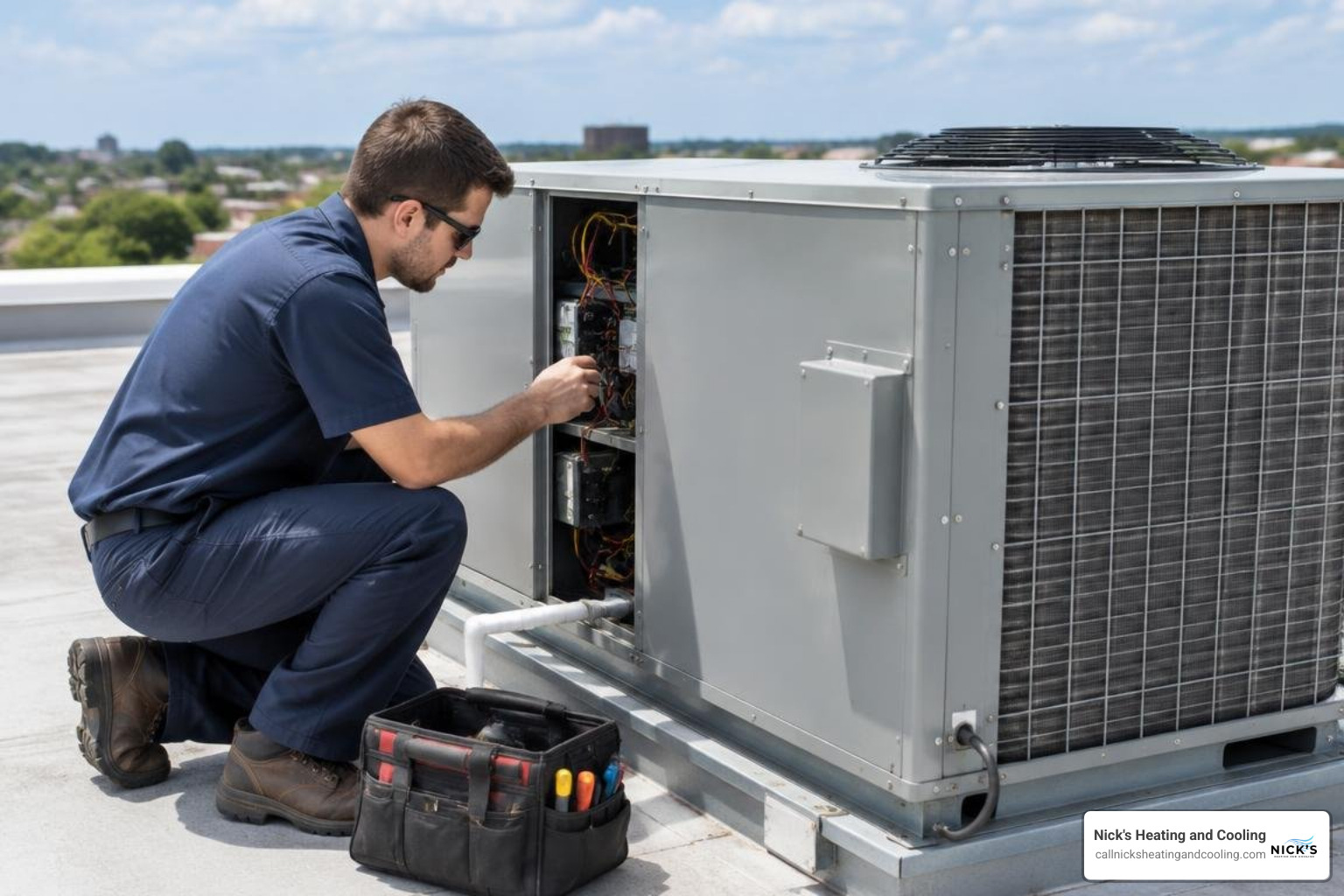
While residential calls center around family comfort and property safety, commercial emergency calls carry unique operational and financial stakes.
Systems Covered: Heat Pumps, Furnaces, Boilers, and Rooftop Units
Emergency technicians service a wide range of residential and light commercial equipment:
- Residential Systems: Split-system heat pumps, gas and electric furnaces, ductless mini-splits, and central air conditioning systems.
- Commercial Systems: Packaged rooftop units (RTUs), light commercial split systems, multi-zone VRF systems, and dedicated computer room air conditioners (CRAC).
Commercial Downtime and Priority Response Protocols
For businesses, an HVAC failure can stop operations, spoil inventory, or compromise critical IT equipment:
- Revenue Protection: Overheated retail spaces drive customers away, while restaurant kitchen failures create unsafe working conditions.
- Data Protection: Server rooms generate immense heat and require constant cooling to prevent expensive servers from shutting down or burning out.
- Tenant Comfort: Property managers must maintain habitable temperatures to comply with local commercial lease agreements and health codes.
How to Prevent Costly After-Hours Emergency Calls
While 24-hour service is essential when unexpected breakdowns strike, most emergency calls can be avoided with consistent maintenance. Investing in professional heating and cooling solutions extends system lifespan and keeps utility bills low.
Routine Seasonal Tune-Ups and Inspections
HVAC equipment works hard year-round. Scheduling bi-annual tune-ups—once in the spring for cooling and once in the fall for heating—lets technicians catch weak capacitors, worn electrical contactors, dirty flame sensors, and refrigerant leaks before they turn into midnight emergencies.
- Book your spring routine AC maintenance to clean dirty outdoor condenser coils, test electrical components, and check operating pressures.
- Schedule your fall annual furnace maintenance to inspect heat exchangers for dangerous cracks, clear burner assemblies, and test all safety limit switches.
Homeowner Best Practices and Surge Protection
You can protect your equipment between professional visits with a few simple habits:
- Change Filters Regularly: Replace standard 1-inch pleated filters every 30 to 90 days.
- Maintain Outdoor Clearances: Keep leaves, tall grass, and garden mulch at least 2 feet away from your outdoor condenser to ensure unrestricted airflow.
- Install Whole-Home Surge Protectors: Voltage spikes from summer thunderstorms can destroy sensitive control boards and variable-speed blower motors. Dedicated surge protection guards your system against electrical damage.
- Use a Programmable or Smart Thermostat: Smart thermostats prevent excessive system strain by gradually adjusting indoor temperatures and sending alerts if indoor temperatures drift outside safe ranges.
Frequently Asked Questions About Emergency HVAC Repairs
How much extra does emergency HVAC repair cost after hours?
Emergency repairs generally cost between $100 and $250 more than standard daytime services. This difference is driven primarily by after-hours dispatch fees and overtime labor rates. The cost of replacement parts remains the same regardless of what time the repair takes place.
Can I troubleshoot my HVAC system before calling for emergency repair?
Yes, basic troubleshooting is safe and recommended. You should verify your thermostat settings and batteries, replace a clogged air filter, confirm that the system’s power switch is turned on, and check for tripped breakers. Do not attempt to open electrical access panels, handle refrigerants, or work on gas lines yourself.
How quickly does an emergency HVAC technician arrive?
In most metro areas, emergency technicians typically arrive within 1 to 3 hours of your initial call. Response times depend on current technician availability, severe weather conditions, and travel distance across town.
Conclusion
HVAC emergencies are stressful, but knowing what to do and understanding the associated costs helps you make confident decisions for your home. When unexpected breakdowns threaten your safety or comfort, relying on upfront pricing and certified technicians gets your heating or cooling system back online quickly.
For fast, dependable diagnostics and honest repairs across the greater Birmingham metro, count on Nick’s Heating and Cooling to keep your home comfortable year-round.
Nick’s Heating and Cooling currently services Birmingham, Hoover, Vestavia Hills, Mountain Brook, Alabaster, Chelsea, Homewood, Trussville, Pelham, and Irondale for all your HVAC and Heating needs.