

Avoid Surprise New AC Installation Charges
For most Birmingham homes, new AC installation charges should be clear before work begins. A typical central AC replacement with usable ductwork often falls around $5,000 to $8,000, while a full central-air install with new ducts can reach $8,000 to $15,000 or more. Ductless mini-splits, window units, and heat pumps have very different price ranges.
To avoid getting burned, compare written quotes that separate:
- Equipment and efficiency rating
- HVAC labor and materials
- Ductwork, electrical, and drain-line work
- Permit, inspection, and old-unit disposal fees
- Available rebates, tax credits, and warranty terms
The lowest quote is not always the lowest final price. Electrical upgrades, damaged ducts, permits, and refrigerant-line changes can add substantial cost when they are not included upfront. Before choosing a system, ask for an on-site evaluation and a load calculation so the unit is sized for your home, not guessed from square footage alone.
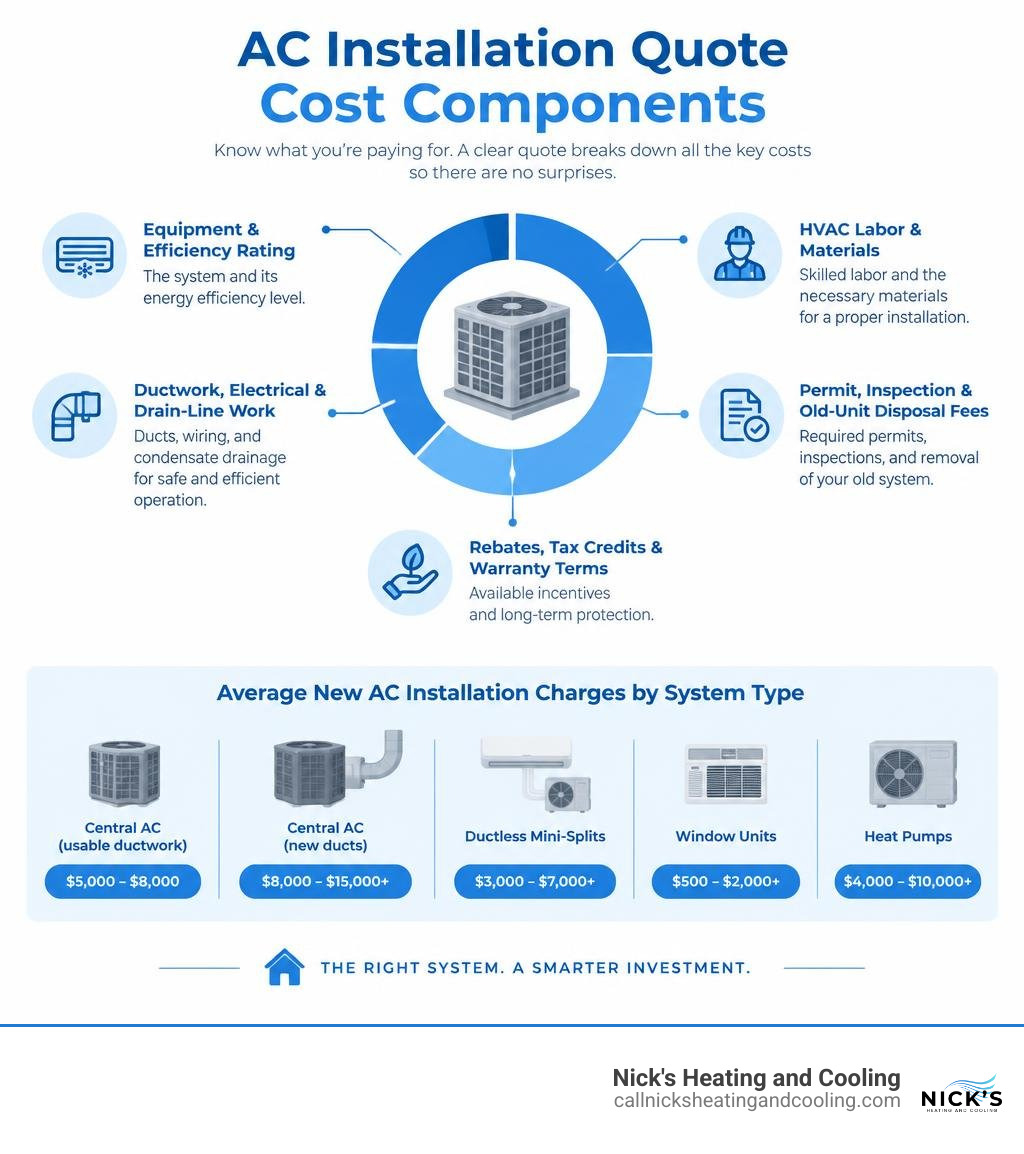
New ac installation charges terms simplified:
Understanding Average New AC Installation Charges by System Type
When you start shopping for a cooling system, you quickly discover that prices vary dramatically depending on the mechanical setup you select. A direct system-for-system replacement costs far less than re-engineering your home’s air distribution infrastructure.
To help you get your bearings, look at this breakdown of central air installation costs alongside common alternative configurations:
| System Type | Typical Equipment Cost | Average Total Installed Cost | Best Suited For |
|---|---|---|---|
| Central AC (Existing Ducts) | $2,500 – $4,500 | $5,000 – $9,000 | Homes with healthy, well-sized existing ductwork |
| Central AC (New Ducts Needed) | $2,500 – $4,500 | $8,000 – $15,000+ | Older homes without central duct networks |
| Air-Source Heat Pump | $2,000 – $6,000 | $6,000 – $12,500 | Moderate climates needing combined heating and cooling |
| Ductless Mini-Split (Single-Zone) | $1,500 – $3,000 | $3,000 – $5,000 | Room additions, sunrooms, or detached garages |
| Ductless Mini-Split (Multi-Zone, 3–4 Heads) | $4,000 – $8,500 | $6,500 – $14,500 | Whole-home cooling without duct modification |
Central Air Conditioning vs. Heat Pumps
Choosing between a standard central air conditioner and a heat pump comes down to how your home handles winter heating. Standard central air units only handle cooling, which means they must pair with a separate furnace or air handler equipped with electric heat strips.
Heat pumps reverse the cooling cycle during colder months to pull outdoor heat inside. While a high-efficiency heat pump system may demand an equipment premium of $1,000 to $2,500 over a standard split AC, it serves as both your heater and air conditioner. In our moderate Southern climate, a heat pump or a dual-fuel setup offers remarkable year-round efficiency. To learn more about navigating these options smoothly, review this ultimate guide to hassle-free AC installation.
Ductless Mini-Split Systems
If your house has plaster walls, historic architectural details, or an addition that lacks ductwork, forced-air installation can quickly turn into a major remodel. Mini-split heat pumps bypass ductwork entirely by connecting an outdoor condenser directly to individual, wall-mounted indoor air handlers via small refrigerant line sets.
A single-zone ductless installation costs between $3,000 and $5,000. Whole-home multi-zone setups generally range from $6,500 to $14,500. This configuration allows you to control temperatures room by room, ensuring you do not pay to cool empty guest bedrooms all afternoon. For a deeper look at duct-free options, explore our complete guide to ductless AC installation.
Equipment vs. Labor: Breakdown of New AC Installation Charges
A professional HVAC installation invoice includes two main categories: the hardware and the skilled labor needed to commission it safely.
- Equipment & Materials (40% to 55% of total): This covers the outdoor condensing unit, indoor evaporator coil or air handler, refrigerant lines, pad, disconnect box, and thermostat.
- Labor & Professional Services (45% to 60% of total): Installing an air conditioner requires specialized technical skills. Licensed technicians charge anywhere from $75 to $150 per hour. Complex installations take 8 to 16 labor hours across a two-person crew.
According to recent average AC unit installation cost data, the median complete installation cost across the country sits around $7,500. Cutting corners on labor to save $500 upfront often costs thousands down the road in poor airflow, refrigerant leaks, and voided manufacturer warranties.

The Sneaky Surcharges: Hidden Fees to Watch Out For
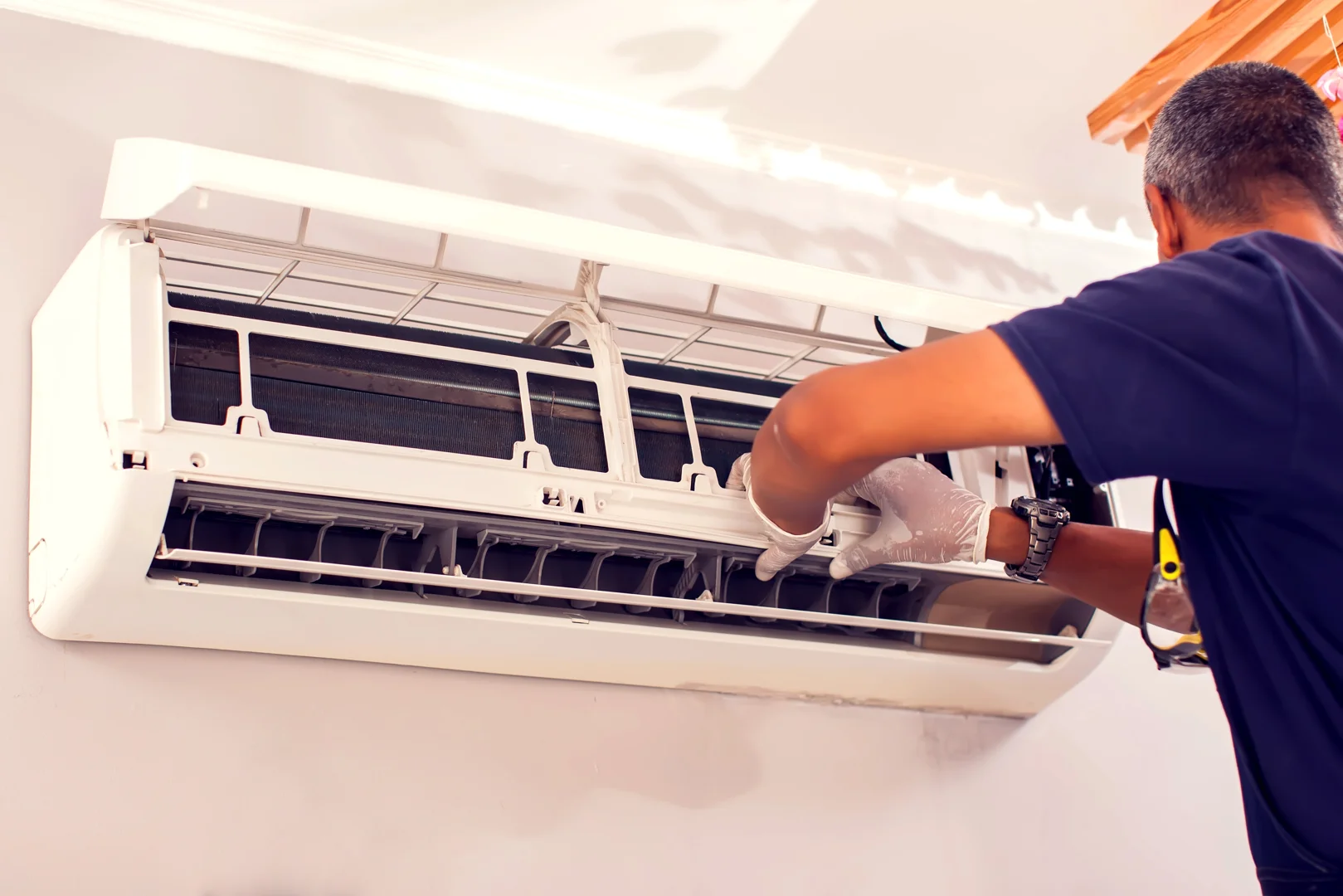
The most frustrating part of buying a new cooling system is receiving an initial estimate of $5,000, only to be handed a final invoice for $8,200. These unexpected increases usually happen when a contractor gives a quick “eyeball” quote without inspecting the infrastructure behind your walls, in your attic, or inside your electrical panel.
Hidden Factors That Inflate New AC Installation Charges
A proper HVAC estimate must account for every connection point. Here are several common line items that can inflate your final balance if left out of your original proposal:
- Refrigerant Line Sets & Flushing ($300 – $800): If your old system used phased-out R-22 refrigerant and your new one uses modern R-410A or newer low-GWP blends, the copper line set must either be replaced or chemically flushed to clear residual mineral oil.
- Condensate Drain Upgrades ($150 – $450): Codes require secure condensate drain lines, safety float switches to prevent attic ceiling flooding, and occasionally dedicated drain pumps.
- Mounting Pads and Brackets ($100 – $300): A heavy outdoor condenser needs a level, composite pad or heavy-duty elevated wall brackets to protect it from settling ground and standing water.
- Equipment Removal and EPA Disposal ($100 – $350): Recovering old refrigerant requires certified recovery equipment under EPA Section 608, along with scrap hauling fees for your worn-out units.
Ductwork Repairs and Modifications
Even the most advanced cooling system will fail to perform if it is hooked up to collapsed, disconnected, or undersized air ducts. Leaky ductwork allows up to 30% of conditioned air to escape into unconditioned attics or crawlspaces, forcing your new unit to run constantly.
- Minor sealing, re-taping, and localized patching often cost between $500 and $2,000.
- Extensive duct re-engineering or full duct replacement adds $3,000 to $8,000 to your total project scope.
If your air registers are whistling or rooms feel unevenly cooled, have your technician inspect the duct network before installing new equipment. You can address air distribution issues through dedicated air duct repair or complete new air duct installation to protect your investment.
Electrical Panel Upgrades and Permits
Modern air conditioners and high-output heat pump auxiliary strips pull significant electrical current. Older homes with 100-amp main breaker panels often lack the physical space or capacity to run a new, dedicated 240-volt circuit.
- Dedicated 240V Circuit & Disconnect Box: $250 to $600
- Main Service Panel Upgrade (to 200 Amps): $1,500 to $3,500
- Municipal Mechanical and Electrical Permits: $100 to $450
Permits are not an optional upcharge—they guarantee that a city or county inspector checks the wiring, clearances, and emergency disconnects to ensure the safety of your home. Always confirm that your contractor pulls the necessary permits under their own license.
How System Sizing and SEER2 Ratings Impact Your Quote
Two identical houses sitting on the same street can require completely different air conditioners. Your home’s layout, sun exposure, window quality, and insulation levels all dictate the cooling capacity and energy-efficiency rating your system needs.
Tonnage, BTU Requirements, and Manual J Sizing
Cooling capacity is measured in British Thermal Units (BTUs) and tons (1 ton = 12,000 BTUs/hour of cooling). Residential systems typically scale from 1.5 tons up to 5.0 tons.
Never hire a contractor who calculates equipment size solely using square footage. An oversized unit will quickly cool the air without running long enough to pull humidity out of the house. This causes short-cycling, clammy indoor air, and premature component failure.
Insist on a formal Manual J load calculation, which evaluates:
- Total square footage and ceiling heights
- Window orientation, glazing, and shading
- Insulation values in attics, crawlspaces, and exterior walls
- Air infiltration and duct leakage rates
- Internal heat loads from appliances and occupants
Energy Efficiency Ratings and Long-Term Savings
Energy efficiency for central cooling systems is governed by SEER2 (Seasonal Energy Efficiency Ratio 2) standards. Modern entry-level units start at 13.4 to 14.3 SEER2, while premium variable-speed inverter units can exceed 20 SEER2.
- Entry-Level (13.4 – 14.3 SEER2): Single-stage compressors. Lowest upfront equipment price ($2,500 – $3,500 for the unit alone), but higher monthly utility operating costs.
- Mid-Tier (15 – 17 SEER2): Two-stage compressors. Balanced price-to-performance ($3,800 – $5,500 unit cost), providing improved humidity removal and quieter operation.
- Premium (18+ SEER2): Variable-speed inverter compressors. Higher upfront price ($6,000 – $9,000+ unit cost), delivering precise comfort, whisper-quiet sound levels, and energy savings of 20% to 40% compared to baseline units.
Investing in a higher SEER2 model costs more on day one, but it pays steady dividends every month across our long, humid cooling seasons.
Step-by-Step Guide to Slashing Upfront AC Costs
Upgrading your home’s air conditioner is a major investment, but you do not have to pay full retail price. With a little planning, you can significantly reduce your total out-of-pocket expenses.
Maximizing Rebates, Utility Programs, and Federal Tax Credits
Before signing any installation contract, take advantage of energy incentives designed to lower the cost of high-efficiency equipment:
- Federal Energy Efficient Home Improvement Credit (Section 25C): Homeowners can claim up to 30% of the project cost (capped at $2,000 for qualifying heat pumps or $600 for high-efficiency standard central ACs) directly on their federal tax returns.
- Local Electric Utility Rebates: Power companies regularly offer mail-in or instant rebates ranging from $200 to $1,000 when you install qualifying high-SEER2 heat pump systems.
- Manufacturer Seasonal Promotions: Major brands offer instant factory rebates (often $300 to $1,500) during spring and fall promotion windows.
Essential Questions to Ask HVAC Contractors Before Signing
Before accepting an installation proposal, review the contract terms with your prospective installer. Use this checklist to protect your budget:
- Did you perform a room-by-room Manual J calculation to size this unit? (Ensure they do not simply replace your old unit with the same tonnage by default.)
- Is this a fixed-price, turnkey estimate, or are there potential extra charges? (Verify that electrical disconnects, pads, line flushing, and permits are included.)
- Will you pull the required municipal permits and schedule the final inspection? (Never pull permits under your own name as an owner-builder.)
- What specific labor warranty do you provide beyond the manufacturer parts warranty? (Look for at least a 1- to 2-year labor warranty backed directly by the contractor.)
- Will you test my existing ductwork for leakage and static pressure before firing up the new system? (Confirm your existing ducts can handle the new blower’s airflow requirements.)
Frequently Asked Questions About AC Setup Costs
How much should I expect to pay for a typical central AC replacement in 2026?
For a standard 1,500- to 2,200-square-foot home with existing, functional ductwork, most homeowners pay between $5,000 and $8,500 for a mid-efficiency (14.3 to 16 SEER2) replacement. High-efficiency variable-speed systems or installations that require electrical panel upgrades or duct modifications range from $9,000 to $14,000.
Is it cheaper to install central AC or a ductless mini-split system?
If your home already has an intact, correctly sized duct system, replacing a central AC is almost always cheaper ($5,000 to $8,500) than outfitting every room with ductless indoor heads. However, if your home has no ductwork, installing a multi-zone ductless mini-split system ($6,500 to $13,500) is often thousands of dollars cheaper than cutting open ceilings and walls to build out brand-new sheet metal duct trunklines.
What permits and inspections are required for AC installation?
Most municipalities require a mechanical permit and, if high-voltage wiring is modified, an electrical permit. After the installation is complete, a city or county building inspector visits the home to ensure the system is securely mounted, the electrical disconnect is wired safely, the condensate line drains away from the foundation, and the equipment complies with regional energy codes.
Conclusion
A new cooling system protects your family’s comfort through the hottest summer days, but you should never have to deal with surprise add-ons or hidden fees. By demanding an itemized written estimate, insisting on a professional Manual J load calculation, and confirming that permits and duct evaluations are included upfront, you can upgrade your system with complete confidence.
When you need an honest, detailed evaluation for your home, turn to a trusted, locally owned team. At Nick’s Heating and Cooling, I provide free, no-obligation inspections and clear, upfront pricing so you know your exact project costs before any work begins. Reach out today for certified AC installation and experience reliable, neighborly service done right the first time.
Nick’s Heating and Cooling currently services Birmingham, Hoover, Vestavia Hills, Mountain Brook, Alabaster, Chelsea, Homewood, Trussville, Pelham, and Irondale for all your HVAC and Heating needs.