

What to Do When Your Air Conditioner Leaks Refrigerant
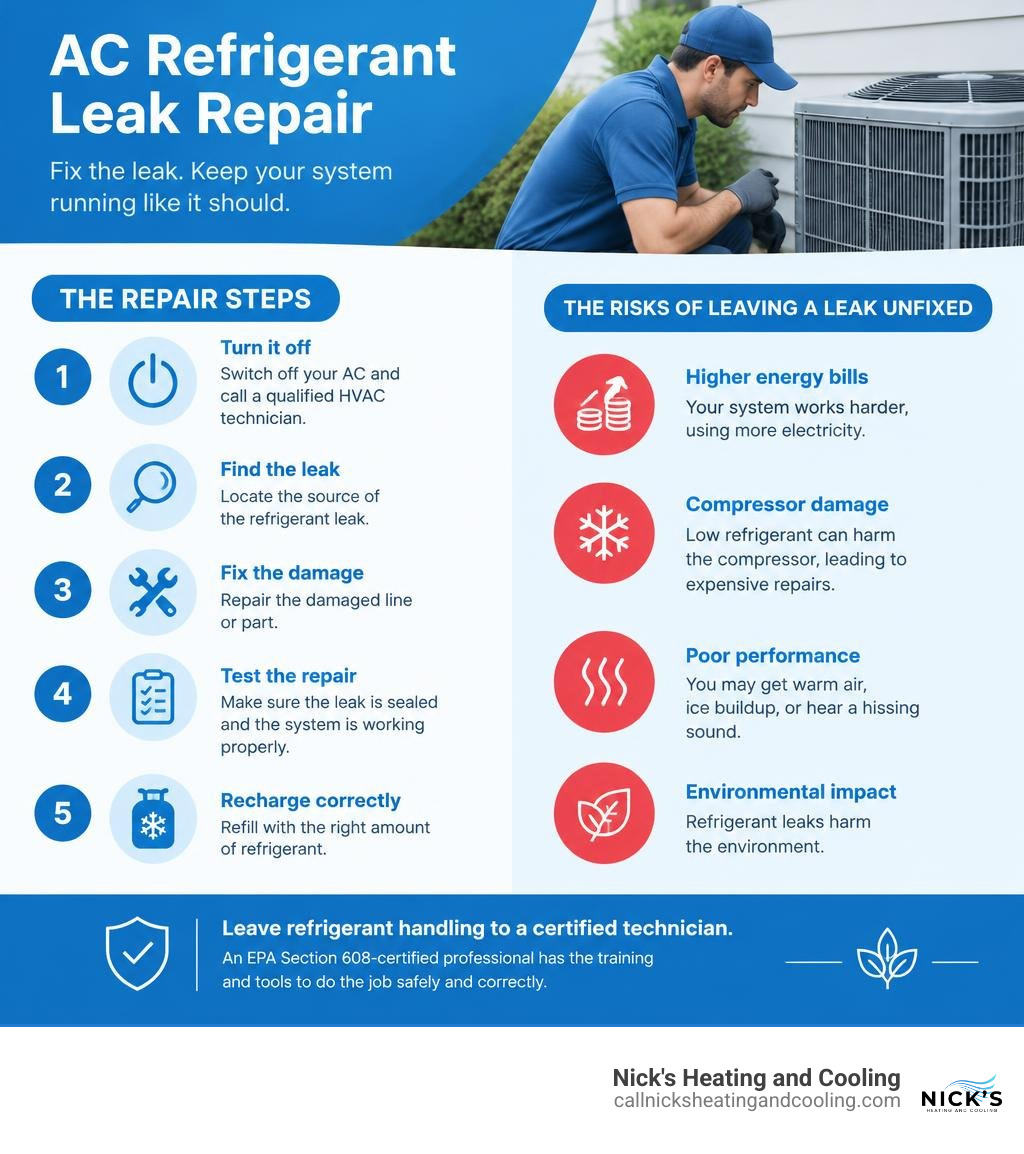
Turn off your AC and call a qualified HVAC technician. A lasting air conditioner gas leak repair means finding the leak, fixing the damaged line or part, testing the repair, and recharging the system with the correct amount of refrigerant. Adding more refrigerant alone will not stop the leak.
Your AC runs in a closed loop, so it should not need routine “Freon” top-ups. If it blows warm air, develops ice, or makes a hissing sound, have it checked soon. Running it with a leak can raise your power bill and damage the compressor. Leave refrigerant handling to an EPA Section 608-certified technician.
Similar topics to air conditioner gas leak repair:
Signs and Dangers of an AC Refrigerant Leak
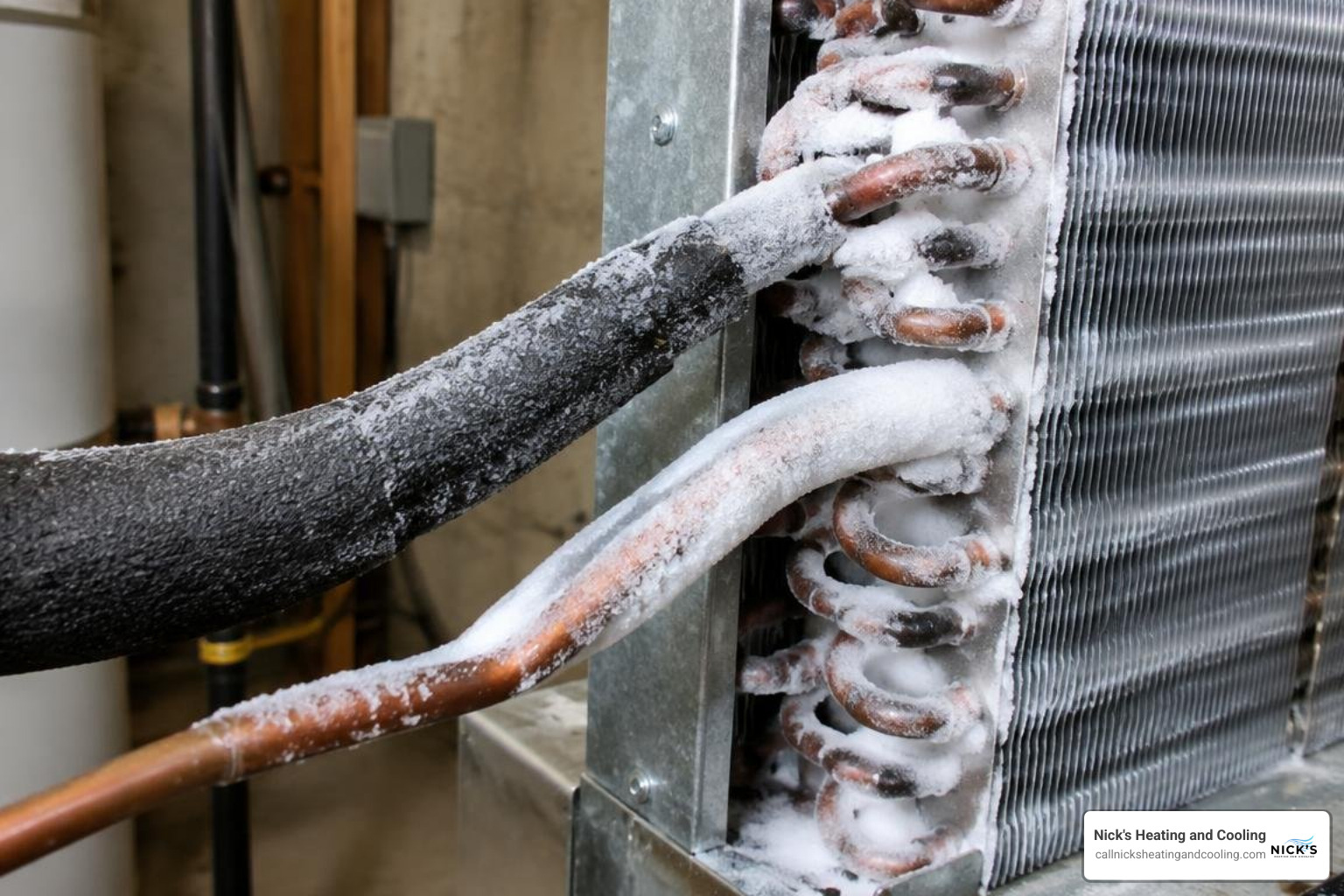
When an air conditioner loses refrigerant, it struggles to absorb indoor heat. If you suspect an issue, scheduling professional AC repair services is the safest way to prevent secondary component damage.
Telltale Symptoms of Leaking Refrigerant
Because refrigerant cycles within an airtight copper loop, any drop in pressure produces noticeable warning signs:
- Hissing or Bubbling Noises: A clear hissing sound near the indoor air handler or outdoor condenser indicates high-pressure gas escaping through a crack. Bubbling sounds often suggest moisture or air entering the lines.
- Sweet or Chemical Odors: Many modern refrigerants emit a faint, ether-like, sweet chemical scent when escaping into living areas.
- Lukewarm Air & Weak Cooling: As gas escapes, the cooling capacity plummets, leaving supply vents blowing room-temperature air.
- Ice Buildup on Coils: A drop in pressure causes the remaining refrigerant to expand at sub-freezing temperatures, causing condensation on the evaporator coil and copper lines to freeze into solid ice.
- Oily Residue along Joints: Refrigerant oil circulates alongside the gas to lubricate internal valves. A leak often leaves dark, greasy residue around copper fittings and service valves.
The Costly Risks of Ignoring Refrigerant Loss
Ignoring a slow leak creates compounding mechanical strain. Operating an undercharged unit leads to:
- 20 to 40 Percent Efficiency Drop: The system runs continuously to satisfy the thermostat, consuming excess power.
- 15 to 25 Percent Energy Bill Spikes: Homeowners face steep electric bill increases during peak summer months.
- Compressor Burnout: Compressors depend on returning refrigerant vapor to stay cool. Overheating causes catastrophic motor failure, with compressor replacements running between $1,500 and $3,000.
Common Causes and Professional Leak Detection Methods
Approximately 9 out of 10 residential refrigerant leaks develop in the copper tubing of the indoor evaporator coil. Understanding what causes these weak points helps protect your cooling system.
What Causes Refrigerant Leaks in Cooling Systems?
- Formicary Corrosion: Volatile organic compounds (VOCs) from household cleaners, paints, and building materials mix with indoor moisture on wet coils, creating formic and acetic acids that pit microscopic pinholes into copper tubing.
- Vibration Friction: Constant vibration from compressors and fan motors can cause unsecured copper lines to rub against metal chassis panels until a rupture forms.
- Flare Fitting & Valve Deterioration: Thermal expansion and contraction over seasonal temperature swings can loosen flare nuts, Schrader valves, and service ports.
- Physical Impact: Outdoor condenser coils are vulnerable to debris, accidental impacts from lawnmowers, and weed trimmers. Practicing safe outdoor AC unit maintenance prevents costly physical punctures.
Advanced Leak Detection Techniques Used by HVAC Pros
Pinpointing a pinhole leak smaller than a human hair requires specialized diagnostic equipment, as detailed in Expert Refrigerant Leak Detection Guidelines.
| Detection Method | Best Used For | Pros | Considerations |
|---|---|---|---|
| Soap Bubble Test | Exposed flare fittings, valves, accessible joints | Inexpensive, provides instant visual confirmation | Ineffective for concealed leaks or microscopic pinholes |
| Electronic Sniffers | Hidden evaporator coils, cramped line sets | Extremely sensitive; detects micro-leaks rapidly | Can give false positives near strong chemical vapors |
| UV Fluorescent Dye | Intermittent or slow, hard-to-find leaks | Pinpoints exact leak locations under UV light | Requires running the dye through the system over several days |
| Nitrogen Decay Test | Systems completely empty of refrigerant | Safe, high-pressure test that stresses joints | Requires full system evacuation before pressurized testing |
Professional Air Conditioner Gas Leak Repair: Step-by-Step Solutions
Repairing a pressurized cooling system requires precision craftsmanship, specialized safety equipment, and proper technical execution.
Why DIY Air Conditioner Gas Leak Repair Is Dangerous and Illegal
Federal regulations under EPA Section 608 prohibit unlicensed individuals from opening refrigerant circuits or venting chemicals into the atmosphere. Improper handling introduces major personal and operational risks outlined in Critical Refrigerant Safety Protocols:
- Asphyxiation Hazards: Heavier-than-air refrigerant gases displace oxygen in enclosed basements or utility closets.
- Severe Frostbite: Liquid refrigerant boils instantly upon contact with atmospheric pressure, causing deep tissue freezing on exposed skin.
- System Clogging from Sealants: DIY “stop-leak” cans contain chemical additives that react with ambient moisture, gumming up thermal expansion valves (TXVs) and destroying compressors.
The Multi-Stage Refrigerant Repair and Recharging Process
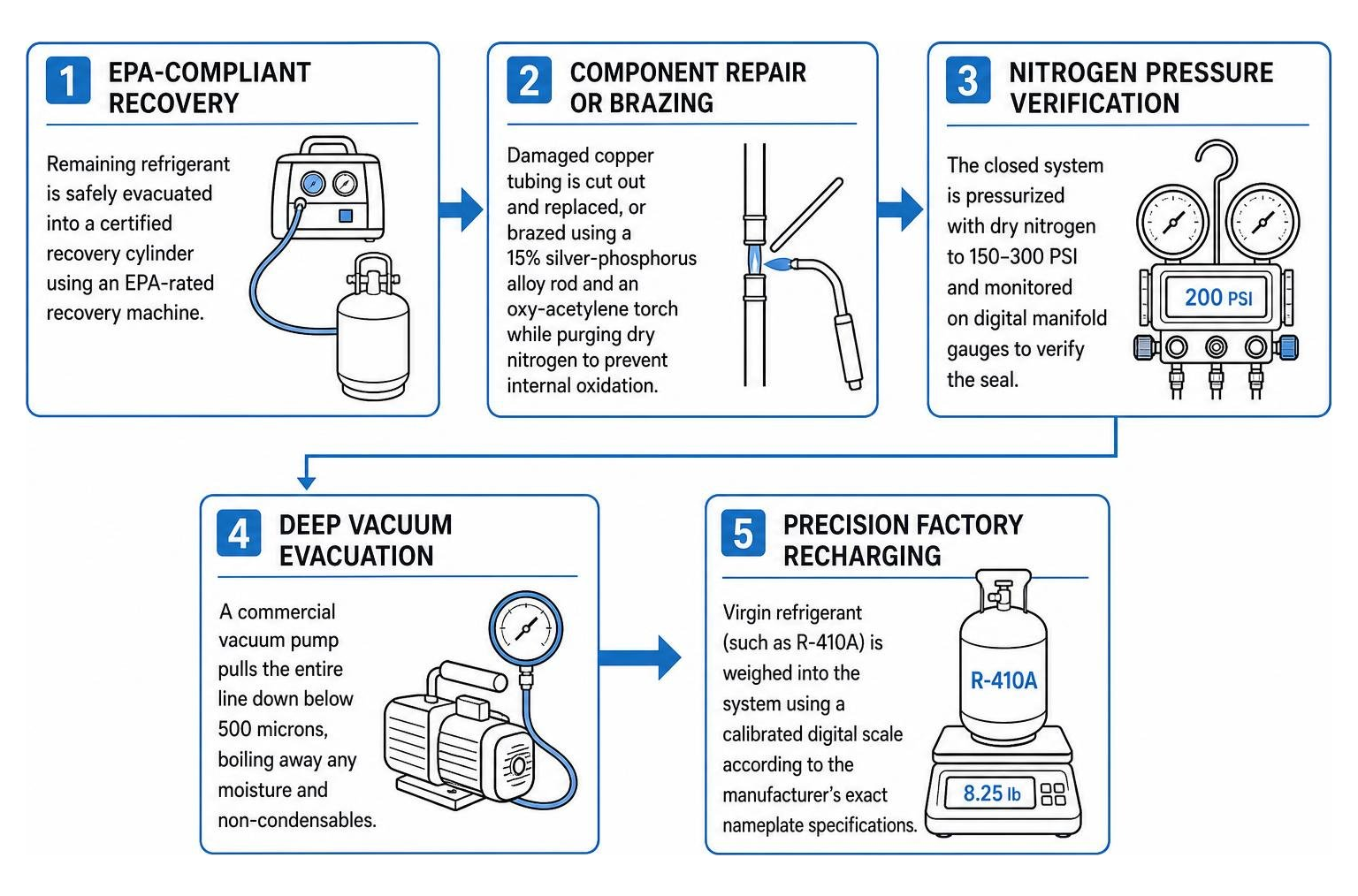
- EPA-Compliant Recovery: Remaining gas is safely evacuated into a certified recovery cylinder using an EPA-rated recovery machine.
- Component Repair or Brazing: Damaged copper tubing is cut out and replaced, or brazed using a 15% silver-phosphorus alloy rod and an oxy-acetylene torch while purging dry nitrogen to prevent internal oxidation.
- Nitrogen Pressure Verification: The closed system is pressurized with dry nitrogen to 150–300 PSI and monitored on digital manifold gauges to verify the seal.
- Deep Vacuum Evacuation: A commercial vacuum pump pulls the entire line down below 500 microns, boiling away any moisture and non-condensables.
- Precision Factory Recharging: Virgin refrigerant (such as R-410A) is weighed into the system using a calibrated digital scale according to the manufacturer’s exact nameplate specifications.
Repair vs. Replacement: Making the Right Financial Choice
Deciding whether to patch a leaking line or invest in new equipment depends on the system’s age, refrigerant type, and long-term costs.
What Is the Typical Air Conditioner Gas Leak Repair Cost?
Standard residential leak repairs typically take 1 to 4 hours to complete.
| Repair Scope | Average Cost Range | Expected Timeframe |
|---|---|---|
| Minor Valve / Fitting Seal | $200 – $450 | 1 – 2 Hours |
| Copper Line Brazing & Patching | $400 – $800 | 2 – 3 Hours |
| Evaporator Coil (Under Warranty) | $1,000 – $2,500 (Labor & Gas) | 3 – 4 Hours |
| Evaporator Coil (Out of Warranty) | $2,500+ | 3 – 5 Hours |
When to Replace Your AC System Instead of Repairing
A central air conditioner has an average lifespan of 15 to 20 years. If your unit is over 10 to 12 years old and experiences multiple leaks, continuous repair expenses rarely deliver good value. Upgrading to modern, high-efficiency equipment through an energy-efficient AC installation lowers monthly electric bills and eliminates costly refrigerant top-ups.
How to Prevent Future Gas Leaks in Your Air Conditioner
Routine upkeep protects your cooling equipment from early degradation:
- Enroll in Regular Maintenance: Units receiving annual tune-ups run an average of 3 to 5 years longer than neglected units. Setting up routine AC maintenance plans catches loose fittings and vibration wear before leaks develop.
- Replace Air Filters Every 1–3 Months: Clean airflow prevents freezing cycles that stress copper joints.
- Isolate Line Vibrations: Ensure line sets are securely anchored with vibration-dampening rubber clamps.
- Improve Indoor Ventilation: Lower indoor VOC levels by venting paint fumes, harsh detergents, and solvents to reduce formicary corrosion on indoor coils.
Frequently Asked Questions About AC Refrigerant Leaks
Is it safe to stay in my house if my AC is leaking gas?
Small, slow leaks pose minimal immediate danger in well-ventilated living spaces. However, if you detect a strong chemical odor or suspect a sudden, massive discharge, turn off the system immediately, open your windows, and step outdoors to avoid inhaling oxygen-displacing fumes.
Can adding more refrigerant fix my AC leak without repairs?
No. An air conditioner is a closed-loop system that does not consume refrigerant during operation. Adding gas without fixing the structural leak is an expensive temporary patch that leads to compressor burnout and violates environmental regulations.
How long does an air conditioner gas leak repair take?
A standard residential leak diagnostic and repair typically takes between 1 and 4 hours, depending on whether the leak is located on an accessible service valve or requires removing the indoor coil for precision brazing.
Conclusion
Protecting your home’s cooling system starts with prompt, certified service. At Nick’s Heating and Cooling, I provide free, no-obligation inspections, honest diagnostics, and permanent leak rectification to restore your comfort quickly. Contact me today for reliable air conditioner repair you can trust.
Nick’s Heating and Cooling currently services Birmingham, Hoover, Vestavia Hills, Mountain Brook, Alabaster, Chelsea, Homewood, Trussville, Pelham, and Irondale for all your HVAC and Heating needs.