
Commercial Aircon Servicing Keeps Your Business Cool
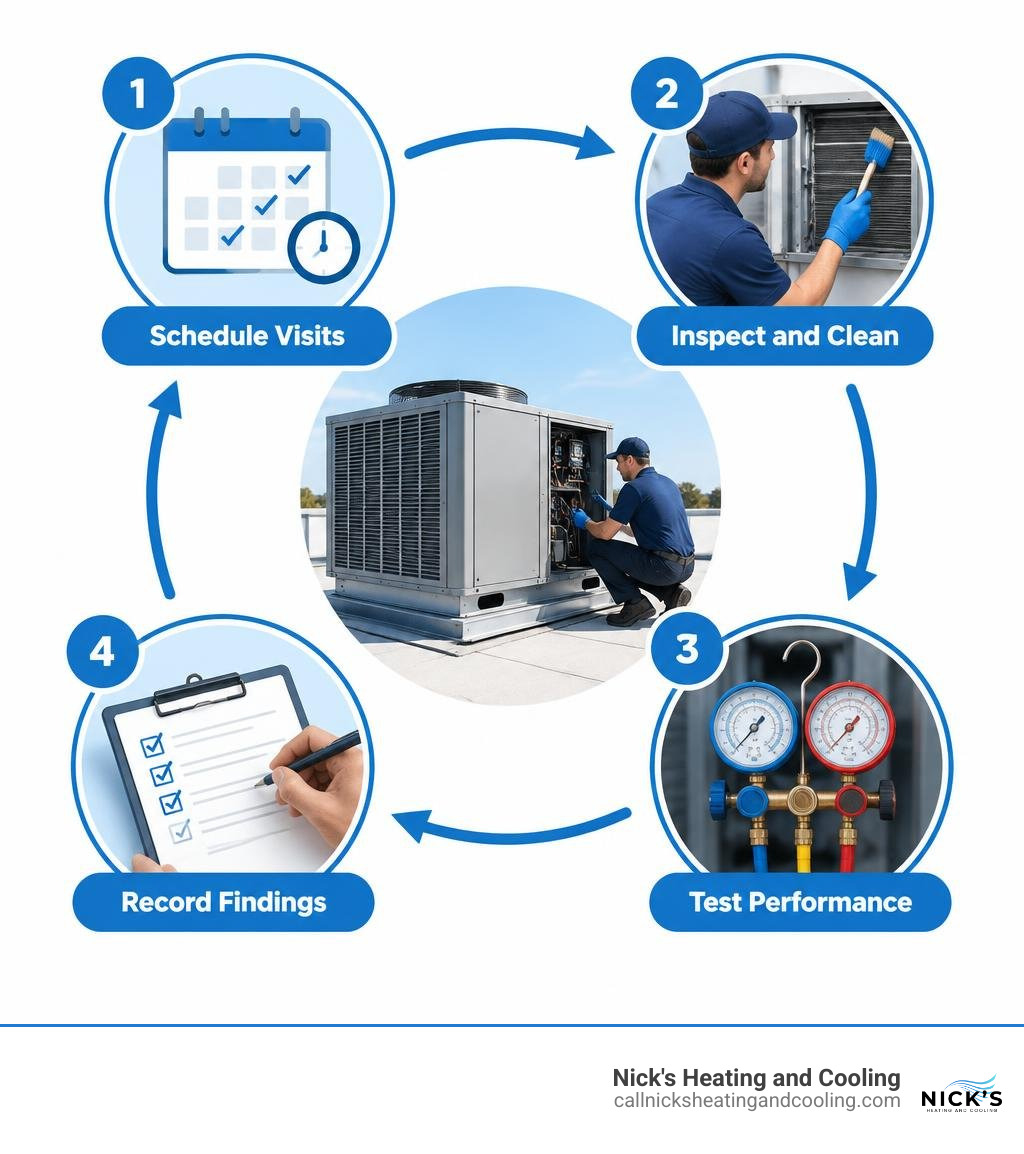
Commercial aircon servicing is planned, professional care designed specifically for the heavy cooling equipment your business relies on every single day. For most commercial facilities in Birmingham, standard best practice begins with two comprehensive professional visits each year. However, if your cooling equipment operates under demanding continuous schedules, supports sensitive electronics, or serves a crowded retail environment, scheduling quarterly maintenance visits makes far better financial and operational sense. Each service visit should thoroughly inspect every subsystem: cleaning filters and coils, clearing condensate drains, testing electrical contactors and electronic controls, checking mechanical tolerances, and documenting minor wear before costly breakdowns occur.
The primary objective is straightforward: catch small mechanical issues before they disrupt daily operations, while keeping your cooling equipment operating at peak electrical efficiency. Keeping an accurate, detailed maintenance log after every technician visit allows building managers to monitor equipment wear trends, optimize seasonal utility budgets, and plan necessary capital replacements well in advance.
Essential commercial aircon servicing terms:
Commercial Aircon Servicing vs. Residential AC Maintenance
When experienced HVAC technicians evaluate a commercial facility, the sheer scale and operational complexity compared to a typical single-family residence become immediately apparent. While residential cooling systems focus primarily on maintaining comfort across a few standard rooms for a small family, commercial installations manage complex multi-zone thermal dynamics, elevated occupant densities, and substantial internal heat gains produced by enterprise servers, commercial kitchen appliances, manufacturing machinery, and intense lighting arrays. Across commercial properties throughout Birmingham and Hoover, these high-capacity systems often operate under continuous load profiles, running twelve to twenty-four hours daily throughout the hottest summer months.
Neglecting these industrial-grade cooling plants causes rapid mechanical degradation and severe efficiency penalties. Postponing routine preventive care leads to compounding mechanical failures—much like spilling a large cup of coffee across an office computer keyboard right in the middle of a high-stakes board presentation. Implementing consistent, reliable commercial AC maintenance guarantees that heavy equipment handles major occupancy shifts and peak outdoor temperatures without sudden disruptions. Modern commercial properties also link climate infrastructure to sophisticated centralized Building Management Systems (BMS), demanding specialized technical proficiency to calibrate airflow dampers, digital temperature sensors, variable frequency drives, and automated control sequences.
Core Commercial Aircon Servicing Procedures for Complex Systems
Modern commercial buildings utilize diverse, highly sophisticated cooling designs. Advanced Variable Refrigerant Volume (VRV) and Variable Refrigerant Flow (VRF) networks route conditioned refrigerant to multiple individual indoor fan coil units from centralized outdoor condensing systems, delivering precise zone-by-zone comfort control. Other large facilities depend heavily on complex chilled water plants, massive multi-zone rooftop packaged units, or multi-circuit ceiling cassette configurations.
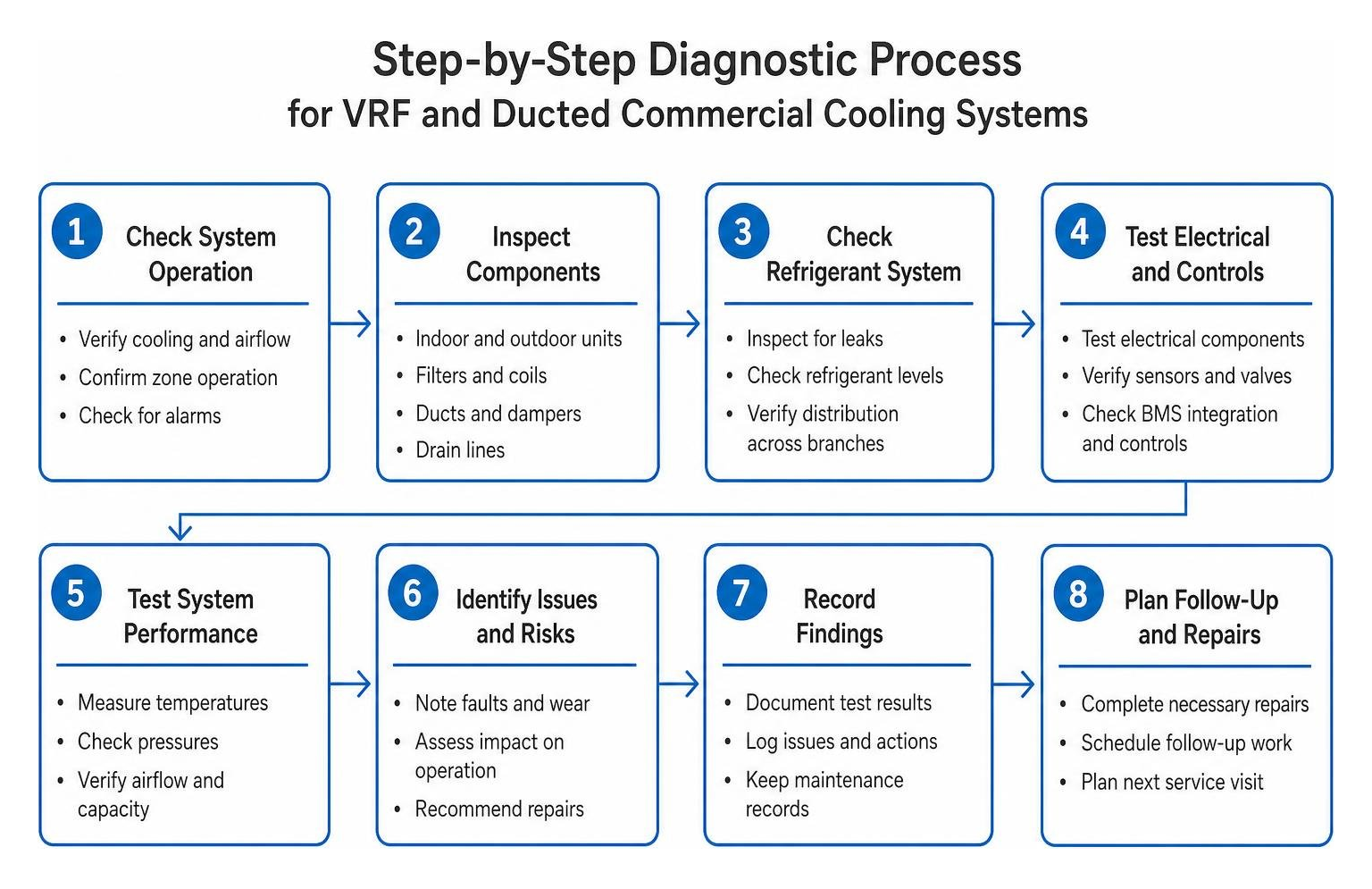
Thoroughly maintaining these complex configurations demands rigorous diagnostic procedures. When managing high-capacity cooling plants, taking timely proactive measures for preventing major commercial cooling meltdowns requires testing electronic expansion valves, assessing compressor motor winding insulation integrity, and verifying balanced refrigerant distribution across all branching pipe networks.
Key Equipment Differences and Compliance Standards
Commercial property managers must balance tenant comfort with strict regulatory oversight. Unlike standard residential systems, commercial cooling systems must comply with rigorous ventilation requirements, indoor air exchange minimums, workplace safety standards, and strict EPA refrigerant management regulations.
Maintaining detailed maintenance documentation after every professional check protects your enterprise during compliance audits. Accurate service logs protect equipment warranties and provide essential proof of regulatory compliance for property investors and corporate management boards. Aligning your facility with smarter commercial mechanical maintenance ensures sustainable energy efficiency, effortless lease compliance, and dependable year-round climate reliability across your entire building footprint.
What a Comprehensive Commercial Cooling Inspection Checklist Includes
A professional commercial cooling service visit goes far beyond simply replacing an air filter. It requires a meticulous, end-to-end mechanical, thermodynamic, and electrical evaluation of every single subsystem to ensure peak operational reliability and energy conservation during intense summer heatwaves.
When qualified technicians evaluate complex commercial installations, they execute rigorous protocols modeled on trusted national standards, including the Standard Practice for Inspection & Maintenance of Commercial Building HVAC Systems. Proactive service schedules represent the single most dependable strategy for protecting your commercial bottom line against premature system replacement costs and costly business interruptions.
Mechanical and Electrical Component Verification
During detailed mechanical and electrical assessments, trained technicians systematically evaluate critical operational components across the entire system:
- Compressor Current Draw: Measuring operating amperage and voltage against nominal manufacturer nameplate ratings to detect early motor winding degradation or mechanical binding.
- Fan Motor & Blower Assembly: Inspecting drive belt tension, aligning pulleys, balancing blower wheels, and lubricating motor bearings to eliminate excessive vibration and prevent sudden motor failure.
- Thermostat and Sensor Calibration: Testing BMS input signals, zone thermistors, and digital programmable controllers to prevent thermal drift, zone fighting, and inefficient short-cycling.
- Safety Controls and Contactors: Testing high- and low-pressure cutout switches, safety float mechanisms, and electrical contactor points to prevent catastrophic compressor lockouts or hazardous electrical arcing.
Deep Cleaning and Refrigerant Charge Optimization
Environmental accumulation and grime are primary drivers of degraded heat transfer efficiency. Dirty coil surfaces force compressors to work significantly harder under elevated head pressures, driving electrical consumption up by as much as 30%.
Comprehensive planned service includes:
- Evaporator and Condenser Coil Cleaning: Removing stubborn dirt, biological films, and industrial particulate from aluminum fins using specialized, non-acidic foaming detergents.
- Condensate Drain Line Flushing: Clearing bacterial sludge, algae, and scale buildup from drain pans and discharge piping to eliminate overflow risks and protect interior ceilings.
- Refrigerant Charge Verification: Analyzing operating pressures, dynamic superheat calculations, and liquid subcooling measurements to locate minuscule refrigerant leaks before they cause compressor overheating.
- Air Filtration Servicing: Replacing high-efficiency pleated air filters and cleaning supply grilles to maximize airflow rates while maintaining superior indoor air quality.
Signs Your Business Facility Needs Immediate AC Attention
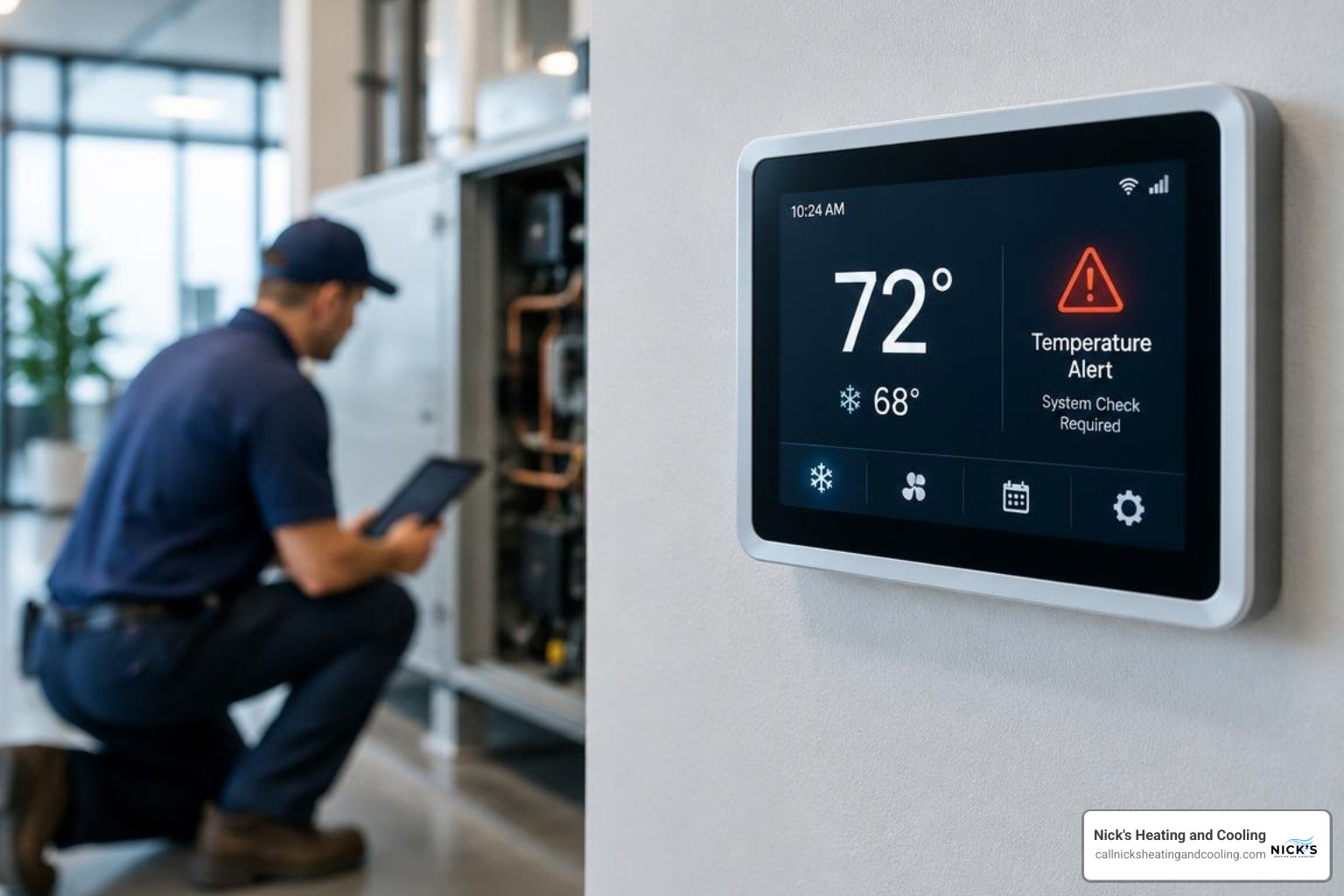
Commercial cooling systems rarely experience total breakdown without exhibiting identifiable early warning symptoms. Maintaining vigilance over subtle operational changes empowers facility managers and building owners to schedule targeted mechanical repairs before an expensive, disruptive emergency shutdown occurs.
Common early warning indicators include:
- Temperature Fluctuations: Individual offices, conference suites, or tenant zones failing to reach designated temperature setpoints while adjacent zones overcool.
- Unusual Noises or Vibrations: Screeching fan belts, grinding motor bearings, rattling duct dampers, or humming contactors that signal mechanical stress or electrical degradation.
- Short-Cycling: Cooling equipment cycling rapidly on and off without running long enough to complete a dehumidification cycle, leaving spaces uncomfortably humid.
- Unexplained Utility Spikes: Sudden surges in monthly electric billing, typically caused by fouled heat exchangers, restricted airflow, or failing compressor components forcing systems to overwork.
Warning Indicators of Equipment Failure
Noticeable physical warning symptoms demand immediate technician response. Restricted airflow discharging from ceiling diffusers suggests failing variable air volume (VAV) dampers, degraded blower assemblies, or heavily clogged filtration media. Sharp, sour, or musty smells often point to standing microbial buildup within blocked drain pans or mold growth inside distribution ductwork. If building personnel notice standing water near air handler closets or rooftop package curbs, shut the equipment down promptly to prevent structural building damage.
When acute symptoms develop, choosing technicians who satisfy rigorous verified HVAC contractor standards guarantees problems are solved safely and correctly without risking additional property damage.
Recommended Maintenance Schedules and Service Contracts
A planned service agreement eliminates guesswork and reactive stress from commercial property management. Rather than constantly reacting to expensive equipment emergencies during severe heatwaves, a Planned Preventative Maintenance (PPM) program keeps commercial cooling plants operating smoothly, safely, and efficiently.
| Service Factor | Planned Maintenance Agreement | Reactive Emergency Repairs |
|---|---|---|
| Service Frequency | Scheduled Bi-Annual or Quarterly Visits | Unplanned, ad-hoc service calls |
| Operating Costs | Predictable, budgeted expenses | High emergency repair bills and premium fees |
| System Reliability | High; minor issues caught before failure | Poor; elevated risk of sudden downtime |
| Energy Efficiency | Optimal; clean coils lower power usage by up to 30% | Degraded; dirty systems consume significantly more energy |
| Equipment Lifespan | Maximized (15–20+ years of service) | Shortened due to sustained component strain |
| Scheduling | Planned around quiet or off-peak business hours | Disruptive, urgent daytime repairs |
Maximizing ROI Through Scheduled Commercial Aircon Servicing
Commercial climate control systems represent one of the largest capital equipment investments within any physical facility. Enrolling your property in a comprehensive planned preventative maintenance contract protects that major investment, sharply reducing month-to-month utility costs while dramatically extending operational service longevity. Consistent preventive servicing ensures drive motors run cooler, sensitive electrical relays experience minimal thermal stress, and refrigerant circuits remain properly balanced and clean.
Enrolling in planned service agreements also provides commercial accounts with guaranteed priority emergency dispatch during regional peak-demand heatwaves, ensuring immediate professional response times whenever unforeseen issues emerge. Partnering with reputable, top-rated local cooling contractors provides your enterprise with reliable, highly skilled technical support when preventing expensive operational downtime is absolutely mission-critical.
Frequently Asked Questions About Commercial Cooling Systems
How often should commercial air conditioning systems be serviced?
Most commercial cooling systems require a complete, comprehensive inspection and tune-up at least twice per year—ideally during the spring before demanding summer cooling loads begin and again in the autumn. However, continuous-use commercial kitchens, data server rooms, fitness centers, and high-traffic retail stores benefit substantially from quarterly or bi-monthly servicing visits to handle accelerated particulate buildup and high continuous run-hours.
Can commercial air conditioning maintenance be scheduled outside normal business hours?
Yes, established commercial HVAC service providers routinely accommodate custom scheduling requirements by performing major component cleanings, filter changeouts, and complex mechanical overhauls during early mornings, evenings, or weekends. This scheduling flexibility prevents disruptive noise, avoids interrupting daily office productivity, and ensures seamless, comfortable business operations for staff, tenants, and visiting customers.
What certifications and qualifications should commercial HVAC technicians hold?
Qualified commercial technicians must hold valid EPA Section 608 Universal Certifications for environmental refrigerant recovery, state mechanical contractor licensing, and comprehensive commercial liability and workers’ compensation coverage. Facility managers searching for verified, high-caliber technical support can research finding certified local HVAC specialists to ensure their chosen maintenance contractor has the specialized diagnostic tools and proven experience needed for complex commercial HVAC machinery.
Conclusion
Proactive facility management requires staying ahead of cooling problems before they disrupt your day-to-day business. Regular commercial aircon servicing keeps energy bills predictable, maintains healthy indoor air quality, and protects your capital equipment investment. If your facility needs a thorough tune-up, inspection, or system diagnostic, explore our comprehensive commercial AC repair and maintenance solutions to keep your workspace cool, comfortable, and productive year-round.
Nick’s Heating and Cooling currently services Birmingham, Hoover, Vestavia Hills, Mountain Brook, Alabaster, Chelsea, Homewood, Trussville, Pelham, and Irondale for all your HVAC and Heating needs.