

Planning Air Duct Installation in Birmingham
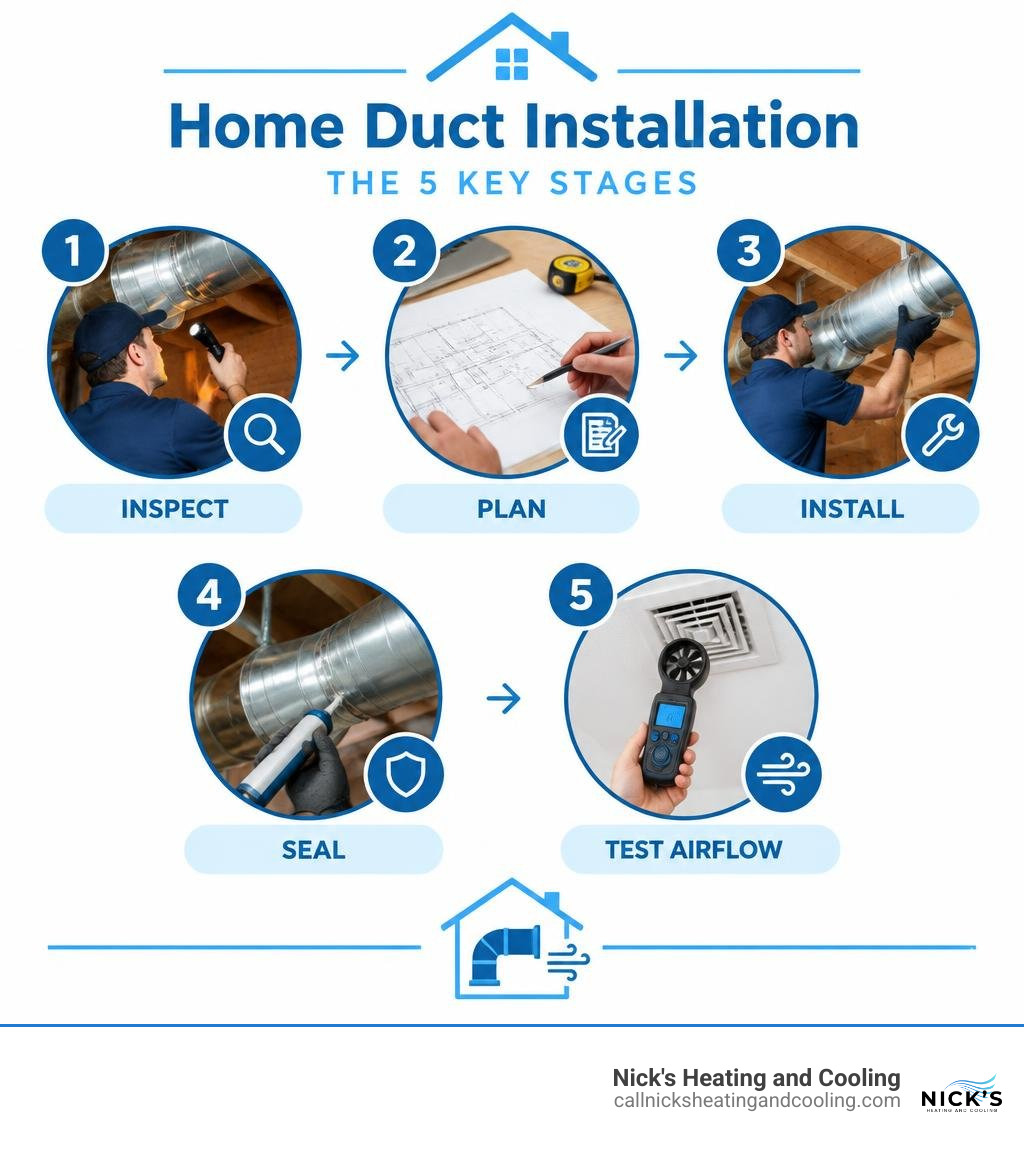
For air duct installation in Birmingham, start with an inspection of your current ducts. Ask the technician to check for leaks, damage, and poor airflow, then explain whether repair or replacement makes more sense. If you need new ducts, the next steps are to plan the layout, size the ducts for your HVAC system, install and seal them, and test airflow in each room.
That process matters when rooms heat or cool unevenly, dust keeps returning, or your system struggles to keep up. Well-installed ducts can reduce wasted heating and cooling and limit the unfiltered air that enters through leaks. In Birmingham’s humid weather, sealed ducts may also help keep damp attic or crawlspace air out of the system, though they will not fix every moisture problem.
Nick’s Heating and Cooling offers free, no-obligation service calls, so you can understand your options before deciding on an installation.
Air duct installation birmingham terms to remember:
Signs Your Home Needs Air Duct Installation in Birmingham
Living in central Alabama means relying heavily on your heating and cooling systems throughout the year. When your ductwork begins to fail, the comfort inside your living space drops quickly while your utility expenses climb.
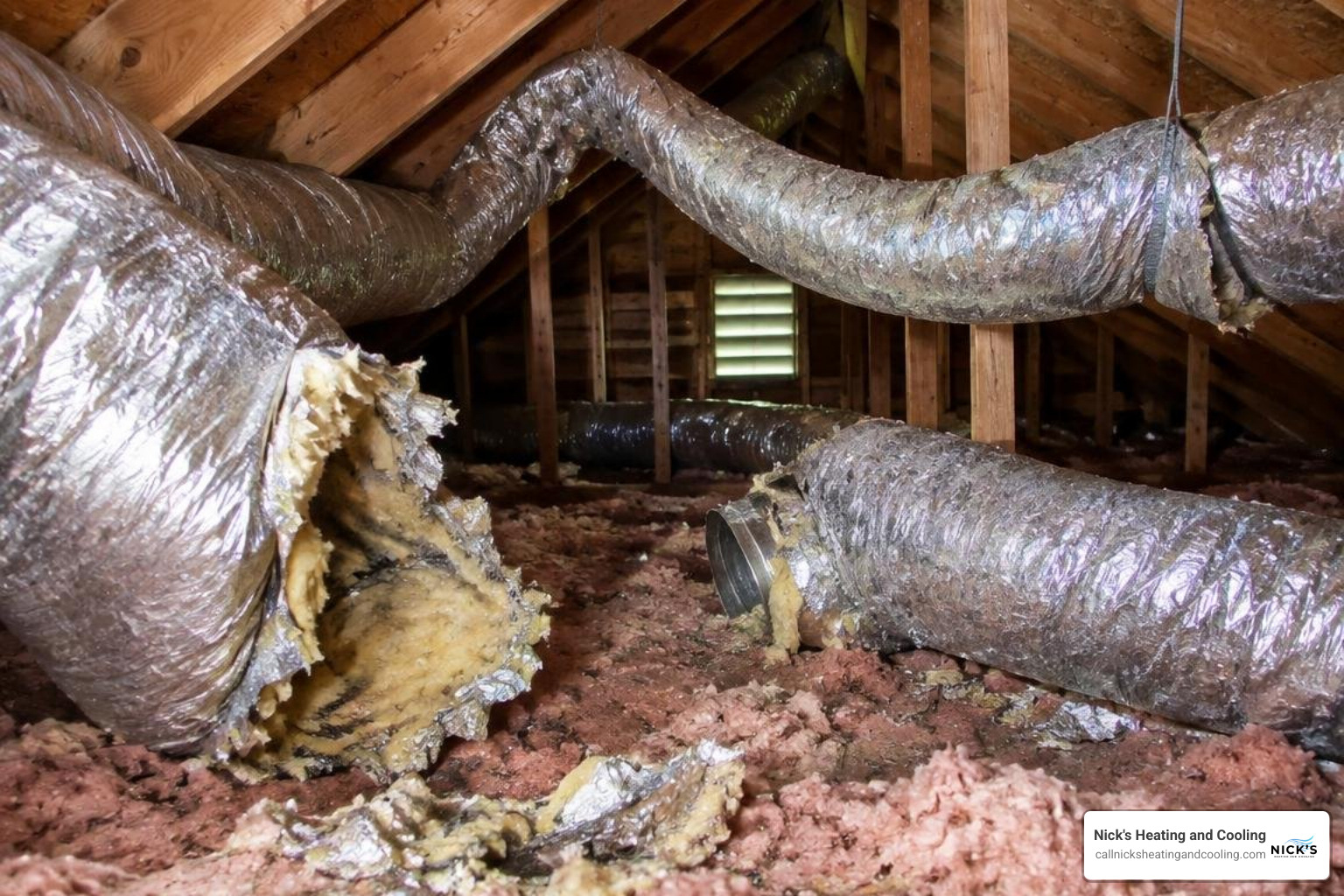
I frequently see older homes throughout the area struggling with deteriorating, uninsulated, or undersized air distribution networks. Over time, physical wear, pest intrusion, and fluctuating attic temperatures cause flexible ducts to sag, crack, or completely disconnect. When conditioned air escapes into unconditioned spaces like attics or crawlspaces, your comfort system is forced to work twice as hard to achieve basic temperature control.
If your system runs constantly without satisfying the thermostat, or if certain rooms feel noticeably warmer or cooler than the rest of the house, damaged ductwork is often the culprit. While minor issues can occasionally be addressed through air duct repair, widespread deterioration warrants a complete replacement to restore balance and system performance.
Warning Signs of Failing Duct Systems
Ductwork problems rarely happen overnight. Instead, they produce subtle warning signs that worsen with each passing season.
Here are the key indicators that your home’s duct system is failing:
- Uneven room temperatures: One bedroom stays uncomfortably warm in July while the living room feels freezing cold.
- Whistling or rattling noises: High-pitched whistling points to undersized duct branches or high static pressure, while rattling indicates loose fittings and detached joints.
- Persistent dust and debris: When return ducts crack open in unconditioned attics, they pull in fiberglass insulation particles, outdoor pollen, and dust, distributing them across your furniture.
- Musty, stale odors: Damaged crawlspace ducts can draw damp, subterranean air into your supply vents, producing persistent mildew smells across your home.
- Skyrocketing power bills: Leaky ducts force your blower motor and compressor to run extended cycles, driving up monthly electric usage.
Homeowners comparing local services often discover that dirty vents are merely a symptom of cracked, failing distribution channels rather than simple surface dust.
Repairing vs Replacing Residential Ductwork
Deciding whether to patch up existing air pathways or invest in a brand-new setup comes down to age, system design, and the extent of the damage.
If your home has isolated damage—such as a single crushed flex line in the attic or a loose joint near the supply plenum—targeted patching and mastic sealing provide an effective, economical fix. However, if your ductwork is over 15 to 20 years old, constructed from degraded fiberglass duct board, or plagued by widespread disconnected runs, patching becomes a temporary stopgap that wastes money.
Old installations often suffer from severe design flaws, such as undersized return air drops or excessively long, twisted branch runs. These engineering mistakes choke airflow and shorten the lifespan of your expensive heating and cooling equipment. Upgrading to a properly engineered system as part of comprehensive HVAC solutions resolves airflow bottlenecks permanently, protecting your system’s blower motor and compressor from premature mechanical failure.
Key Benefits of Upgrading Your Ductwork System
Upgrading your air distribution system delivers immediate improvements to comfort, system efficiency, and indoor environmental quality. When ducts are designed with precise calculations, air moves smoothly with minimal resistance, allowing your equipment to hit its rated seasonal energy efficiency ratios (SEER2).
| Feature | Old, Leaky Ductwork | Newly Installed Sealed Duct System |
|---|---|---|
| Air Leakage Rate | 20% to 35% air loss into attic/crawlspace | Under 3% total leakage with mastic sealing |
| Airflow Balance | Hot and cold spots; uneven room pressures | Balanced CFM distribution to every room |
| Static Pressure | High static pressure, stressing blower motors | Optimal static pressure for smooth operation |
| Indoor Air Quality | Draws attic dust, pollen, and crawlspace odors | Clean, filtered air circulation throughout |
| Equipment Lifespan | Premature wear from extended run cycles | Extended lifespan due to reduced operating strain |
| Insulation Rating | Often uninsulated or degraded R-4.2 | High-efficiency R-8 thermal insulation wrap |
As outlined in the Measure Guideline: Sealing and Insulating of Ducts in Existing Homes, properly insulated and sealed duct pathways eliminate significant thermal losses, keeping conditioned air at its target temperature from the air handler all the way to the supply register.
How Proper Air Duct Installation in Birmingham Improves Indoor Air Quality
Indoor air quality remains a major concern for Alabama residents due to high ambient humidity and heavy seasonal pollen counts. In a damaged duct setup, the return air plenum acts like a giant vacuum. If that plenum has gaps or tears, it draws unconditioned air, mold spores, insulation fibers, and attic humidity straight into the airstream.
By installing fully sealed, airtight return and supply systems, you prevent unconditioned space air from bypassing your filtration setup. Incorporating dedicated indoor air quality accessories—such as media air cleaners, whole-home dehumidifiers, and UV air purifiers—works best when air travels through a sealed network.
Many residents checking local duct cleaning resources realize that no amount of surface cleaning can compensate for an unsealed return plenum pulling outdoor contaminants into their living quarters.
Lowering Energy Bills and Protecting Equipment
Your heating and cooling equipment functions as the heart of your home’s comfort, while the ductwork serves as the circulatory system. If the arteries are pinched, disconnected, or leaking, the heart must pump significantly harder to deliver results.
When supply runs leak conditioned air into the attic, your air conditioner must run longer cycles to cool your living areas. This extra run time causes higher electric bills and places continuous mechanical stress on internal components, including the blower motor, contactors, and compressor. Pairing an airtight duct design with a modern ac installation ensures that your high-efficiency equipment delivers the exact energy savings promised on its manufacturer label.
The Step-by-Step Air Duct Installation Process
A proper duct replacement is a detailed engineering project that requires precise measurements, skilled craftsmanship, and thorough testing.
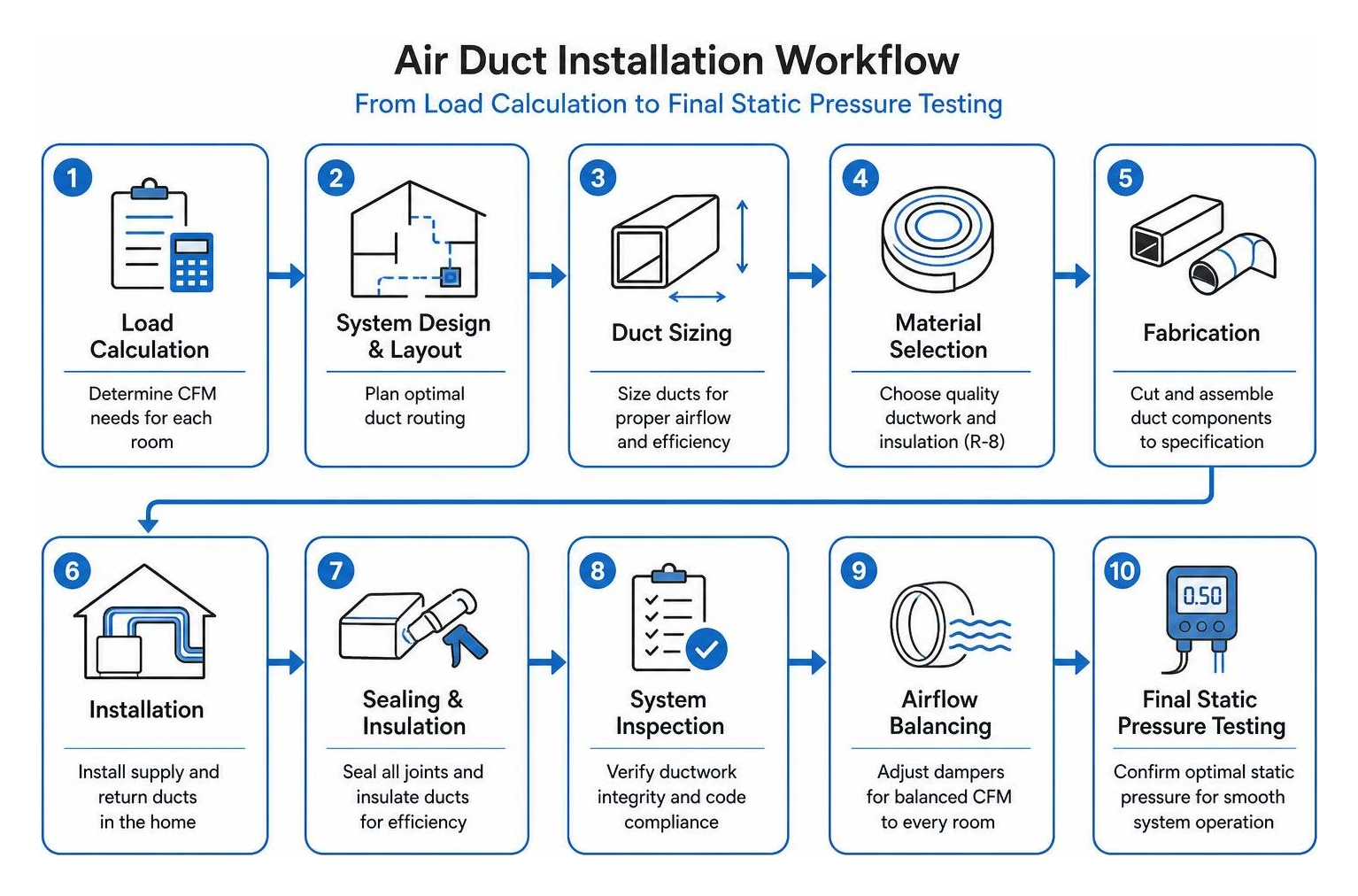
When my team and I handle a full installation, we follow a systematic workflow to ensure maximum thermal efficiency, quiet performance, and code compliance. Homeowners can read our step-by-step guide to air duct installation cost process to understand how each phase unfolds from initial layout to final inspection.
Planning and Sizing Your Air Duct Installation in Birmingham
The installation begins long before any sheet metal is cut. Proper system design relies on ACCA Manual D calculations, which determine the exact cubic feet per minute (CFM) of airflow required for each individual room based on square footage, window exposure, insulation levels, and ceiling height.
During the planning phase, I evaluate the architectural layout of your home to select the best routing strategy:
- Trunk-and-Branch Layout: A rigid main trunk line delivers high-volume airflow through the center of the structure, feeding shorter flexible branches that connect directly to individual room registers.
- Radial Distribution Layout: Flexible runs extend outward from a central supply plenum, which works well in compact single-story floor plans.
- Return Air Balancing: Dedicated return grilles are placed in primary living areas and hallways to prevent room pressurization, eliminating door slamming and temperature stratification.
Planning these details ensures that modern systems integrate smoothly with hassle-free cooling system setups, providing whisper-quiet comfort throughout the home.
Installation, Sealing, and Airflow Balancing
Once the custom layout is finalized, technicians remove the obsolete materials and begin securing the new distribution network.
- Mechanical Fastening: Rigid metal trunks are hung using heavy-gauge galvanized straps to prevent sagging, vibration, and noise transmission into the ceiling framing.
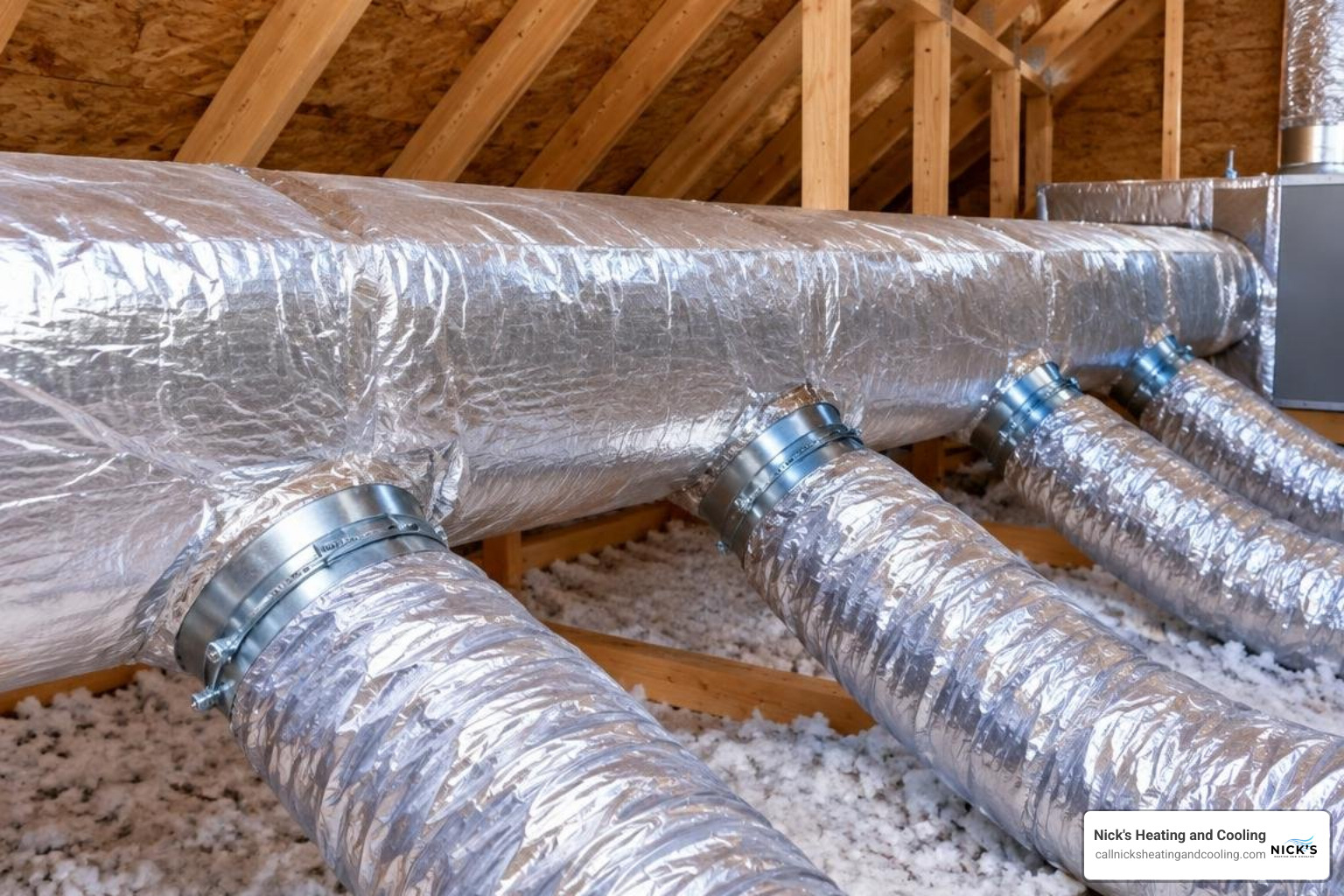
- Airtight Sealing: Every joint, collar, and elbow is mechanically fastened with sheet metal screws and sealed using UL-181 listed mastic paste and fiber-mesh tape. Mastic provides a permanent, flexible seal that will not dry out, peel, or crack under attic temperature extremes.
- High-Grade Insulation: All supply and return runs located in unconditioned spaces are wrapped in R-8 fiberglass insulation jackets with durable vapor barriers to prevent surface condensation during humid summer months.
- Damper Adjustments & Static Pressure Testing: Once the physical installation is complete, technicians measure total external static pressure (TESP) using a digital manometer and adjust manual balancing dampers to guarantee each room receives its specified CFM delivery.
Ductwork Materials and Alternatives for Alabama Homes
Choosing the right materials for your duct network depends on your home’s structural design, attic access, moisture exposure, and budget.
| Material Type | Primary Application | Key Advantages | Considerations |
|---|---|---|---|
| Rigid Sheet Metal | Main supply/return trunks, plenums | Extremely durable, smooth interior for low static resistance, 30+ year lifespan | Higher upfront fabrication cost; requires external insulation wrap |
| Flexible Ducting | Branch runs to individual room registers | Cost-effective, easy to route around framing, built-in R-8 insulation | Must be pulled tight without kinks or sharp bends to maintain airflow |
| Fiberglass Duct Board | Plenums and distribution boxes | Built-in thermal and acoustic insulation, lightweight | Requires careful installation to protect inner fibers from moisture |
Choosing the Right Duct Materials
For most residential applications, a hybrid approach yields the best balance of longevity, acoustic quietness, and thermal efficiency. We typically construct the central supply and return trunks from galvanized rigid sheet metal, which provides exceptional structural integrity and optimal air velocity.
From the rigid metal trunk, insulated flexible branch ducts connect to individual ceiling or floor boots. High-quality flex duct features an airtight inner core, thick fiberglass insulation, and a reinforced outer vapor barrier that resists tears.
When investing in professional air duct installation, ensuring that your flexible branch runs are pulled taut and supported every four feet prevents sagging and airflow restrictions.
When to Consider Ductless Alternatives
While central ductwork is ideal for whole-home climate management, certain structural scenarios make duct installation impractical or cost-prohibitive. Homes with finished basements, historic properties with low-clearance attics, flat roofs, or new room additions often lack the physical space needed to run bulky distribution chases.
In these circumstances, mini-split systems offer an efficient alternative. By mounting independent indoor air handlers directly to walls or ceilings, you achieve zoned climate control without carving out closet space or building drywall soffits. You can learn more about how these compact systems perform by checking out our the birmingham guide to ductless ac installation.
Frequently Asked Questions About Birmingham Air Duct Services
How long does a full home duct replacement take?
A complete residential duct replacement typically takes between one to three days, depending on the size of your home, the location of your equipment (attic versus crawlspace), and the complexity of the architectural layout.
My team works systematically to ensure your home remains clean throughout the project. We lay down protective drop cloths, remove obsolete duct materials carefully, and complete the installation of the main trunk lines before connecting branch runs. In most cases, we stage the installation so that your heating and cooling equipment remains offline for only a few hours during the hottest or coldest parts of the day.
Can new ductwork solve summer humidity issues in Birmingham?
Yes, a properly sized and sealed duct installation plays a major role in controlling indoor humidity. When leaky return ducts draw hot, moisture-laden air out of attics and crawlspaces, they overwhelm your air conditioner’s dehumidification capacity.
Airtight, fully insulated R-8 ductwork ensures that only indoor air passes across the cold evaporator coil, allowing the system to remove latent moisture efficiently. Furthermore, properly sized ducts maintain the correct airflow velocity across the cooling coil, maximizing moisture condensation and drainage before cool air is distributed into your rooms.
How often should air ducts be cleaned or inspected?
Ductwork should receive a professional visual inspection at least once every year during your regular seasonal heating and cooling maintenance tune-up. A technician will check for loose joints, degraded tape, sagging flex runs, and signs of biological growth or pest intrusion.
For routine cleaning, the National Air Duct Cleaners Association (NADCA) recommends scheduling air duct cleaning every three to five years, or sooner if you have completed home renovations, noticed visible dust buildup blowing from registers, or suffered from unexplained allergy flare-ups indoors.
Conclusion
Upgrading your home’s air distribution system is one of the most effective investments you can make to lower utility costs, balance room temperatures, and improve your everyday indoor air quality. Leaky, deteriorating, or undersized ductwork forces your comfort equipment to work harder than necessary, driving up power bills while leaving your living areas drafty and dusty.
Nick’s Heating and Cooling provides residential and commercial HVAC services—including AC, heating, and air-duct installation, repair, and maintenance—in Birmingham, AL. Our unique value is built on offering free, no-obligation inspections combined with certified, locally-owned technicians who prioritize integrity, professionalism, and rapid, reliable service. Whether you are dealing with hot spots in upstairs bedrooms or planning a full system overhaul, we provide transparent recommendations and 24/7 emergency service to keep your family comfortable year-round. Contact our team today to connect with a birmingham hvac contractor who treats your home with the care and attention it deserves.
Nick’s Heating and Cooling currently services Birmingham, Hoover, Vestavia Hills, Mountain Brook, Alabaster, Chelsea, Homewood, Trussville, Pelham, and Irondale for all your HVAC and Heating needs.