

Stop an Air Con Pipe Leak Before It Damages Your Home
If you have an air con pipe leaking, first turn the system off if water is entering your home or near electrical equipment. Then place towels or a container under the drip and check where it starts.
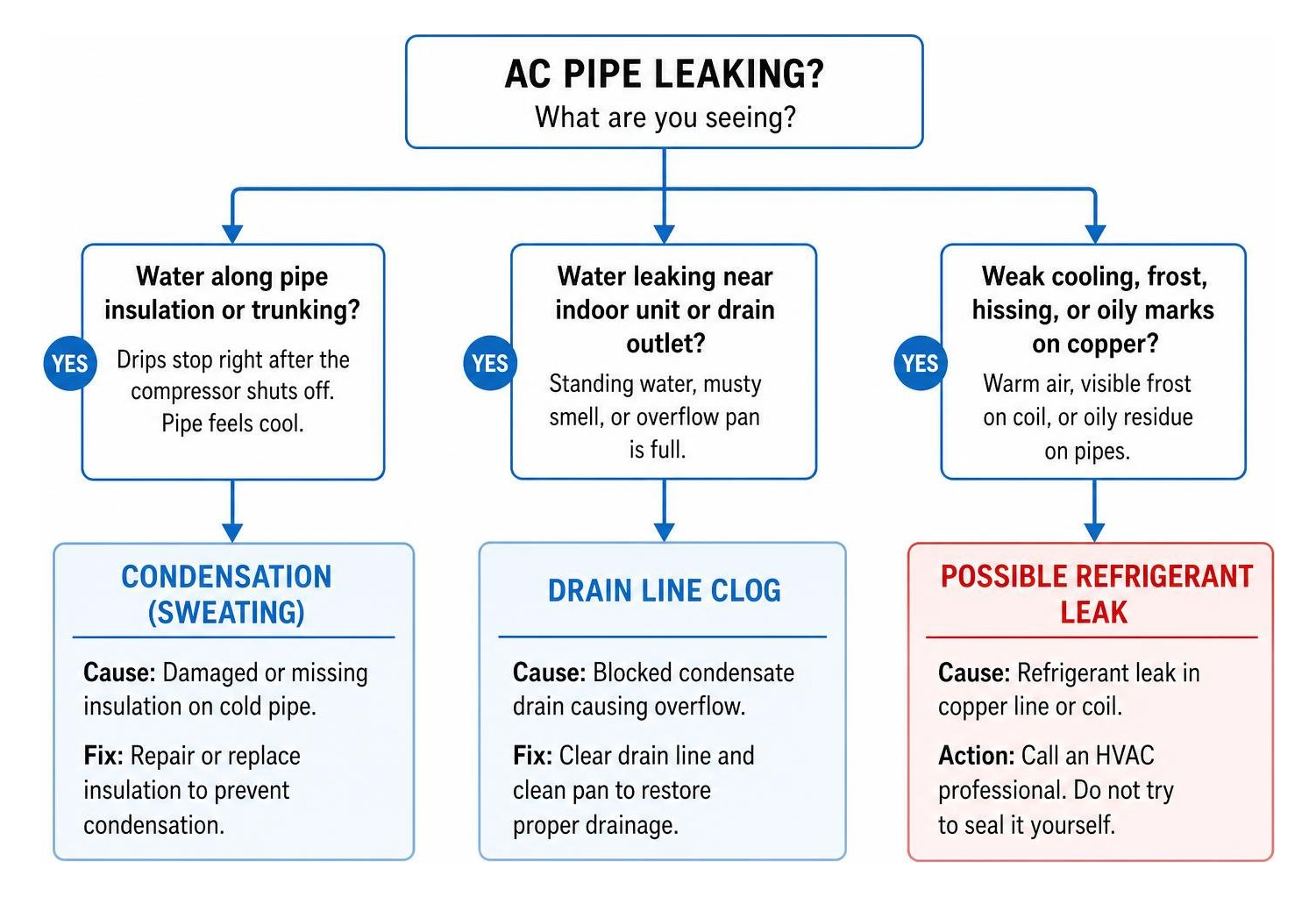
- Water at the indoor unit: Often a blocked condensate drain or overflowing pan.
- Water along pipe insulation or trunking: Often condensation on a cold pipe with damaged insulation.
- Weak cooling, frost, hissing, or oily marks on copper: Possible refrigerant leak. Call an HVAC professional rather than trying to seal it yourself.
A little water dripping from an outdoor drain pipe can be normal, especially during a humid Birmingham summer. But water stains, wet walls, steady indoor dripping, or reduced cooling are not problems to ignore. A working AC can remove a large amount of moisture from the air, and that water needs a clear path outside.
Fixing the right cause early can help prevent mold, damaged drywall, electrical risks, and expensive compressor damage.
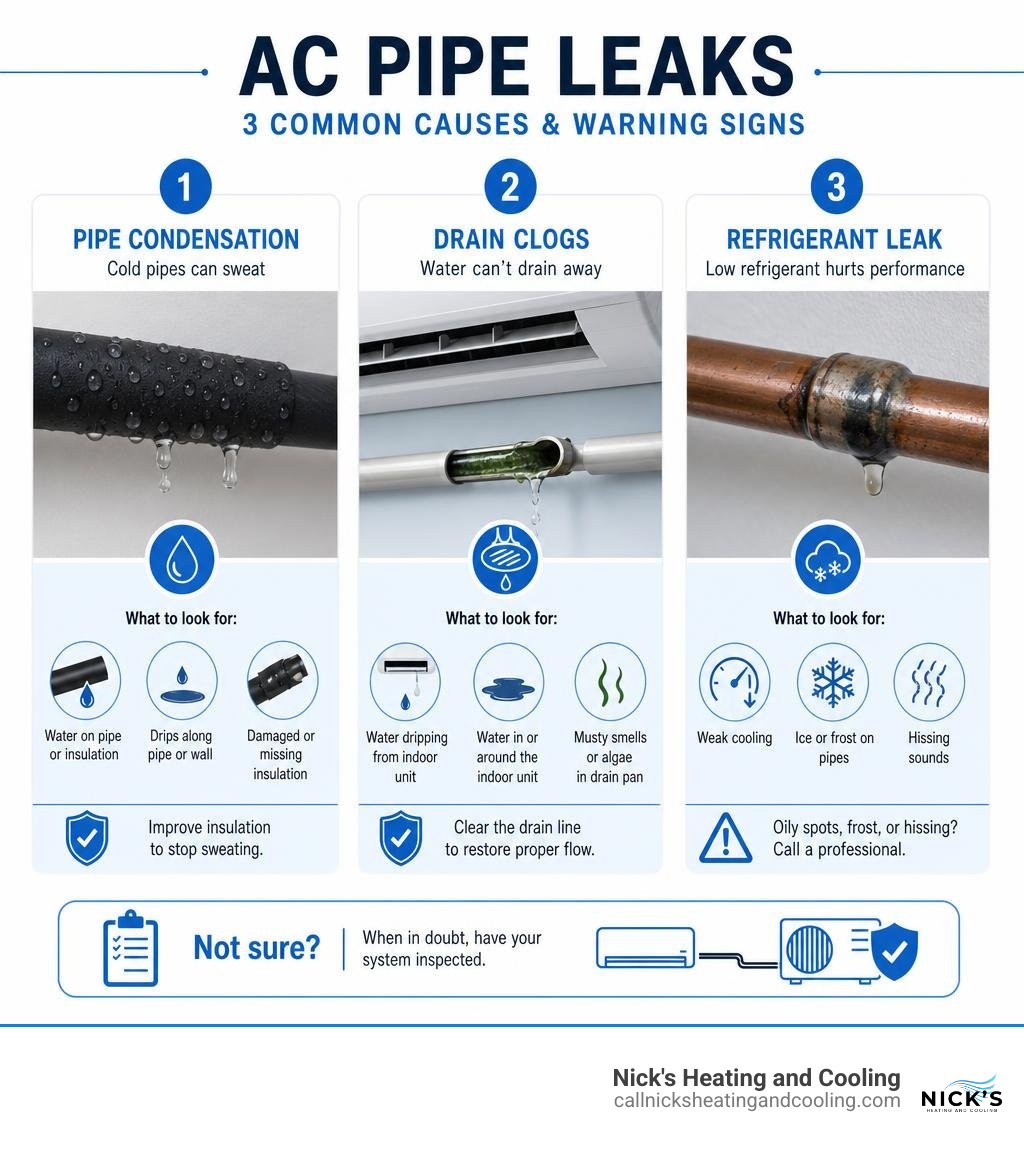
Air con pipe leaking terms you need:
Why You Have an Air Con Pipe Leaking: Condensation, Clogs, or Gas
When I arrive at a home with an air conditioner leaking moisture, the first job is identifying what kind of fluid is escaping. Homeowners often assume every drop of moisture coming from an AC line set or plastic casing is the same issue. In reality, your air conditioning system manages two completely different substances under pressure and gravity: liquid water extracted from indoor air, and chemical refrigerant circulating between the coils.
During the peak heat of late summer in September 2026, cooling systems pull massive amounts of humidity out of indoor spaces. Residential air conditioning units can easily generate up to a gallon of condensation per hour under humid conditions. When that volume cannot escape smoothly, or when cold pipes hit unconditioned air, water ends up where it does not belong.
| Issue Type | Primary Fluid | Common Location | Distinct Signs | Risk Level |
|---|---|---|---|---|
| Condensation (Sweating) | Pure atmospheric water | Along line set, trunking runs, ceiling drywall | Drips stop right after compressor shuts off; cool to touch | Moderate (structural rot, mold) |
| Drain Line Clog | Stagnant water & bio-sludge | Indoor unit casing, secondary overflow pan | Water overflows near unit; persistent standing pool | Moderate to High (drywall collapse) |
| Refrigerant Line Leak | Gas + lubricating compressor oil | Copper pipe joints, service valves, outdoor unit | Oily residue on copper, hissing sound, coil frost, warm air | Severe (compressor failure, environmental) |
Understanding the distinction between these failures prevents unnecessary repairs. For example, if your line is sweating, repeatedly cleaning your drain pan will never solve the problem. As detailed in this guide on condensation tracking along pipe trunking, water can condense on bare copper inside wall casing and travel meters away before soaking through your ceiling.
Air Con Pipe Leaking Due to Degraded or Missing Insulation
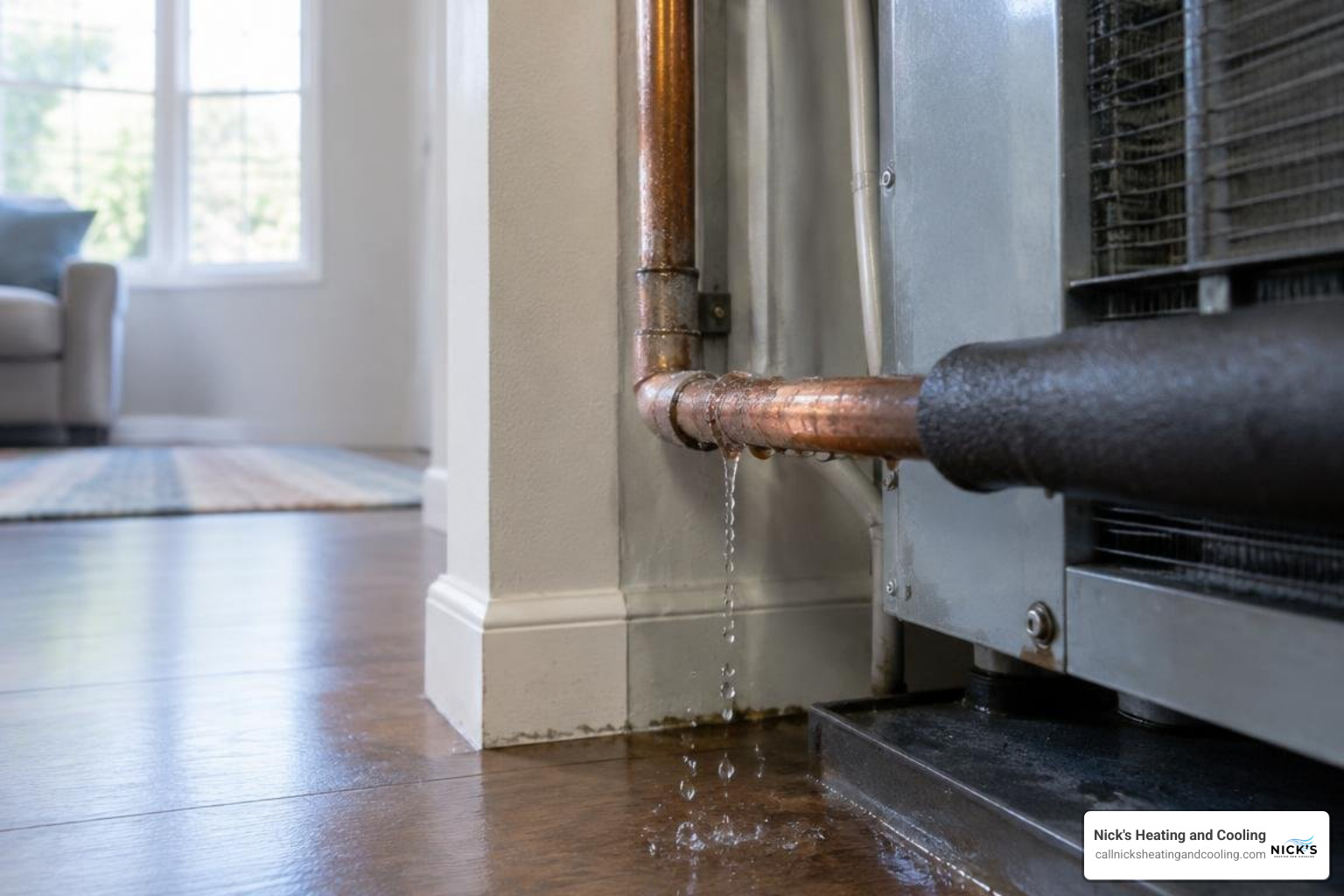
Your AC system features two copper lines connecting the indoor air handler or evaporator coil to the outdoor condenser: the smaller, warm liquid line and the larger, cold suction line. The suction line carries cold, low-pressure vapor back to the compressor. Because that copper pipe runs well below the ambient dew point, it will immediately condense atmospheric moisture out of the surrounding air unless it is completely isolated by a vapor-tight barrier.
When pipe insulation breaks down, thermal bridging happens. The warm, humid air makes direct contact with the freezing copper line, turning airborne humidity into water droplets. This leads to common points of failure:
- Crushed Insulation: When installers pull zip ties or pipe clamps too tightly around soft foam, they crush the closed cells. Crushed foam loses its insulating R-value, causing sweat rings to form right at the bracket points.
- Separated Butt Joints: Over years of thermal expansion and contraction, standard pipe foam shrinks. If the seams were not bonded with heavy-duty contact adhesive or vapor-barrier tape, the joints pull apart, exposing bare copper to the air.
- Corner and Elbow Tears: Forcing straight foam around sharp copper bends causes the material to stretch thin, crack, and tear over time.
- Weather and UV Degradation: Unshielded insulation on outdoor runs hardens, cracks, and flakes away within five years due to direct sunlight and weather exposure.
Once pipe sweat starts inside line trunking or above a ceiling, gravity takes over. The water tracks along the smooth copper line, pooling at the lowest bend before soaking into your drywall and creating brown ceiling rings.
Blocked Condensate Drain Lines and Overflowing Pans
The moisture pulled from your indoor air collects on the evaporator coil, drips down into a primary drain pan, and exits your home through a 3/4-inch PVC drain pipe. Because this water carries dust, pet dander, and airborne microbes, the drain line creates an ideal habitat for algae, bacteria, and mold growth.
Over time, this organic matter forms a thick bio-sludge that completely plugs the pipe. Once blocked:
- Water backs up into the primary drain pan beneath the indoor coil.
- The water overflows into the secondary safety pan located underneath the air handler.
- If your system has a properly installed float switch, it detects rising water and cuts power to the outdoor compressor to prevent an active flood.
- If the float switch fails, or if your system lacks a secondary pan, gallons of water will spill into your ceiling, floorboards, or attic insulation.
Regularly learning how to clean your AC drain line like a pro using a wet/dry vacuum and a vinegar flush is one of the most effective ways to avoid sudden overflows.
High-Pressure Refrigerant Gas Line Punctures and Corrosion
A leaking refrigerant line is fundamentally different from a water issue. Refrigerant lines in modern residential systems operate under extreme internal pressures, often exceeding 400 PSI in R-410A equipment. A pinhole no thicker than a human hair can vent an entire system charge into the atmosphere within weeks.
Refrigerant leaks generally occur due to:
- Formicary Corrosion: A chemical reaction between moisture, copper, and common household organic acids (such as vapors from cleaning products, paints, and building materials) that creates microscopic tunnels through the copper wall.
- Vibration Fatigue: If copper line sets are secured loosely or touch vibrating metal framing, the friction rubs a hole through the metal tubing.
- Poor Flare Connections and Weak Brazed Joints: Improperly torqued mechanical fittings or joints brazed without sufficient silver alloy can crack under continuous system pressure cycles.
When refrigerant escapes, it leaves behind a telltale greasy, oily residue on the copper because lubricating oil circulates alongside the gas. As the refrigerant level drops, pressure plummets, causing the remaining moisture on the indoor coil to freeze solid. When the system cycles off, that block of ice melts rapidly, overwhelming the drain pan and creating a massive secondary water leak. If left unaddressed, low refrigerant will overheat and destroy your compressor, requiring repairs that frequently exceed $1,000 to replace.
Immediate Action Steps: What to Do When Water Leaks from AC Pipes
If you notice water pooling beneath your indoor unit or dripping steadily through a ceiling, prompt action protects your home from severe structural damage and electrical hazards.
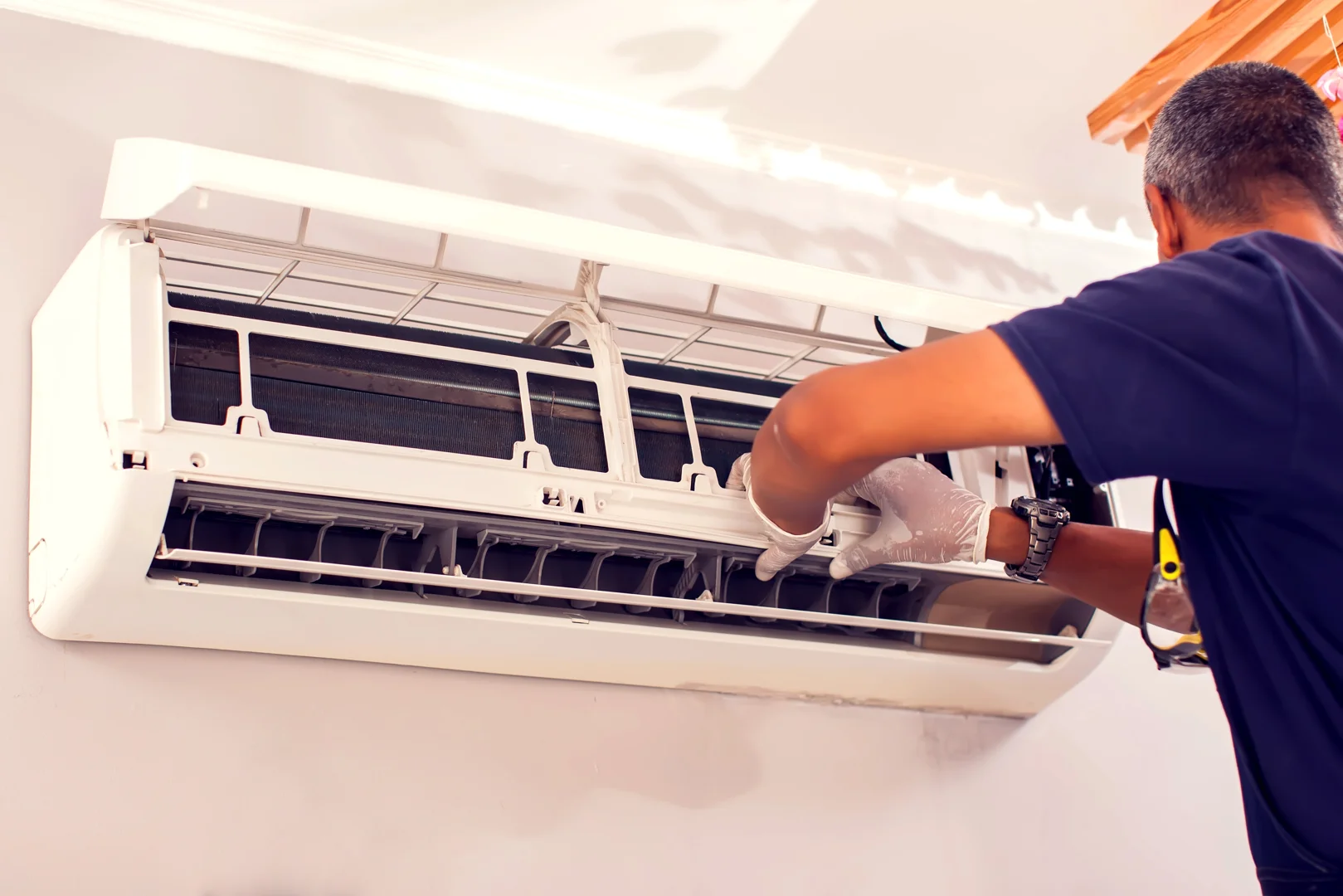
- Shut the System Down Immediately: Walk to your thermostat and switch the system mode to OFF. Leaving the AC running while it is leaking accelerates water accumulation and risks short-circuiting electrical components in your furnace or air handler.
- Cut Power at the Breaker (If Water Is Near Wiring): If water is dripping near electrical outlets, light fixtures, or the main breaker panel, shut off the HVAC circuit breaker immediately to eliminate shock hazards.
- Contain the Water: Place deep buckets, plastic tubs, or heavy towels beneath the active drip. If water is pooling on drywall or a false ceiling, placing a small pinhole in the center of the water bulge with a screwdriver will allow the trapped water to drain directly into a bucket below, preventing the entire sheet of drywall from collapsing under the weight.
- Extract Standing Water: Use a wet/dry vacuum to clear standing water from your secondary drain pan, carpets, and surrounding flooring. Mold can begin colonizing wet drywall and insulation within 48 to 72 hours.
- Inspect the Drain Outlet: Walk outside to locate the primary condensate exit pipe. If the indoor unit is flooded but the outdoor drain line is completely dry, you have confirmed a physical blockage in the drainage line.
How to Repair Leaking AC Pipes: DIY Fixes vs. Professional Solutions
Depending on whether your leak stems from standing drain water, missing pipe insulation, or a pressurized refrigerant line, the fix ranges from a simple DIY cleanup to specialized professional service.
What Homeowners Can Safely Fix (DIY)
- Clearing a Clogged Drain Line: Connect a wet/dry shop vacuum to the outdoor condensate drain termination point using your hand or a rag to form a tight seal. Run the vacuum for two to three minutes to pull out built-up algae, sludge, and standing water from the line.
- Patching Cracked PVC Drain Lines: If your plastic condensate pipe has a hairline crack, cut out the damaged section with a PVC pipe cutter and cement a new coupling in place using PVC primer and solvent cement. Avoid using silicone caulk or duct tape on PVC lines, as they degrade quickly under moist conditions.
- Replacing Exposed Pipe Insulation: If the foam insulation on accessible indoor or outdoor copper runs is torn or crumbling, you can install pre-slit, closed-cell elastomeric foam sleeves. Ensure the inner diameter matches your suction line, push the seam tightly together, and seal every joint with specialized vapor-barrier tape.
For an in-depth breakdown of when to tackle pipe jobs yourself versus calling an expert, check these guidelines on professional and DIY pipe repair standards.
What Requires a Certified Professional
Refrigerant line leaks are strictly regulated by federal law under the EPA Clean Air Act. It is illegal for unlicensed individuals to handle, vent, or purchase regulated refrigerants. Modern refrigerants like R-410A carry high global warming potentials, making professional containment essential.
When our certified technicians handle a refrigerant leak repair, we follow a precise technical process:
- Electronic Leak Detection & Nitrogen Isolation: We isolate the line set and use electronic sniffers alongside high-pressure dry nitrogen testing to pinpoint the exact pinhole leak without unnecessary demolition.
- Refrigerant Recovery: We use EPA-certified recovery machines to pull the remaining refrigerant safely into a recovery cylinder.
- Nitrogen-Purged Brazing: When cutting out and brazing a damaged copper section with silver alloy, we flow low-pressure dry nitrogen through the pipe. This prevents copper oxide scale from forming inside the pipe, which would otherwise circulate and destroy the compressor valves.
- Deep Vacuum Evacuation: We use a commercial vacuum pump to pull the entire system down below 500 microns. This step boils away internal moisture and removes non-condensable gases that cause acid formation.
- Precision Recharging: We recharge the system using digital scales, introducing the manufacturer-specified refrigerant weight down to the exact ounce.
For complex refrigerant issues, our team delivers complete AC repair across the Greater Birmingham area with guaranteed workmanship.
Long-Term Protection: Preventing AC Pipe Leaks and Water Damage
Preventing an air con pipe leaking problem requires proactive maintenance before peak summer heat arrives. By addressing insulation integrity, drainage flow, and system pressure regularly, you can avoid unexpected water damage.
How to Prevent an Air Con Pipe Leaking Emergency with Routine Care
Routine preventative care keeps your system operating at peak efficiency while catching minor line wear before it leads to a flooded ceiling:
- Monthly Air Filter Replacements: A dirty, restricted air filter chokes off airflow over the evaporator coil. Without adequate airflow, the coil drops below freezing, turns into a block of ice, and floods the drain pan when it thaws.
- Bi-Monthly Drain Line Flushes: Pour one cup of distilled white vinegar down the primary condensate T-pipe every two months during cooling season. Vinegar kills algae and bacteria without degrading the plastic drain pipe or rubber seals.
- Enrolling in Preventative Maintenance: Scheduling annual AC maintenance allows a licensed technician to inspect electrical contactors, test safety float switches, measure operating pressures, and clean the evaporator coil before problems arise.
If you live in the local area, partnering with a dependable Birmingham HVAC contractor ensures your cooling equipment stays protected year after year.
Upgrading Pipe Insulation and Exterior Line Cladding
Standard foam insulation on copper lines often begins breaking down after four to five years of exposure to direct sunlight, humidity, and wildlife. Upgrading your pipe protection adds years of reliability:
- Switch to Closed-Cell Elastomeric Foam: Open-cell foam absorbs moisture over time, losing up to 30% of its insulating capability once saturated. Closed-cell elastomeric rubber insulation resists moisture absorption entirely, providing a permanent vapor barrier.
- Install UV-Resistant Aluminum or PVC Line Cladding: Encase all exposed outdoor refrigerant line sets in rigid PVC architectural trunking or UV-rated metal cladding. This shields the foam insulation from ultraviolet breakdown, hail, weed trimmers, and birds.
- Seal All Building Penetrations: Ensure the wall sleeve where your line set enters your home is thoroughly sealed with non-hardening exterior duct seal compound. This stops hot, humid outdoor air from sneaking into your wall cavities, where it would condense against cold indoor pipe sections.
Frequently Asked Questions About Leaking AC Pipes
How do I know if my AC pipe leak is water condensation or refrigerant gas?
The quickest way to tell the difference is by touching and smelling the substance:
- Condensation: The liquid is clear, odorless, and feels like pure water. It typically stops dripping shortly after the outdoor compressor turns off.
- Refrigerant Leak: Refrigerant escapes primarily as an invisible gas, but it leaves behind a distinct greasy, yellowish, or clear oil film around the copper joint. You may also notice a faint chemical or sweet ether-like odor, a soft hissing noise near the pipe, ice on the larger copper line, and a steady loss of cooling output inside your home.
Is a leaking air conditioner pipe dangerous to my health or home?
Yes, both water leaks and refrigerant leaks carry serious risks if ignored:
- Water & Condensation: Persistent moisture pooling inside walls, ceilings, or crawlspaces triggers toxic mold colonization within 48 hours. This degrades indoor air quality, which can aggravate asthma and respiratory allergies for roughly 30% of the population, while rotting structural wood and causing costly drywall damage.
- Refrigerant Leaks: Escaping refrigerant gases are heavier than air. In enclosed, poorly ventilated spaces, large leaks can displace oxygen, presenting an asphyxiation hazard. Operating a system low on refrigerant will also cause the compressor motor to burn out, creating acidic sludge that ruins the entire refrigerant circuit.
Can I repair a leaking refrigerant line myself?
No. Federal EPA regulations strictly prohibit unlicensed homeowners from servicing, repairing, or recharging pressurized refrigerant systems. Refrigerant circuits operate at pressures above 400 PSI, which can cause severe frostbite, chemical burns, or blindness if disconnected improperly.
Furthermore, simply adding more refrigerant to a leaking line without brazing the underlying crack is a short-term band-aid that wastes money and damages the environment. Only licensed technicians equipped with recovery machines, nitrogen tanks, brazing torches, and micron gauges can legally and safely repair copper line sets.
Keep Your Home Dry and Cool
A leaking air conditioning pipe should never be left to drip unchecked. Whether the issue is simple condensation from crushed line insulation, a clogged PVC drain line backing up into your ceiling, or a high-pressure refrigerant leak threatening your compressor, addressing the problem early protects your wallet and your home’s structure.
If you are dealing with persistent AC leaks, strange hissing noises, or sweating line sets, do not wait for water to ruin your drywall. At Nick’s Heating and Cooling, our certified, locally-owned technicians provide rapid diagnostics, upfront pricing, and free, no-obligation inspections across Alabama to restore your peace of mind. Reach out to our team today for dependable, high-quality AC repair services.
Nick’s Heating and Cooling currently services Birmingham, Hoover, Vestavia Hills, Mountain Brook, Alabaster, Chelsea, Homewood, Trussville, Pelham, and Irondale for all your HVAC and Heating needs.