

When a 24 Hour HVAC Service Call Is Worth Making
A 24 hour HVAC service call is the right move when your system failure creates a safety risk, threatens health during very hot or cold weather, or could cause more damage if it waits until morning. Call for help if you have no heat or AC during temperature extremes, smell gas or burning, see smoke, have repeated breaker trips, or find significant water leaking from the unit.
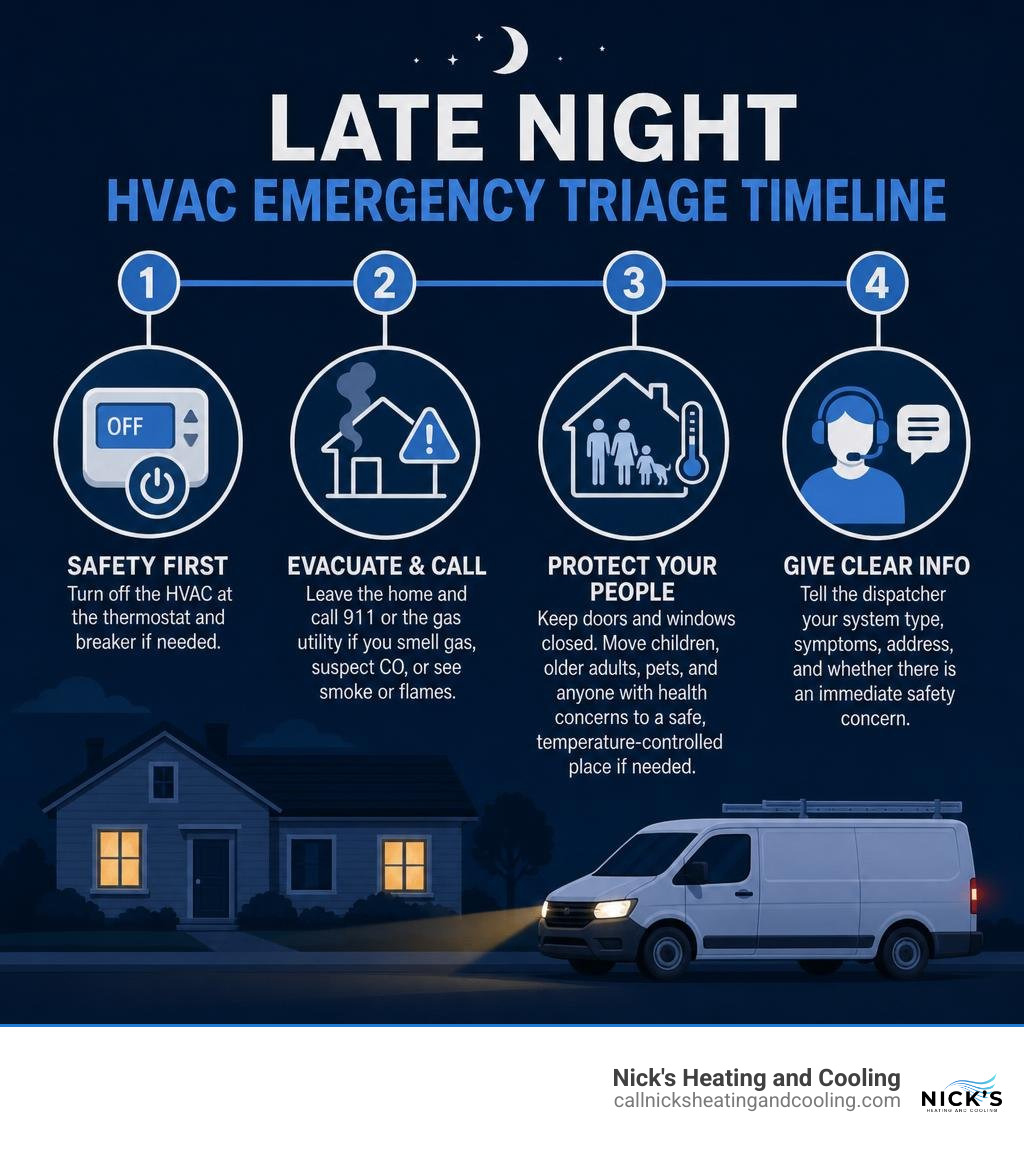
While you wait:
- Turn the HVAC system off at the thermostat and breaker if it smells burned, runs oddly, or keeps tripping power.
- Leave the home and call 911 or the gas utility first if you smell gas, suspect carbon monoxide, or see smoke or flames.
- Keep doors and windows closed during severe heat or cold, and move children, older adults, pets, and anyone with health concerns to a safe temperature-controlled place if needed.
- Tell the dispatcher your system type, symptoms, address, and whether there is an immediate safety concern.
HVAC systems do not literally plan their breakdowns for 2 a.m. But hard-working equipment often fails during the hottest and coldest stretches, when it runs longer and small worn parts finally give out. A reliable emergency team can triage the risk, explain likely arrival timing and after-hours charges, and send a qualified technician to diagnose the problem.
Related content about 24 hour hvac service:
What Truly Qualifies as an Emergency Requiring 24 Hour HVAC Service?
It never fails: heating and air conditioning units do not quietly shut down on a mild Tuesday afternoon at 2:00 PM when everyone is awake and contractors are on regular shifts. They tend to give out in the dead of night, right when outdoor weather reaches an uncomfortable extreme.
When you find yourself awake in the dark wondering if you should make that call, it helps to distinguish between an uncomfortable inconvenience and an urgent situation. A true heating or cooling emergency involves extreme temperatures, potential property damage, or immediate hazards to human health. According to data from the Centers for Disease Control and Prevention (CDC), thousands of people die every year across the country from exposure to severe heat or cold. Vulnerable household members—including infants, the elderly, and individuals with underlying respiratory or cardiovascular conditions—struggle rapidly when indoor temperatures spike above 85°F or drop into freezing ranges.
If your system stops functioning during a brutal heat wave or a severe freeze, seeking the best HVAC services Birmingham has to offer ensures your family stays protected rather than enduring dangerous indoor conditions until morning.
Critical Heating and Cooling Breakdowns
Not every breakdown requires immediate dispatch, but weather context is everything. If the outdoor temperature is a mild 68°F and your air conditioner stops blowing cold air, opening the windows and waiting until regular business hours can save on after-hours dispatch fees. However, when ambient conditions swing to extremes, system loss becomes urgent:
- Subzero Snaps and Severe Freezes: When outdoor temperatures dip below freezing, an unheated house loses heat rapidly. Within hours, indoor temperatures can plummet, putting vulnerable family members at risk of hypothermia and exposing plumbing pipes in exterior walls or unconditioned crawl spaces to catastrophic freezing and bursting.
- Oppressive Heat Waves: High humidity combined with triple-digit temperatures creates indoor environments where heat exhaustion or heat stroke can set in quickly. If your cooling system cuts out during peak summer weather, relying on top HVAC services in Hoover AL restores essential indoor climate control before the living space becomes unsafe.
Immediate Safety Hazards: Gas Leaks, Smoke, and Electrical Trips
Some HVAC issues are critical safety hazards regardless of what the thermometer reads outside. These scenarios demand an immediate shutdown and rapid intervention:
- Rotten Egg or Sulfur Odor: Natural gas providers add mercaptan to create a distinct sulfur smell. If you smell gas near your furnace or vents, evacuate the house immediately. Do not flip light switches or use landline phones inside, as an electrical spark could ignite the gas. Call 911 or your local gas utility from a safe distance outside before requesting heating repair.
- Burning Plastic or Acrid Electrical Smells: An acrid odor resembling burning plastic or hot wire insulation usually indicates a failing blower motor, overheating transformer, or compromised wiring harness. Shut off power at the main electrical panel to prevent an electrical fire.
- Repeatedly Tripping Circuit Breakers: If an air conditioner or heat pump trips its dedicated breaker once, it might be a transient surge. If it trips immediately upon resetting, do not reset it again. Continued attempts can melt wire insulation or destroy the compressor.
- Active Water Flooding: When an indoor condensate drain clogs and the overflow float switch fails, gallons of water can spill through ceilings, ruin drywall, and warp hardwood floors. Turn off the system immediately to stop condensation production.
What to Expect from After-Hours Emergency Dispatches
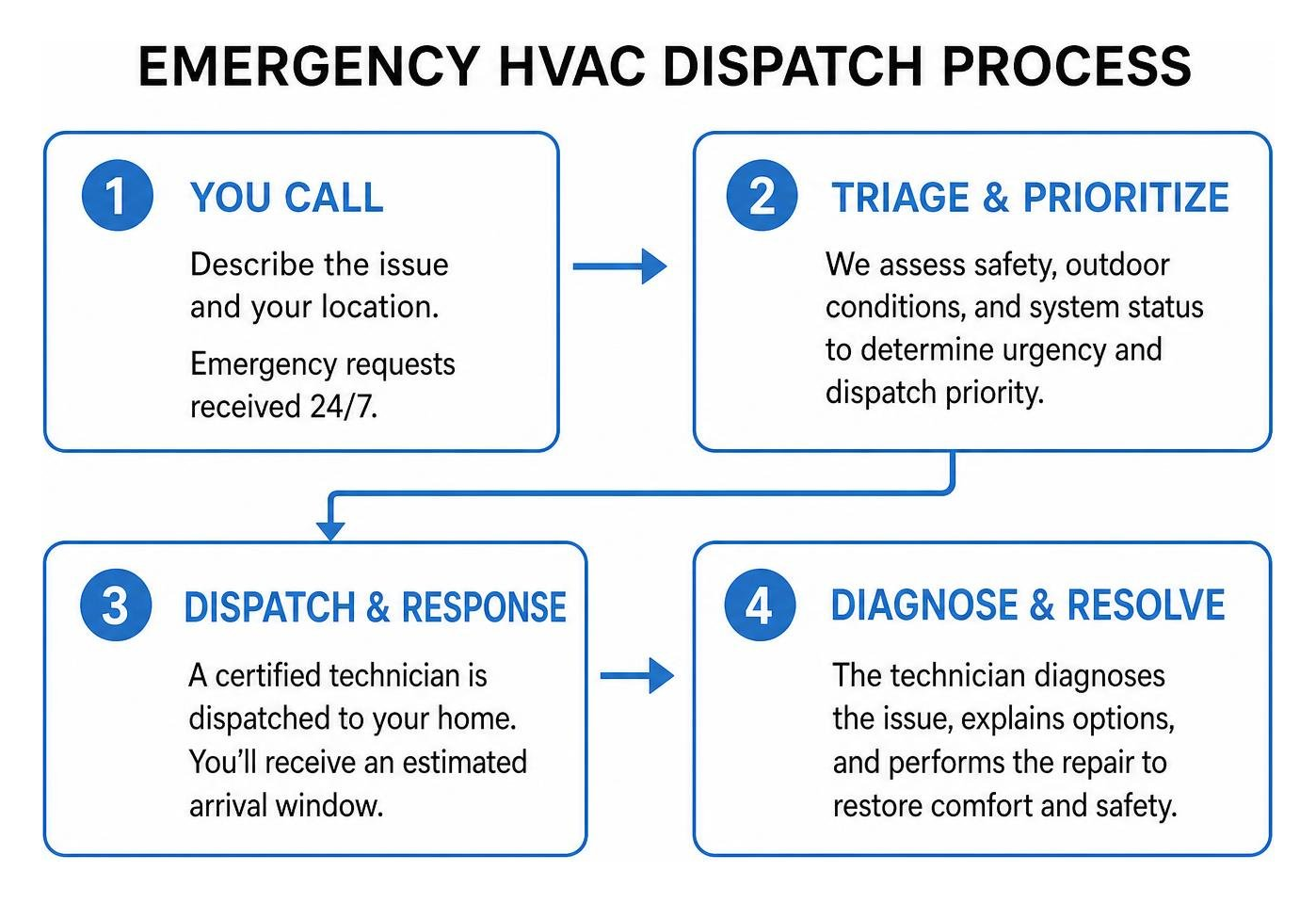
Making a late-night service call should not leave you in the dark regarding pricing or arrival expectations. Professional emergency dispatching follows a structured triage procedure designed to get certified help to your doorstep as quickly and transparently as possible.
| Service Tier | Typical Hours | Typical Diagnostic / Dispatch Fee | Expected Response Window |
|---|---|---|---|
| Standard Business Hours | Mon–Fri, 8:00 AM – 5:00 PM | $49 – $89 | Same-day or scheduled window |
| Evening Emergency | Mon–Fri, 5:00 PM – 10:00 PM | $149 – $249 | 1 to 3 hours |
| Overnight & Weekend | 10:00 PM – 7:00 AM / Sat–Sun | $249 – $349 | 2 to 4 hours |
| Major Holidays | All hours on observed holidays | $299 – $399 | Priority triage (safety first) |
Response Times and Technician Arrival Speeds
When you call an emergency number at 2:00 AM, your call is answered by a live on-call dispatcher or routed directly to an on-duty technician. During this initial call, the dispatcher collects crucial details: your system type, specific symptoms, address, and any active safety concerns.
Arrival times vary based on geography and current call volume:
- Urban and Core Suburban Areas: Technicians typically reach homes within 1 to 3 hours.
- Outer Suburban and Rural Locations: Travel times may extend arrival windows to 2 to 4 hours depending on road conditions and highway proximity.
A qualified technician arrives in a fully stocked service vehicle carrying universal parts—such as dual run capacitors, contactors, flame sensors, universal control boards, transformer relays, and blower motors—allowing most emergency repairs to be resolved on the spot during that first visit.
Pricing Tiers for 24 Hour HVAC Service Calls
Emergency service involves overtime compensation, dedicated on-call staffing, and after-hours operational logistics. Consequently, emergency diagnostic and dispatch fees are tiered higher than standard daytime service calls.
During standard daytime hours, diagnostic fees typically start around $49 to $89. Evening service calls generally range between $149 and $249, while late-night, overnight, or holiday calls usually fall between $249 and $349.
Transparent contractors outline these dispatch fees upfront before rolling a truck so there are no surprises. Furthermore, many reputable providers apply a portion of the diagnostic dispatch fee as a credit toward the approved repair if you proceed with the work on the spot.
Common Midnight HVAC Failures and System Compatibility
Why do air conditioners and furnaces wait until the worst possible moments to fail? The answer comes down to physics and thermal stress. HVAC equipment experiences its heaviest operational strain during extreme weather cycles.
In the heat of summer, an air conditioner runs for hours at a time, building up intense internal pressure and electrical heat. In winter, furnaces cycle continuously through ignition, combustion, and high-heat distribution. When worn parts finally reach mechanical fatigue, they give out under that prolonged load.
Frequent Failure Points: Capacitors, Control Boards, and Frozen Coils
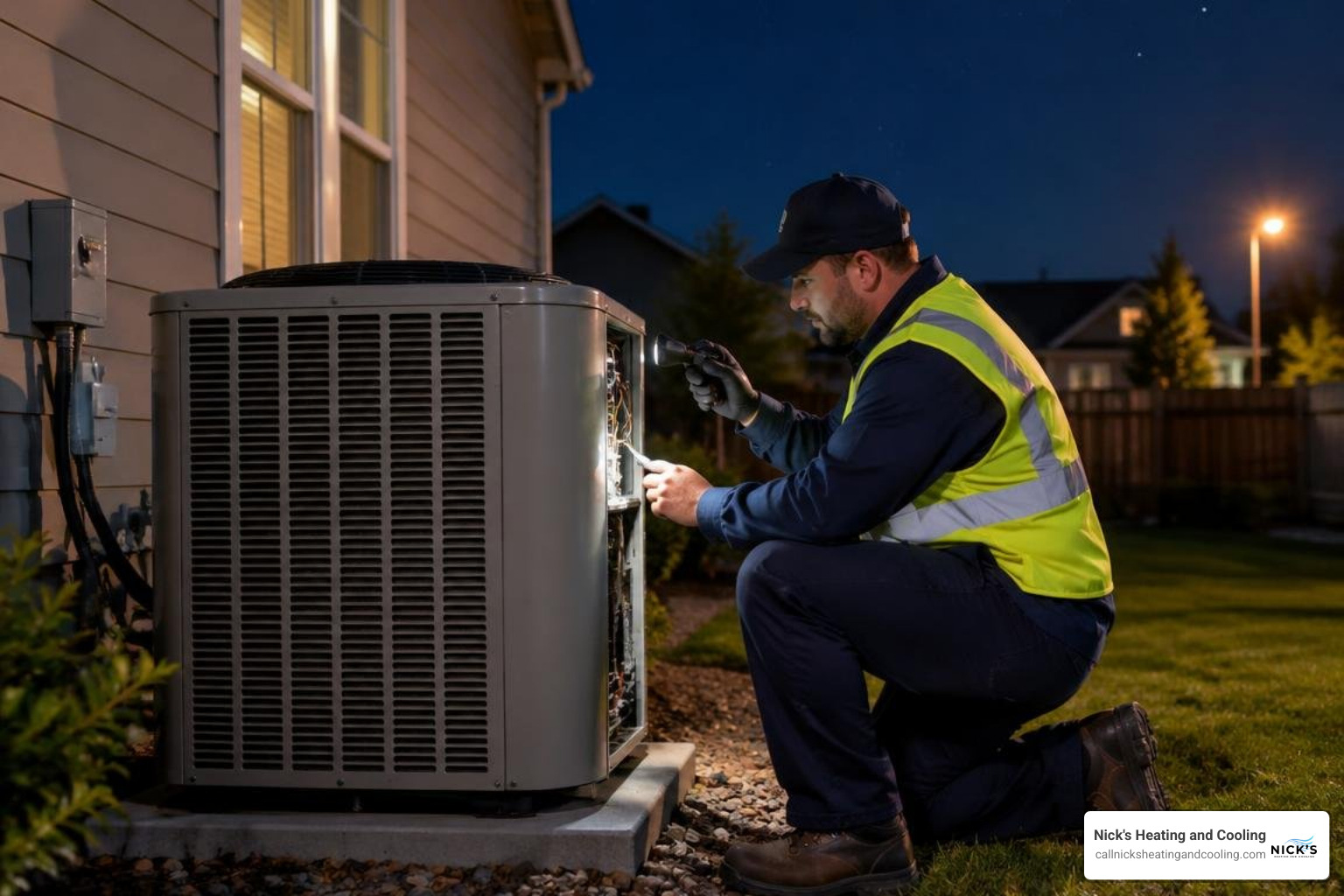
When I open an outdoor condenser or indoor air handler during a midnight dispatch, the failure usually traces back to a handful of high-wear components:
- Capacitor Failure: Dual run capacitors store electrical energy to kick-start and run the compressor and outdoor fan motor. Under sustained summer heat, internal electrolyte fluids degrade, causing the capacitor to bulge or lose microfarad rating. When this happens, the fan or compressor hums loudly but refuses to spin. Timely AC repair replaces the failing capacitor before motor windings burn out.
- Furnace Control Boards and Gas Valves: In heating systems, continuous thermal cycling over years causes microscopic cracks in solder joints on integrated control boards. Similarly, aging electronic gas valves or dirty flame sensors fail to prove ignition, causing the furnace to lock itself out for safety. If your system refuses to ignite during a freeze, targeted furnace repair restores warmth without delay.
- Iced Evaporator Coils: A restricted air filter, failing blower motor, or refrigerant leak causes coil temperatures to drop below freezing. Moisture from the indoor air freezes onto the coil, building a solid block of ice that chokes airflow entirely. Homeowners should shut the system down immediately to let the ice melt; running an iced system can quickly destroy the compressor.
- Clogged Condensate Drain Lines: In humid climates, air conditioners extract gallons of water from indoor air every single day. Algae and sediment accumulate in drain pans and trap lines. When the line backs up, safety float switches cut power to the entire system to prevent water damage, leaving you without cooling until the line is cleared. For comprehensive system care, utilizing professional AC repair ensures both electrical and drainage assemblies run cleanly.
Servicing Heat Pumps, Furnaces, and Ductless Systems
Modern 24-hour service providers handle a diverse range of equipment across all major heating and cooling configurations:
- Heat Pumps: In colder weather, heat pumps must regularly cycle into defrost mode to clear outdoor frost. If a defrost control board or reversing valve fails, the outdoor unit turns into a giant ice cube, causing auxiliary electric heat strips to run non-stop or leaving the home chilly.
- Gas and Electric Furnaces: Technicians service multi-stage and modulating gas burners, hot-surface igniters, draft inducer motors, safety pressure switches, and electric heating element banks.
- Ductless Mini-Splits: Inverter-driven ductless systems require specialized diagnostic tools to read inverter error codes, measure DC voltage on electronic expansion valves, and service compact indoor blower wheels.
- Central Air Systems: Dedicated service vans carry universal replacement parts compatible with major manufacturers including Carrier, Trane, Lennox, Rheem, Goodman, York, Daikin, Mitsubishi, American Standard, and Amana.
Managing Costs: Financing, Warranties, and Preventive Club Memberships
An unexpected late-night HVAC repair is never a welcome budget item. Fortunately, there are straightforward ways to manage emergency costs, protect your pocketbook, and avoid emergency calls altogether.
If you are researching local options, checking a local directory of vetted heating and cooling specialists helps you evaluate reputable contractors who maintain transparent pricing and strong consumer ratings.
How Regular Maintenance Prevents 24 Hour HVAC Service Dispatches
The most cost-effective emergency call is the one you never have to make. Industry data shows that the vast majority of after-hours breakdowns stem from neglected maintenance—such as filthy filters, loose wire connections, weak capacitors, or dirty burner assemblies that could have been caught during regular hours.
- Spring Cooling Tune-Ups: Comprehensive AC maintenance includes washing outdoor coils, checking refrigerant pressures, measuring capacitor capacitance, tightening electrical contacts, and testing safety switches before summer heat waves hit.
- Autumn Heating Tune-Ups: Thorough furnace maintenance involves inspecting the heat exchanger for dangerous cracks, cleaning flame sensors, checking gas manifold pressure, and calibrating the thermostat before winter cold snaps arrive.
Joining an annual maintenance club membership pays substantial dividends. Maintenance club members typically receive two complimentary seasonal tune-ups per year, discounts on parts and labor (often 15% to 20%), waived or discounted after-hours diagnostic fees, and priority dispatch status when severe weather strikes.
Repair Warranties and Flexible Financing Options
When an emergency repair is finished, you want peace of mind knowing the fix is built to last. Reputable contractors back their emergency work with solid warranties—typically covering replacement parts and labor for at least one full year.
If a late-night diagnostic reveals an older unit with a burned-out compressor or cracked heat exchanger, investing thousands into an emergency patch may not make financial sense. For major repairs or unexpected emergency replacements, look for contractors offering flexible financing options with approved credit. Online applications provide credit decisions in seconds, breaking costly replacements into manageable monthly payments so you don’t have to compromise on safety or home comfort.
Frequently Asked Questions About Emergency HVAC Repair
What safety steps should I take while waiting for an emergency technician?
If you smell gas or suspect a carbon monoxide leak, evacuate all occupants and pets from the home immediately and dial 911 or your local gas utility from outside. Do not touch light switches or open windows on your way out.
If you detect electrical burning smells, see smoke, or notice water pooling near the equipment, switch the thermostat to “Off” and turn off the dedicated breaker at your main electrical panel. Keep interior doors and exterior windows closed to trap residual heating or cooling inside the living space until the technician arrives.
How do I verify that an after-hours HVAC contractor is licensed and insured?
Always verify that the visiting technician is fully licensed by your state’s heating, air conditioning, and refrigeration board and carries comprehensive general liability and worker’s compensation insurance. Ask if technicians hold NATE (North American Technician Excellence) or EPA Section 608 certifications. Reputable contractors gladly provide their license number and present transparent, upfront estimates before beginning any physical repair.
Can I attempt temporary DIY repairs during a late-night breakdown?
Attempting DIY repairs on modern heating and cooling systems in the middle of the night is strongly discouraged. HVAC units contain high-voltage electrical circuits capable of causing severe shocks or arc flashes. They also contain pressurized refrigerants, combustible fuel supplies, and complex microprocessors.
Poking around inside an electrical cabinet without proper testing meters or training can cause electrical shorts, destroy delicate control boards, void manufacturer warranties, and create serious fire hazards. Always shut the unit down and allow a certified professional to handle the repair safely.
Conclusion
A middle-of-the-night heating or cooling breakdown is stressful, but understanding how 24-hour service works turns panic into a clear action plan. By recognizing critical safety hazards, knowing what to expect from after-hours dispatch logistics, and taking proactive steps to maintain your system throughout the year, you can keep your home safe, comfortable, and protected no matter what the weather does.
When sudden system failures threaten your home comfort, the certified, locally owned team at Nick’s Heating and Cooling is ready around the clock with rapid response times, transparent pricing, and free, no-obligation inspections. If your system runs into trouble, reach out directly through our contact page for fast, dependable service.
Nick’s Heating and Cooling currently services Birmingham, Hoover, Vestavia Hills, Mountain Brook, Alabaster, Chelsea, Homewood, Trussville, Pelham, and Irondale for all your HVAC and Heating needs.