

AC Ductwork Repair: Fix the Leak or Replace the Duct?
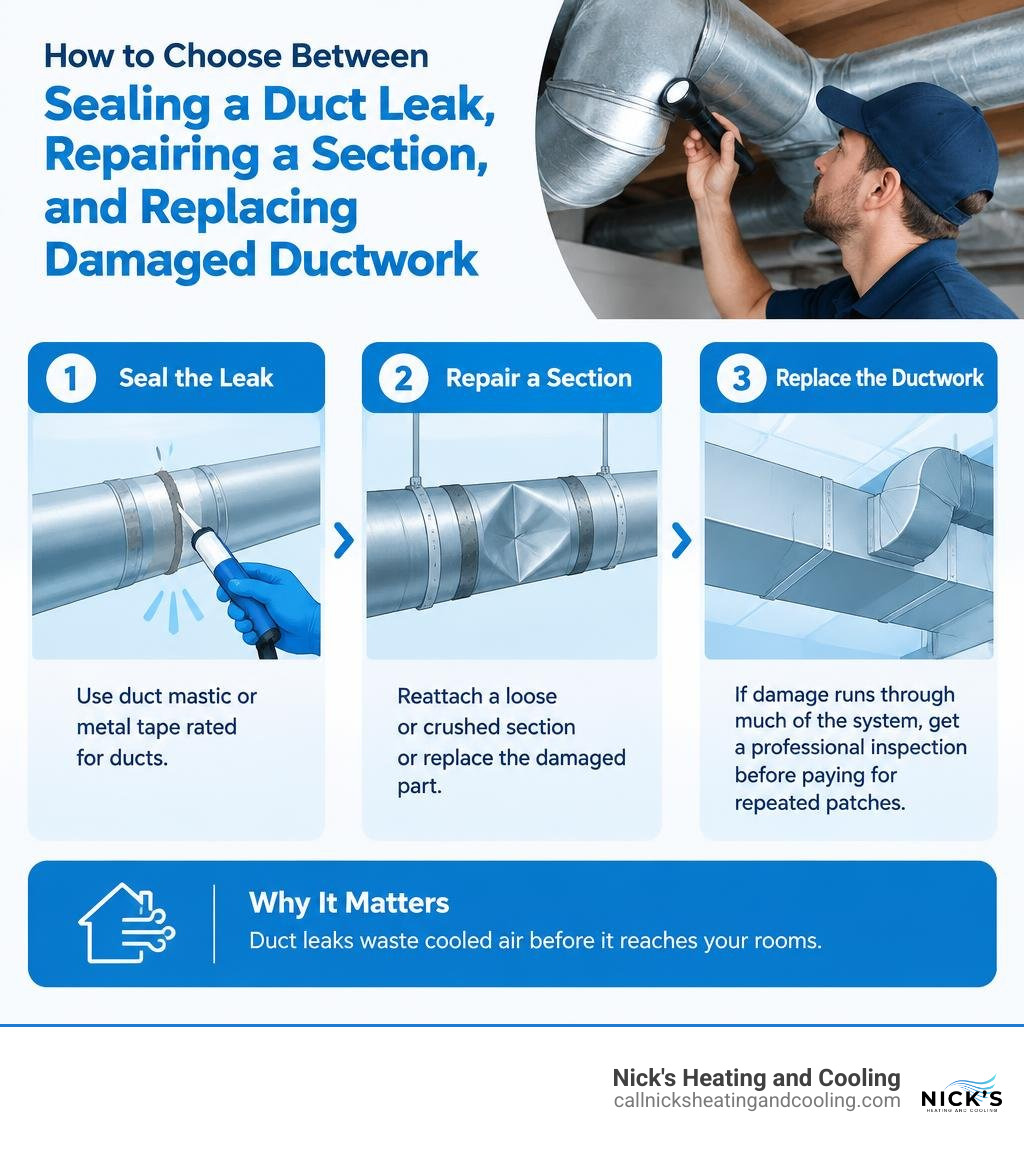
For AC ductwork repair, I’d start by checking accessible ducts for loose joints, holes, or crushed sections. Small leaks can often be sealed with duct mastic or metal tape rated for ducts. A crushed or disconnected section may need to be reattached or replaced. If damage runs through much of the system, I’d get a professional inspection before paying for repeated patches.
Leaks matter because they waste cooled air before it reaches your rooms. ENERGY STAR estimates that a typical duct system loses 20% to 30% of its air through leaks and poor connections.
Ac ductwork repair vocabulary:
Common Signs Your Home Needs AC Ductwork Repair
When ductwork begins to fail, your home usually gives you subtle hints before a complete airflow disaster occurs. In my experience working with residential cooling systems, people often assume their air conditioner is losing its cooling power when the real culprit is hiding in the attic or crawlspace. The air conditioning unit might be running at peak performance, but if the distribution network has gaps, that chilled air simply escapes into unconditioned spaces.
One of the first things I notice in homes needing duct repair is uneven cooling across different rooms. You might find that your living room feels like an icebox while an upstairs bedroom remains uncomfortably warm. These temperature variations happen when air escapes through separated seams or when restricted runs starve specific supply registers.
You might also notice strange noises whenever the blower motor kicks on. Whistling sounds often point to air forcing its way through small cracks or unsealed joints under high static pressure. Rattling noises frequently indicate loose metal brackets or disconnected sheet metal sections vibrating against framing.
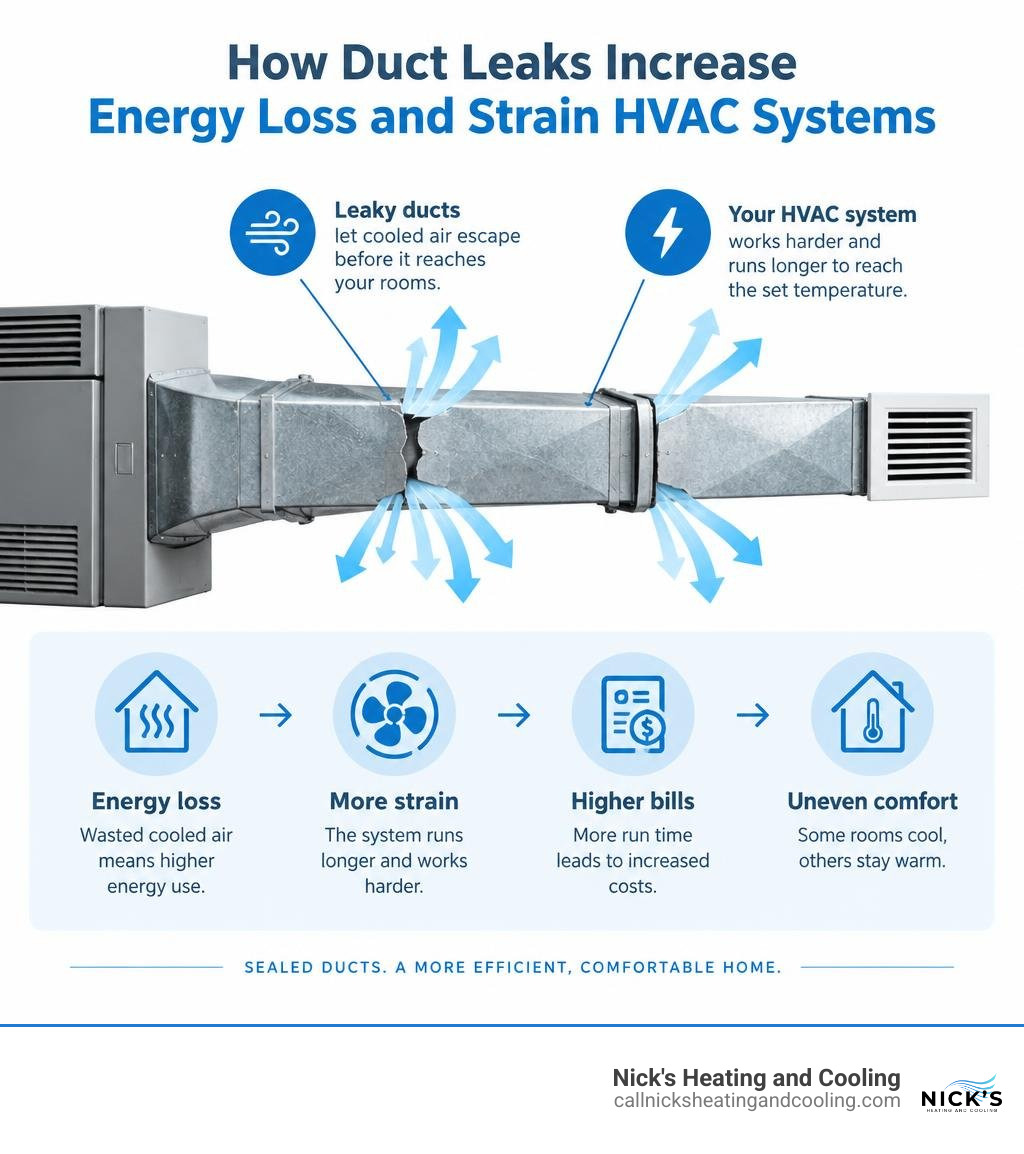
Another major red flag is an unexplained spike in your monthly utility bills. When 20 to 30 percent of conditioned air leaks out before reaching your vents, your system must run significantly longer cycles to satisfy the thermostat setting. In addition, torn or disconnected return ducts pull unconditioned, dusty air from attics and crawlspaces straight into your living areas. If you find yourself dusting furniture every two days or noticing worsening allergy symptoms, compromised ducts are actively degrading your indoor air quality.
Visual and Physical Warning Signs
Whenever I perform a physical walkthrough, I look for clear physical defects along the duct runs. If your home has flexible ductwork, look for crushed or kinked sections. Flexible ducts are prone to sagging when hangers are placed too far apart, creating severe airflow bottlenecks that choke off supply air to downstream rooms.
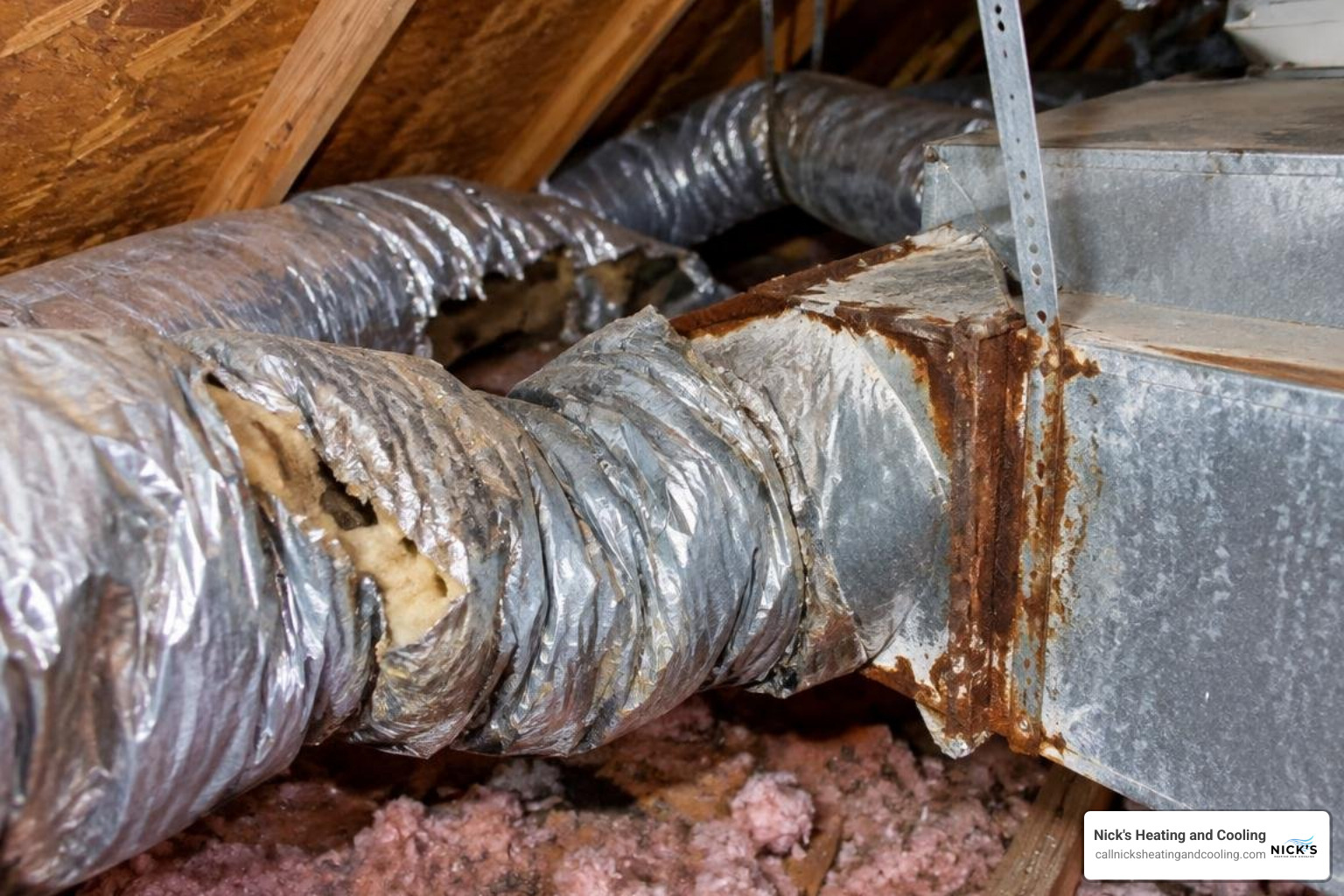
On rigid metal ducts, pay close attention to the joints and take-off collars where branch lines connect to the main trunk line. Gaps often form where old adhesives have dried out or where vibration has loosened sheet metal screws. In damp crawlspaces or humid attics, uninsulated or poorly sealed metal ducts develop condensation. Over time, that standing moisture causes rusted seams, deteriorated insulation, and even biological growth inside the air stream. If you notice musty odors blowing from your registers, scheduling a thorough air duct cleaning alongside necessary repairs will help restore fresh airflow.
Performance and Efficiency Indicators
Persistent hot spots in specific rooms often point to pressure drops caused by torn flexible inner cores or disconnected branch lines. When air escapes through a breach, static pressure drops throughout the remaining branches, making the entire distribution system inefficient.
This pressure imbalance places heavy strain on your system’s blower motor. The air handler works against improper resistance, which leads to overheating, excessive wear, and continuous system cycling. Over time, ignoring these air distribution problems can cause premature component failure inside your air conditioner. Pairing periodic ac maintenance with duct pressure checks helps catch these air loss issues before they turn into major equipment breakdowns.
How Much Does Ductwork Repair Cost in 2026?
As of 2026, the national average starting cost for minor ductwork repairs is around $100, with most homeowners spending between $200 and $2,100 for comprehensive repairs. The exact price depends on the nature of the damage, where the ducts are located, and how easily a technician can reach the damaged sections.
HVAC technicians typically charge between $50 and $100 per hour for labor. Minor jobs, such as sealing a few exposed register boots or reattaching an accessible flexible line, can take just an hour or two. However, complex repairs involving multiple damaged runs or mold remediation require specialized equipment, materials, and safety protocols that increase project costs.
| Repair Type / Scope | Typical Cost Range (2026) | Common Labor Time |
|---|---|---|
| Single Vent / Register Repair | $100 – $300 | 1 – 2 hours |
| Leak & Seam Sealing (Accessible) | $375 – $700 | 2 – 4 hours |
| Flexible Duct Repair / Reattachment | $100 – $800 | 2 – 5 hours |
| Rigid Sheet Metal Duct Repair | $300 – $2,100 | 4 – 8 hours |
| In-Wall or Under-Floor Duct Repair | $400 – $3,500 | 1 – 2 days |
| Mold Remediation in Ductwork | $1,125 – $3,345 | 1 – 2 days |
| Annual Duct & HVAC Inspection | $175 – $350 | 1 – 2 hours |
Key Factors Influencing AC Ductwork Repair Costs
The specific material used in your ductwork system plays a major role in overall repair pricing. Rigid sheet metal is exceptionally durable, but cutting, fitting, and sealing metal sections requires specialized tools and sheet metal screws, placing repair costs between $300 and $2,100. Flexible ducting is generally less expensive to repair or replace, ranging from $100 to $800 per run, though it is far more vulnerable to physical tears and crushing.
Accessibility is another critical cost driver. Ducts located in an open, walkable basement are straightforward to service. In contrast, working in a tight, unconditioned crawlspace or a sweltering attic requires additional labor time and protective gear. When leaks occur inside finished walls, ceilings, or subfloors, technicians must cut access openings to reach the damaged lines. Repairing and refinishing drywall can add $300 to $925 to your overall bill, while repairing subflooring can add $205 to $635. When unexpected damage occurs, working with certified professionals for prompt air duct repair ensures that access cuts remain minimal and clean.
Repair vs. Replacement: Making the Right Investment
I am often asked whether it is better to patch existing ducts or replace the entire system. The typical lifespan of residential ductwork ranges from 10 to 25 years, with an average lifespan of about 15 years. If your home’s duct system is relatively new and the damage is confined to a few loose joints or a punctured flex line, targeted repairs are by far the most economical choice.
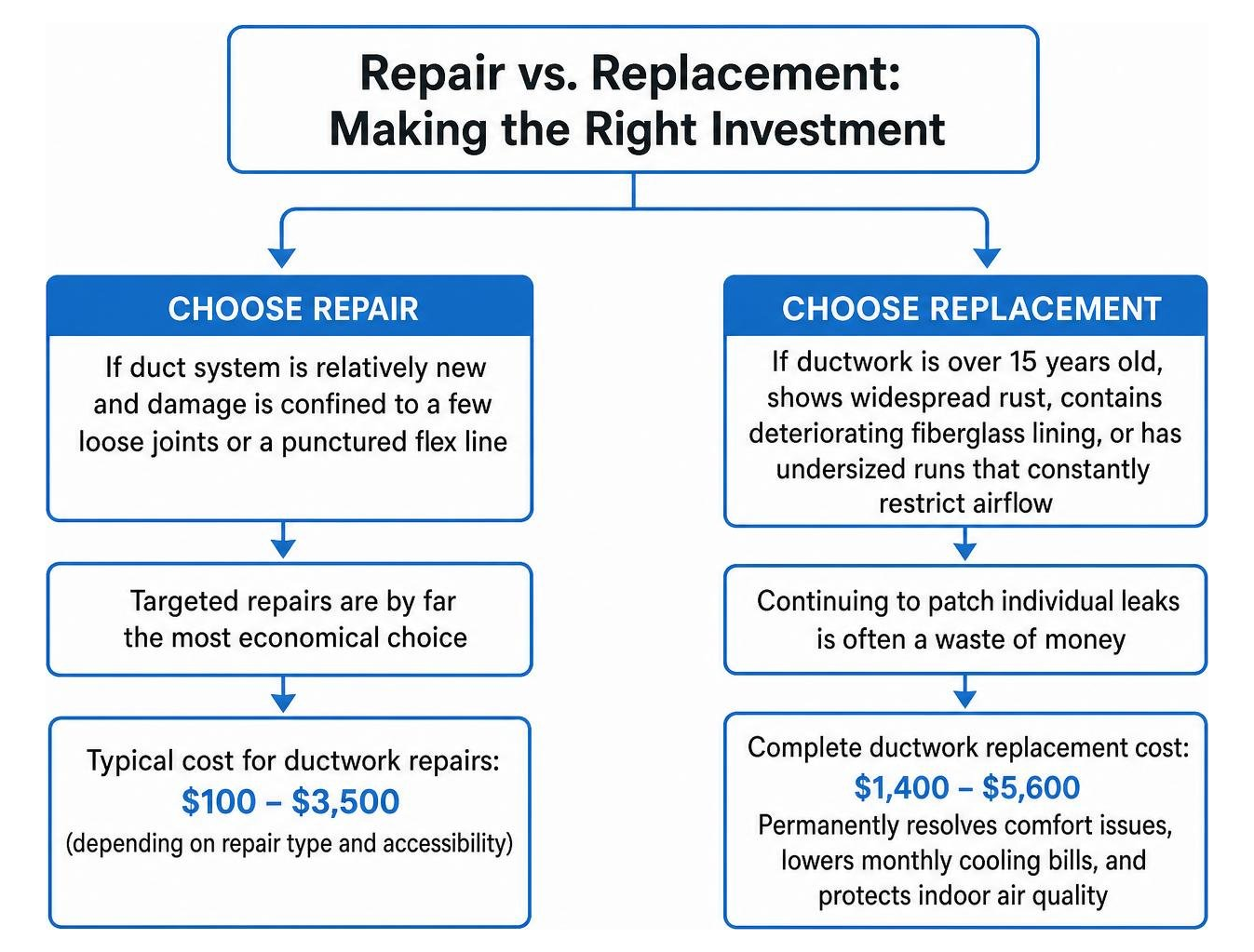
However, if your ductwork is over 15 years old, shows widespread rust, contains deteriorating fiberglass lining, or has undersized runs that constantly restrict airflow, continuing to patch individual leaks is often a waste of money. While complete ductwork replacement costs between $1,400 and $5,600, it permanently resolves persistent comfort issues, lowers monthly cooling bills, and protects your indoor air quality. There are many reasons why birmingham homeowners are upgrading their air duct installation to modern, energy-efficient standards rather than repeatedly patching obsolete duct systems. When you are ready for a clean slate, professional air duct installation ensures every branch line is engineered to balance airflow perfectly.
Step-by-Step Methods for Sealing and Fixing Duct Leaks
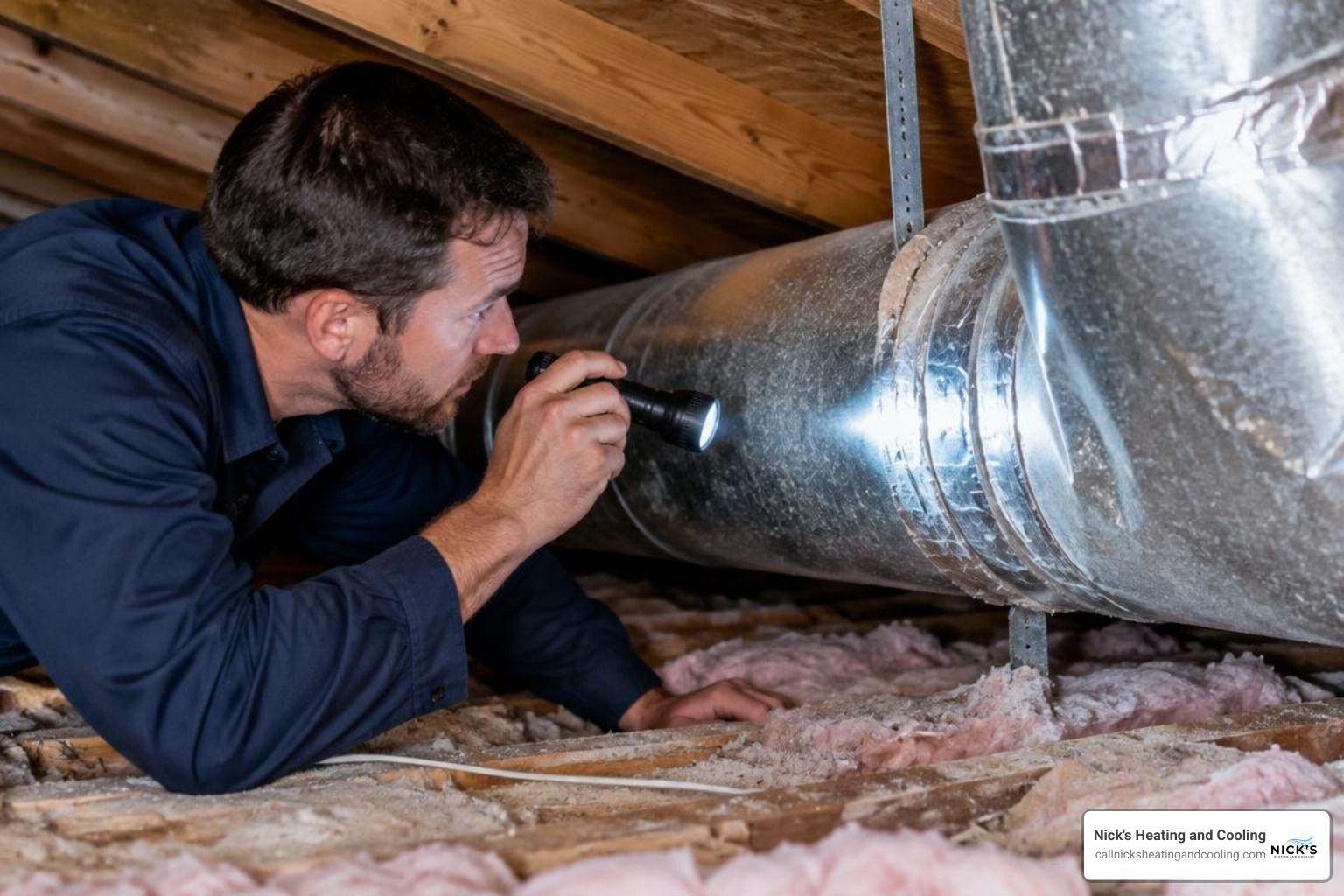
Locating hidden air leaks requires a methodical approach. When I inspect a duct system, I start by turning on the system blower to pressurize the ductwork. Moving along exposed runs in the attic, basement, or crawlspace, you can often feel escaping air with your bare hand or see dust blowing around loose seams.
Professional technicians use precision diagnostic tools to locate and measure air loss. Using a specialized duct blaster fan, a technician pressurizes the system to approximately 25 Pascals of test pressure to quantify total air leakage. Combining pressure gauges with theatrical smoke pencils or non-toxic fog allows us to pinpoint microscopic leaks along hidden seams and branch connections without tearing down drywall.
Proper sealing follows a clear, step-by-step procedure:
- Surface Preparation: Turn off the HVAC system completely. Remove any deteriorated, dry cloth tape from the metal surfaces using a stiff wire brush or scraper, ensuring the area is free of dust, grease, and loose insulation.
- Mechanical Fastening: If a sheet metal take-off collar or joint is loose, secure it with number seven self-piercing sheet metal screws spaced evenly around the circumference.
- Primary Seal Application: Apply a generous layer of fiber-reinforced mastic paste over the seam. As recommended by home improvement guides like This Old House, you want the mastic layer to be at least the thickness of a nickel coin to bridge gaps effectively.
- Tape Reinforcement: For gaps wider than one-eighth of an inch, embed fiberglass mesh tape or high-grade foil tape directly into the wet mastic, then brush a second layer of mastic over the tape, extending one to two inches past the edges.
- Curing: Allow the mastic paste to cure undisturbed for 24 to 48 hours before turning the system back on to prevent pressure blowouts while the compound sets.
Proper Materials for Lasting AC Ductwork Repair
Using the right materials is the difference between a repair that lasts 15 years and one that fails in six months. Never use standard cloth-backed utility tape for air duct sealing. The rubber-based adhesive on standard tape quickly oxidizes, dries out, and falls away under the temperature swings of an HVAC system.
Instead, the Building America Solution Center emphasizes using UL-181 rated mastic paste or UL-181 rated aluminum foil-backed tape. For flexible ducts, connections must be secured over the inner metal collar with heavy-duty nylon tension ties pulled tight with a tensioning tool. Flexible duct runs must also be supported using straps or saddles that are at least 1.5 inches wide, spaced no more than 4 feet apart to prevent sagging and airflow restrictions.
When insulating bare sheet metal ducts, always use Foil-Scrim-Kraft (FSK) faced fiberglass duct wrap with a minimum thermal rating of R-8. Never wrap ducts with unfaced fiberglass batts; moisture from humid air will pass through the porous insulation and condense on the cold metal surface, leading to hidden rust, water damage, and mold growth.
DIY Sealing vs. Hiring a Professional Technician
Handling minor duct sealing on exposed, accessible basement runs is a viable weekend project for a handy homeowner. If you can easily reach a drafty seam near your air handler, brushing on UL-181 mastic paste can save you money and stop immediate air loss.
However, ductwork running through tight crawlspaces, cathedral ceilings, or behind finished drywall presents serious challenges. Working in confined spaces introduces safety risks, including exposure to fiberglass fibers, electrical wiring, and structural framing. Furthermore, improper duct modifications can inadvertently alter your system’s static pressure, leading to frozen evaporator coils or cracked heat exchangers. When facing extensive layout problems, reading our step by step guide to air duct installation cost process will give you a clear picture of what a comprehensive professional repair or replacement entails.
Frequently Asked Questions About Duct Repair
How long does a typical ductwork repair take?
Most standard residential duct repairs take between 2 and 4 hours to complete. Simple tasks, such as reattaching a fallen flexible run or sealing accessible joints in an open basement, can be finished in a single morning. Larger projects involving multiple branch replacements, attic crawlspace work, or extensive mold remediation can take 1 to 2 full working days. That mastic paste requires a 24- to 48-hour curing window before full-pressure testing is performed.
How much can I save on energy bills by repairing my ducts?
Sealing and repairing leaky ductwork can save homeowners up to 20% on their annual heating and cooling costs. Because heating and cooling make up over half of a typical home’s energy consumption, stopping conditioned air loss produces immediate, noticeable reductions on monthly electric and gas bills. Proper sealing also prevents your air conditioner from running extended cooling cycles, reducing wear on internal components and extending the overall lifespan of your HVAC equipment.
Can I use standard duct tape to seal air leaks?
No, you should never use standard cloth-backed utility tape to seal air ducts. Despite its misleading name, standard duct tape features a rubber-based adhesive that breaks down rapidly under thermal stress and humidity changes. Within months, the adhesive dries up, leaving the tape brittle and detached from the duct joint. Always use UL-181 rated mastic sealant or UL-181 foil-faced aluminum tape, both of which are engineered to expand and contract with temperature shifts without losing adhesion.
Conclusion
Your home’s ductwork serves as the respiratory system of your entire living space. Even the most advanced, high-efficiency air conditioning system cannot keep your home comfortable if a quarter of its conditioned air escapes into the attic or crawlspace. By recognizing the early warning signs of duct leakage, using proper UL-181 sealing materials, and addressing airflow bottlenecks, you can enjoy balanced indoor temperatures, cleaner air, and lower utility bills throughout the cooling season.
If you suspect your ductwork is leaking, damaged, or struggling to deliver adequate airflow, our team at Nick’s Heating and Cooling is ready to help. Our certified, locally-owned technicians provide free, no-obligation inspections across the greater Birmingham metro area. We take the time to evaluate your entire air distribution system, pinpoint hidden breaches, and deliver long-lasting repairs built on integrity and professionalism. Explore our professional ac repair and maintenance services today to restore complete comfort to your home.
Nick’s Heating and Cooling currently services Birmingham, Hoover, Vestavia Hills, Mountain Brook, Alabaster, Chelsea, Homewood, Trussville, Pelham, and Irondale for all your HVAC and Heating needs.