

What AC Installation Charges Really Cover
In 2026, a complete central AC installation in the U.S. typically costs $3,500-$12,000, with about $7,500 as a planning figure. A ductless mini-split often costs $2,000-$8,000 per zone. These are installed system prices, not labor-only charges. For a Birmingham home or small business, the reliable number is a written quote based on the space and the work required.
Ask whether that quote includes electrical work, permits, duct changes, and removal of the old unit. Those items can change the final bill, even when the equipment price looks straightforward.
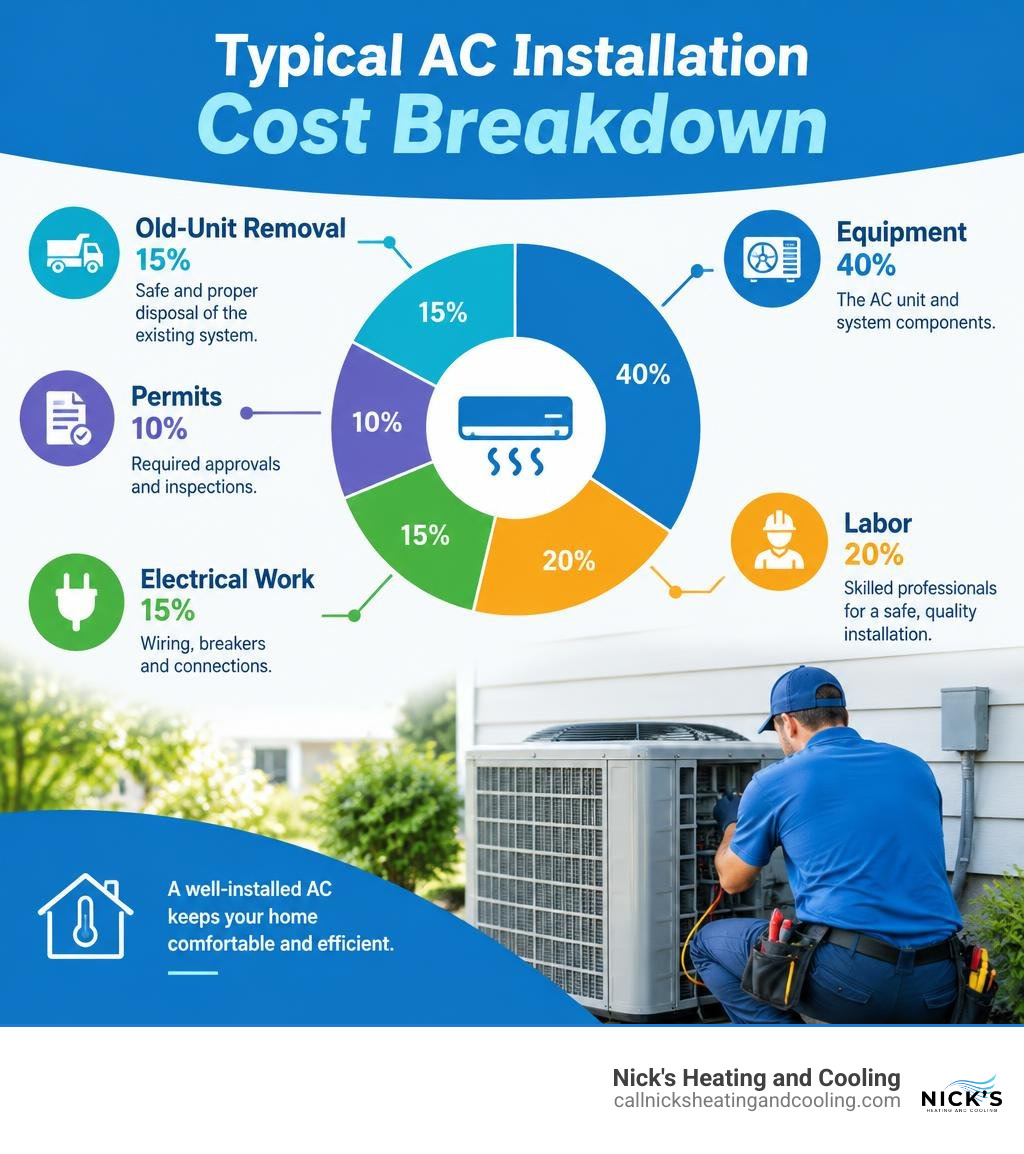
Quick ac installation charges definitions:
Comprehensive Breakdown of AC Installation Charges by System Type
When I sit down with homeowners across Birmingham and Hoover to talk through new cooling options, their first question is almost always about the bottom line. The truth is that cooling equipment varies wildly in complexity. Installing a straightforward single-room cooler takes minimal time, whereas setting up whole-home ducted cooling requires structural integration, line flushing, and airflow balancing.
According to industry pricing benchmarks compiled in the Air Conditioning Installation Cost in the U.S. 2026 – PICKHVAC report, your total investment depends heavily on whether your home already has usable air distribution channels.
| System Type | Average Equipment & Labor Cost Range | Typical Labor & Setup Only | Ideal Home Application |
|---|---|---|---|
| Central Air Conditioner (Changeout) | $3,500 – $12,000 | $1,500 – $4,000 | Existing homes with intact ductwork |
| Central AC with New Ductwork | $7,000 – $18,000+ | $3,500 – $8,000 | Full renovations or brand-new home builds |
| Ductless Mini-Split (Single Zone) | $2,000 – $4,500 | $800 – $1,800 | Room additions, sunrooms, master suites |
| Ductless Mini-Split (Multi-Zone: 3–5 zones) | $6,000 – $16,000 | $2,500 – $5,500 | Older historic homes without ductwork |
| Window / Compact Room AC | $250 – $1,200 | $100 – $300 | Single small bedrooms or supplemental cooling |
Central Air Conditioning Setup Costs
A standard central split system pairs an outdoor condenser with an indoor evaporator coil seated directly on your furnace or air handler cabinet. When I install a standard replacement unit, I ensure the refrigerant lines match modern pressure demands, connect the condensate drain lines, install new safety switches, and wire the thermostat.
If your home lacks existing ductwork, or if your attic ducts have collapsed, the labor climbs dramatically. Adding custom sheet metal, supply registers, return plenums, and insulated flexible runs will add $2,000 to $8,000 to your overall budget. For homes where duct installation would mean tearing down beautiful historic plaster ceilings, exploring the birmingham guide to ductless ac installation is often the smartest, least invasive path forward.
Ductless Mini-Split and Multi-Zone Systems
Ductless heat pumps and mini-split setups offer targeted, room-by-room comfort. Each room receives its own wall-mounted, ceiling-cassette, or floor-mounted indoor air handler connected to an exterior inverter compressor via a compact conduit bundle (copper tubing, power cabling, and condensate drain).
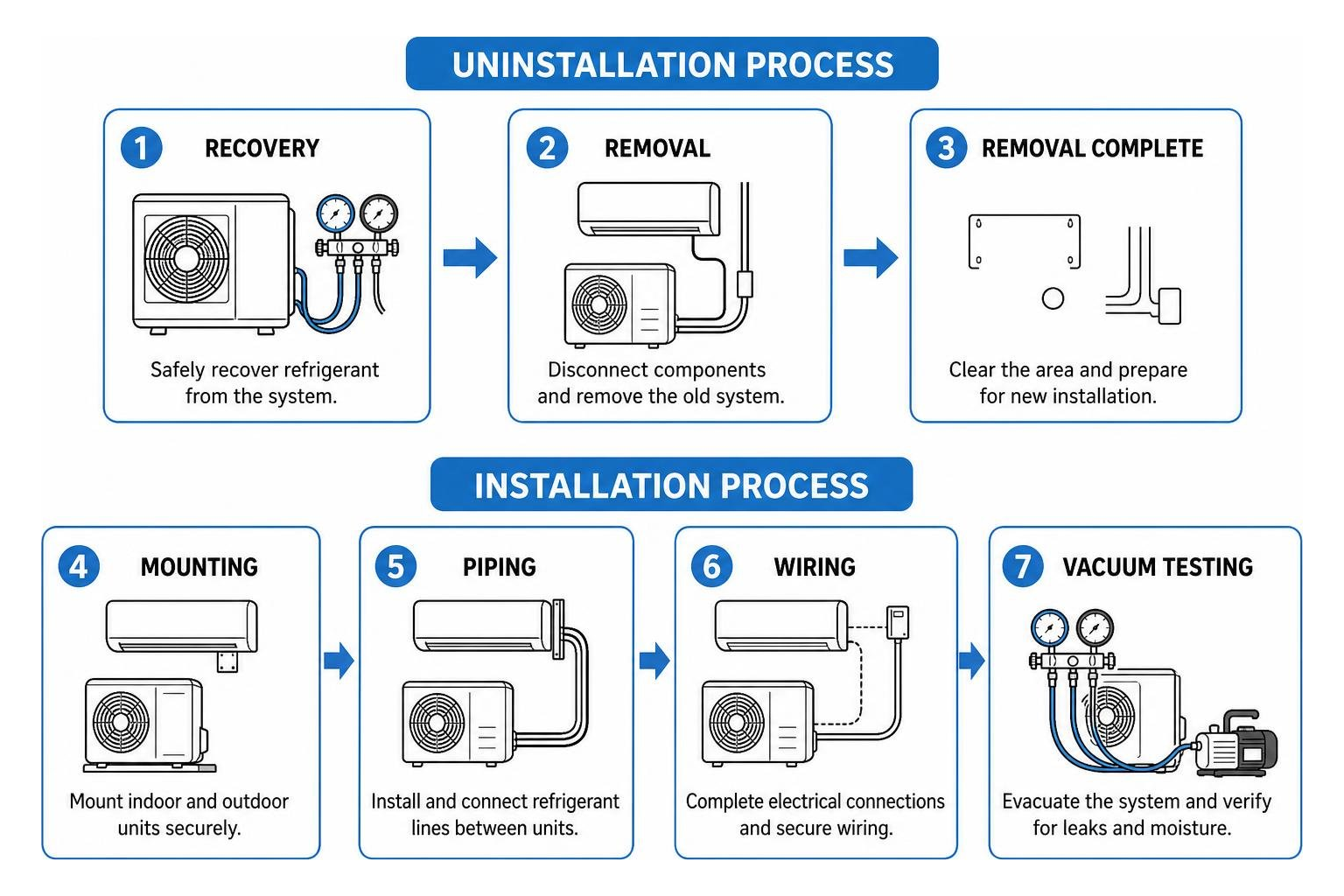
Because each indoor zone requires precise electrical communication wiring, structural wall mounting, exterior line hide covers, and vacuum testing, multi-zone labor scales per room. If you are comparing comprehensive heating and cooling system overhauls, reviewing heat pump replacement costs sizing and top options helps pinpoint whether high-efficiency variable-speed heat pumps match your budget.
Window Units and Compact Systems
Window units and compact room coolers require minimal physical modification. As detailed in consumer guides like the AC Installation Cost – Charges and Price Breakdown, basic window mounting involves setting support brackets, securing the sash, and weatherstripping the sides. Professional assistance for window setups usually costs $100 to $300, mostly ensuring the unit is pitched correctly so condensation doesn’t rot your windowsill.
Material and Labor Pricing Variables
Labor rates for licensed HVAC technicians generally range from $75 to $150 per technician hour. A standard crew involves two technicians, meaning standard on-site installation labor runs between $1,500 and $4,000 for a typical day’s work. Beyond raw hours, materials represent a major variable that directly impacts your final invoice.
Core Factors Influencing Total AC Installation Charges
Every home features unique architectural hurdles. The primary variables determining your project charges include:
- SEER2 Energy Efficiency Ratings: Higher efficiency ratings (16 to 20+ SEER2) require sophisticated variable-capacity compressors, specialized electronic communication thermostats, and wider physical coil cabinets.
- Copper Line Set Length and Diameter: Copper tubing connects the outdoor and indoor units. While standard installations accommodate up to a 15-foot line run, long distances across basements or multi-story chases require extra copper footage, specialized brazing, and extra refrigerant charging.
- Wall Penetrations and Drilling: Drilling through standard wood siding is straightforward, but drilling through reinforced brick, stone, or concrete foundations adds specialized tooling time and sealing materials.
- System Sizing (Tonnage): Sizing an AC unit from 2 tons to 5 tons increases equipment dimensions, copper tube diameters, and the structural support required for the outdoor pad.
Electrical Infrastructure and Accessory Add-ons
Your air conditioner pulls significant electrical current upon startup. If your electrical panel or outdoor disconnect does not meet local building codes, these supplementary electrical upgrades are necessary:
- Dedicated Circuit Breaker & Wiring: Running a fresh 220V/240V line from your breaker panel to the outdoor unit ($250 – $600).
- Outdoor Disconnect Box & Whip: A weatherproof service disconnect switch mounted within arm’s reach of the outdoor condenser ($150 – $350).
- Surge Protectors & Voltage Stabilizers: Integrated electronic surge protectors shield sensitive inverter circuit boards from thunderstorm surges ($200 – $450).
- Equipment Pads or Heavy-Duty Wall Brackets: Upgraded composite equipment pads or vibration-dampening wall brackets for elevated outdoor mounting ($100 – $300).
- Panel Upgrades: If your home’s main panel is maxed out at 100 amps, upgrading to a 200-amp service panel can add $1,500 – $3,000.
Hidden Costs, Free Installation Pitfalls, and Uninstallation Fees
One of my biggest pet peeves in the HVAC industry is the practice of advertising low-ball initial rates, only to hit the customer with unexpected fees once the old equipment is already dismantled. Understanding common cost traps protects your wallet.
Unmasking “Free Installation” Exclusions
Many big-box retail promotions advertise “Free Basic Installation.” In reality, these promotional deals come with strict fine print that excludes the materials necessary for a code-compliant job.
Items commonly excluded from basic promotions include:
- Mounting Brackets & Concrete Pads: They provide the unit, but you pay extra for the surface it sits on.
- Copper Piping Beyond Bare Minimums: Extra footage is frequently billed at exorbitant markups.
- High-Voltage Electrical Connections: Promos rarely cover running conduit from the breaker panel.
- Condensate Drain Lines and Float Switches: Secondary overflow switches required by local codes are billed as optional add-ons.
- Local Municipal Permits: Administrative and inspection fees are excluded from baseline promotional quotes.
Replacement vs. New Installation and Removal Costs
Replacing an existing cooling unit involves decommissioning charges that brand-new construction avoids. Federal environmental laws mandate that refrigerants (R-410A or newer R-454B/R-32) must be safely evacuated using certified recovery machines—they cannot simply be vented into the atmosphere.
When planning your budget, consult our breakdown on how much to take it down and put it up ac re installation costs to understand transition expenses. Decommissioning, refrigerant recovery, and hauling away a rusted 150-pound condenser typically add $150 to $500 to the job. However, retrofitting also saves you money if your existing refrigerant line set can be chemically flushed and pressure-tested rather than replaced. Reviewing my guide to hassle free ac installation helps clarify how we streamline these steps on-site.
Vetting Contractors and Maximizing Long-Term Value
A budget-rate installation is no bargain if poor workmanship causes a refrigerant leak or compressor failure two summers later. Over 70% of premature air conditioner breakdowns stem directly from improper installation rather than factory defects.
Comparing AC Installation Charges: Brand Authorized vs. Independent Contractors
When collecting estimates, you will encounter varying tiers of service providers:
- Factory-Authorized & Certified Contractors: These technicians undergo continuous manufacturer training, carry comprehensive liability insurance, pull necessary municipal permits, and provide both manufacturer part warranties and company labor guarantees. While their initial quote may be moderately higher, your investment remains fully protected.
- Uncertified Independent Handymen: A solo handyman might offer cut-rate labor, but they often lack expensive vacuum evacuation pumps, nitrogen pressure-testing rigs, and the credentials required to preserve your factory warranty.
To help evaluate your contractor options, read my guide on choosing the right ac repair service to ensure you partner with reputable, certified professionals.
How to Ensure Transparent Itemized Billing
A professional contractor should always provide a detailed, written estimate before starting work. Ensure your proposal includes these line items:
- Exact equipment make, model numbers, tonnage, and certified SEER2 ratings.
- Scope of refrigerant line work (new copper line set or chemical line flush).
- Electrical work included (disconnect box, whip, breaker size).
- Condensate drainage setup and safety float switch installations.
- Municipal permit acquisition and post-install inspection fees.
- Labor warranty duration (separate from the manufacturer’s parts warranty).
- Safe recovery, hauling, and disposal of all old HVAC equipment.
Frequently Asked Questions About AC Installation Charges
What is the average timeline for completing an AC installation?
A straightforward central AC or heat pump changeout takes a two-person crew approximately 4 to 8 hours. If the job requires replacing indoor ductwork, upgrading the main electrical panel, or setting up a 4-zone ductless mini-split system, the project can take 2 to 3 full working days.
Are there available rebates or utility incentives for installing a new AC in 2026?
Yes! While federal Section 25C tax credits evolved at the close of 2025, regional electric utilities offer direct rebates for energy-efficient cooling equipment. In Alabama, high-efficiency heat pump upgrades and smart thermostat installations frequently qualify for utility bill credits and energy-efficiency rebates. Always ask your installer to check active utility programs before selecting your equipment.
Why is copper piping billed as an extra line item?
Copper is a valuable commodity, and refrigerant line sets require thick-walled, ACR (air conditioning and refrigeration) certified tubing. A standard split system utilizes two separate lines: a smaller high-pressure liquid line and a larger, insulated suction vapor line. Extended distances require extra raw copper, specialized brazing labor, UV-resistant insulation wrapping, and additional factory refrigerant to balance system pressures.
Conclusion
Getting a new air conditioner should bring comfort and peace of mind, not sticker shock. By understanding the core variables behind equipment, copper line sets, electrical safety switches, and labor, you can confidently evaluate estimates and avoid low-ball installation traps.
I always believe in 100% upfront pricing without high-pressure sales tactics. If your cooling system is struggling to keep up with the summer heat, contact my team today to schedule an inspection and explore your options for a seamless ac installation or seasonal ac maintenance.
Nick’s Heating and Cooling currently services Birmingham, Hoover, Vestavia Hills, Mountain Brook, Alabaster, Chelsea, Homewood, Trussville, Pelham, and Irondale for all your HVAC and Heating needs.